KAWS Art & Comix
A Rainy Day Exhibition at Albertina Modern
On a rain-slicked April day in Vienna, I sought refuge inside the Albertina Modern, only to find a high-voltage jolt of creative energy. "KAWS: Art & Comix" is an autopsy of the collapsing wall between high art and pop culture. As both a Viennese and a comics fan, it felt to me both nostalgic and jarring to see the rebellious, ink-stained spirit of underground comix immortalized within such a grand museum. While our digital world has essentially become a living cartoon, this exhibition uses the "disposable" icons of the past to hold a diagnostic mirror to our modern cultural soul.
April 2026
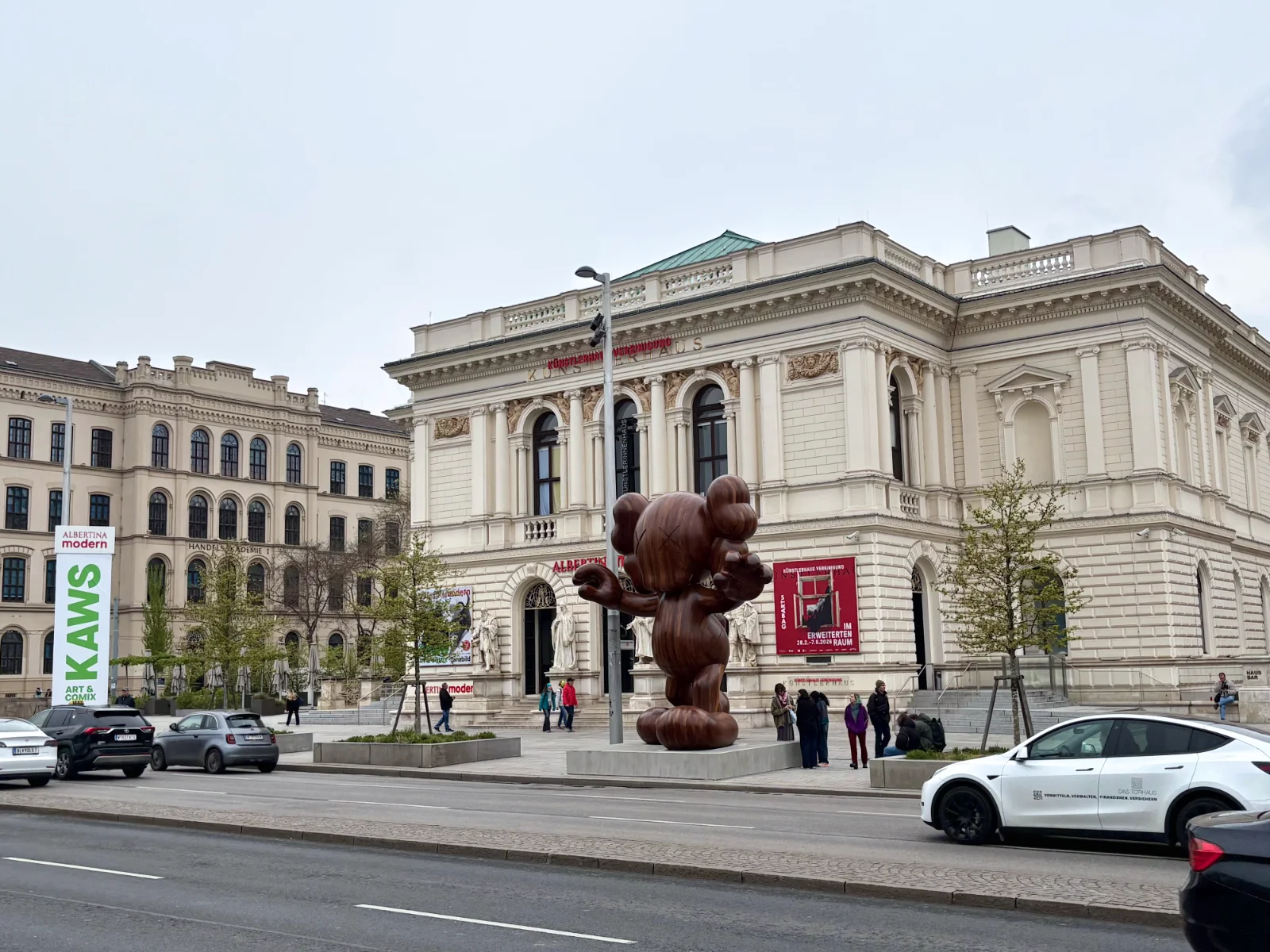
A monumental COMPANION greets visitors in front of the
Albertina Modern. This is one of KAWS' most famous characters,
resembling Mickey Mouse with X-eyes.
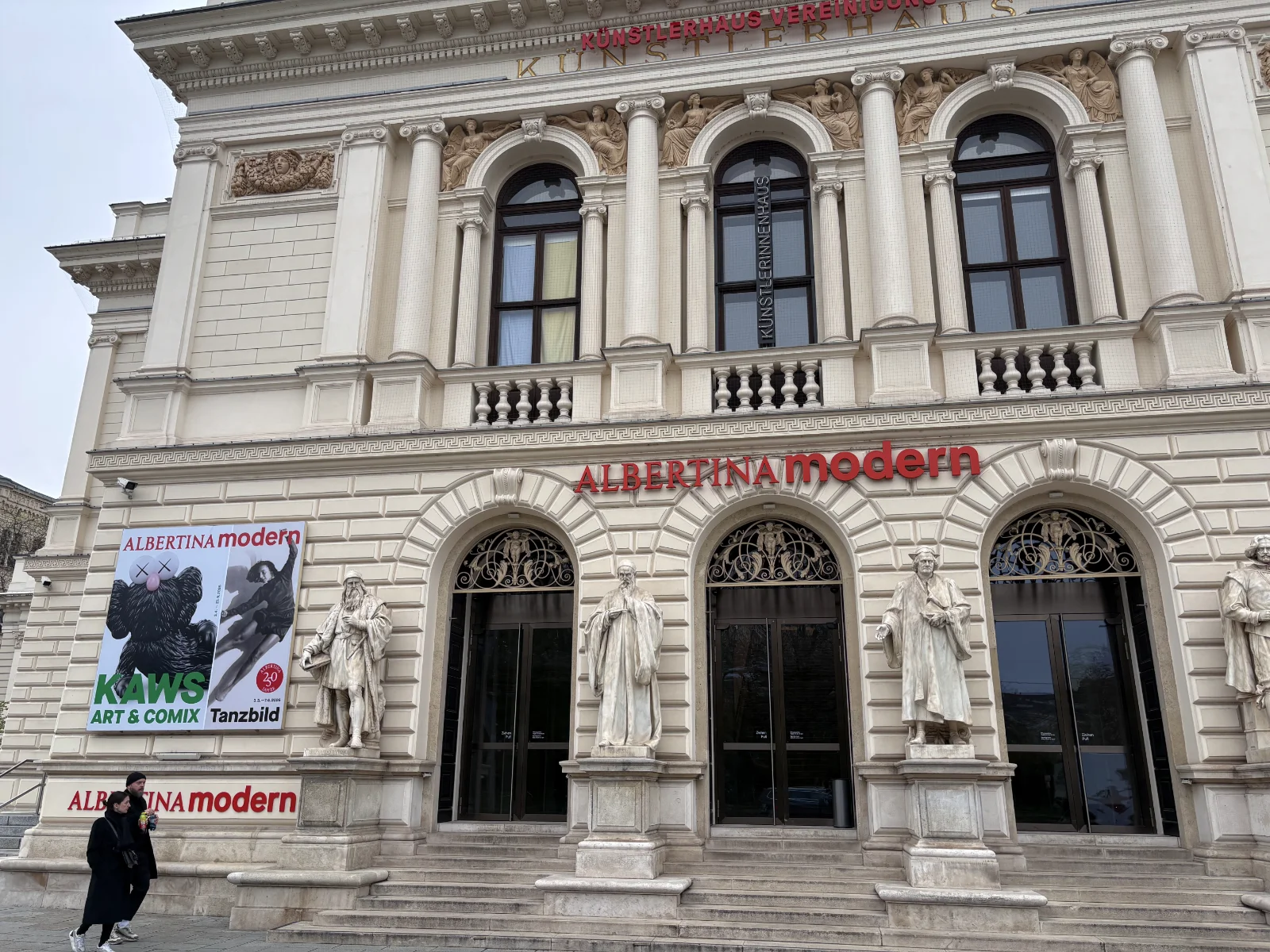
The Albertina Modern on a rainy April day.
The Albertina Modern is a modern art museum in Vienna. I like to think of it as a bit like the "edgy younger sibling" to the classic Albertina. This is the venerable main building with over 600 years of art history.
This was my first time visiting the Albertina Modern. The KAWS Art & Comix exhibition ended up being fun and I definitely learned a lot. It juxtaposed the artist KAWS with pop art icons like Roy Lichtenstein and Keith Haring. Though I felt that the presence of these two great names only served as an excuse to add them to the exhibition description to make it more glamorous and attract more visitors. The show highlights how comic language has become a universal storytelling tool. It is a bit strange looking at all of these cartoony yet artistic presentations because they have become anachronistic in the age of digital media.
I guess that's part of the charm and nostalgia of it all.
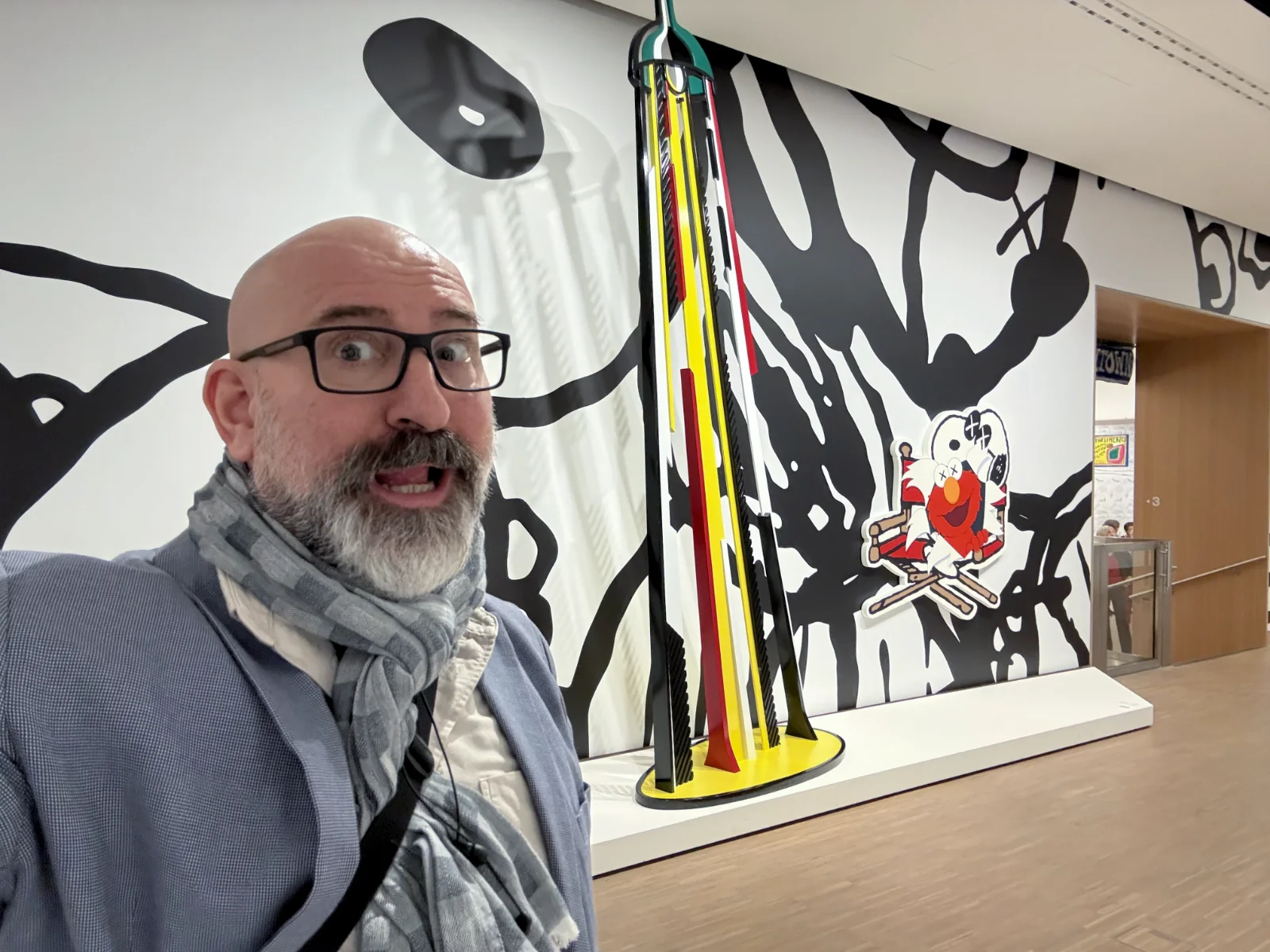
Right at the entrance to the exhibition, there's a splashy
installation by Roy Lichtenstein.
Dark Nostalgia and Precision
The transition between artists was jarring in the best way. I was particularly impressed by the large-format paintings of Gottfried Helnwein. His depictions of Mickey Mouse are aggressively reinterpreted, detaching the character from its innocent origins to create a sense of "uncanny" social anxiety.
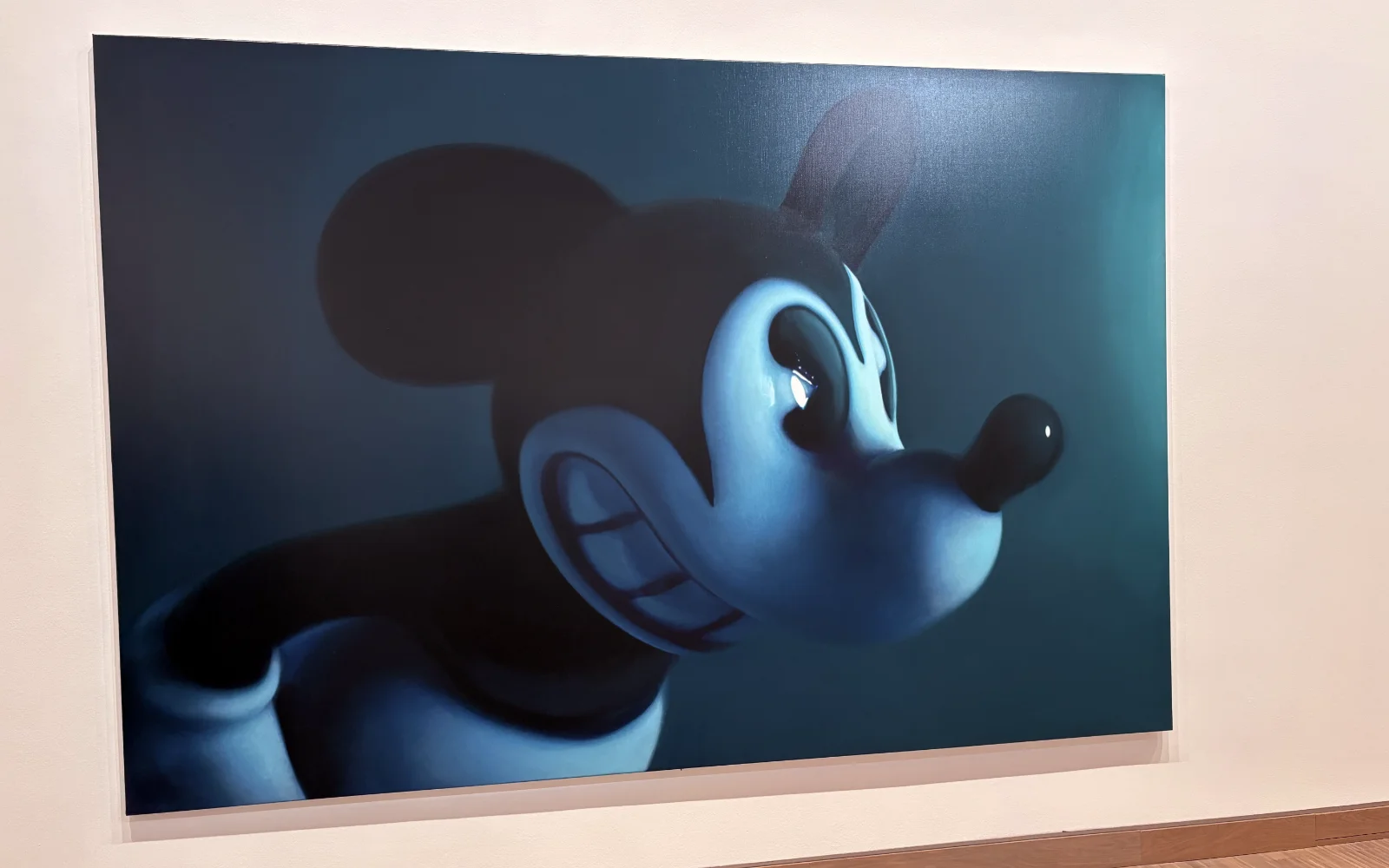
Helnwein's Mickey: A diagnostic mirror of modern visual
culture.
KAWS, the professional name of New York-based artist Brian Donnelly, is a global phenomenon who blurred the lines between fine art, street culture, and commercial design. He originally started his career as a graffiti artist subvertising bus shelters and phone booths. He eventually transitioned into a powerhouse of the contemporary art world, creating everything from vinyl toys to monumental sculptures.
His work is characterized by a playful yet subversive use of pop culture icons, often reimagining them with his signature "X" eyes and exaggerated features.
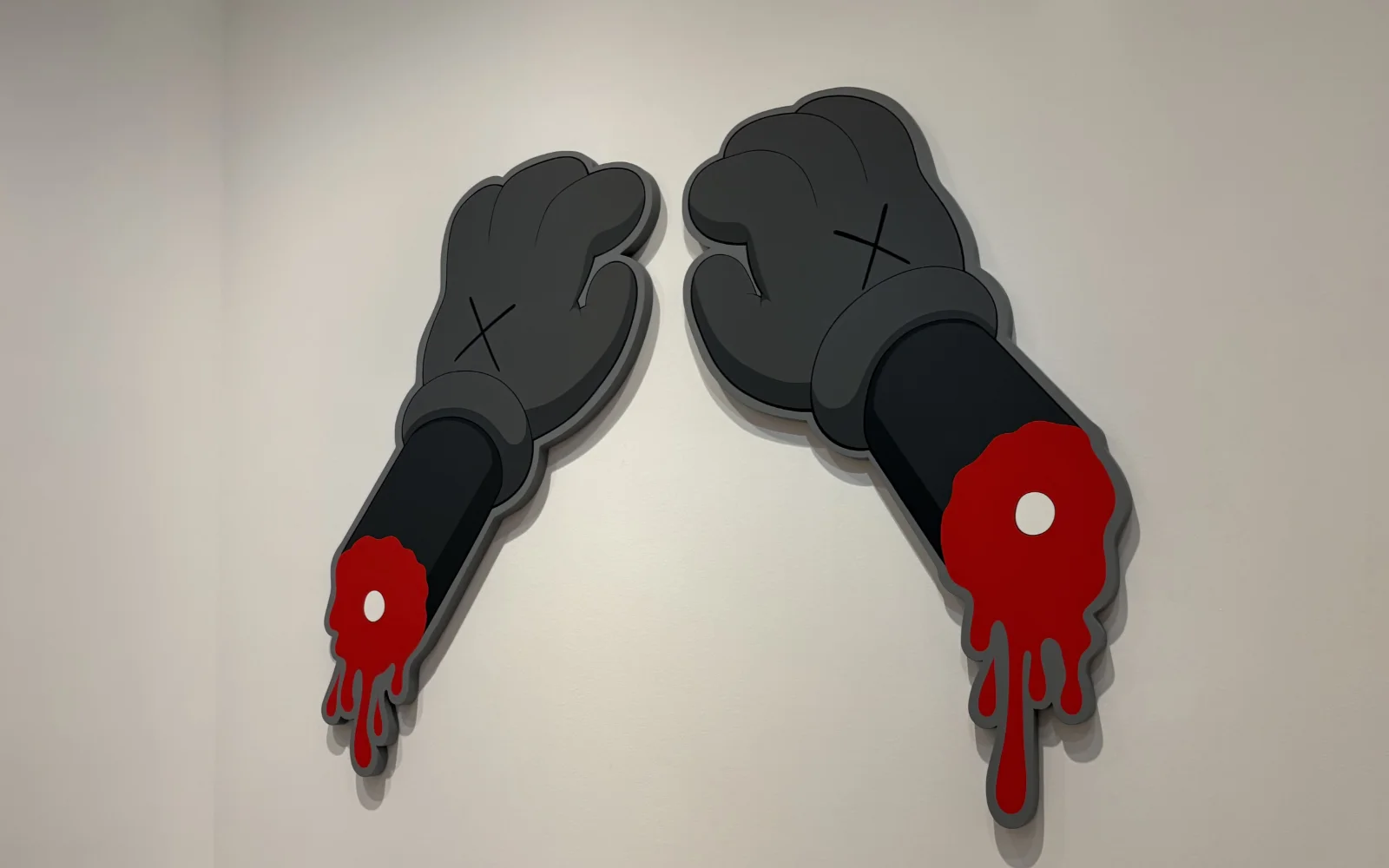
Exploring the expressive gestures of comic icons.
The COMPANION is the crown jewel of the KAWS universe. It acts as a subversive, "dystopian" remix of pop culture iconography. Born from a 1999 collaboration in Japan, this skull-and-crossbones figure with signature "X" eyes has evolved from a vinyl toy into a global monument of contemporary art.
In the context of this exhibition, the COMPANION acts as a bridge between street culture and the museum. While its body mimics the joyful curves of a classic cartoon, its posture is often slumped in melancholy or shielding its eyes, transforming a commercial mascot into a deeply human symbol of vulnerability and isolation.
By placing it alongside masters like Haring and Basquiat, the exhibition highlights how KAWS has successfully turned the language of the "collectible" into a profound reflection on the modern soul and the modern art market.
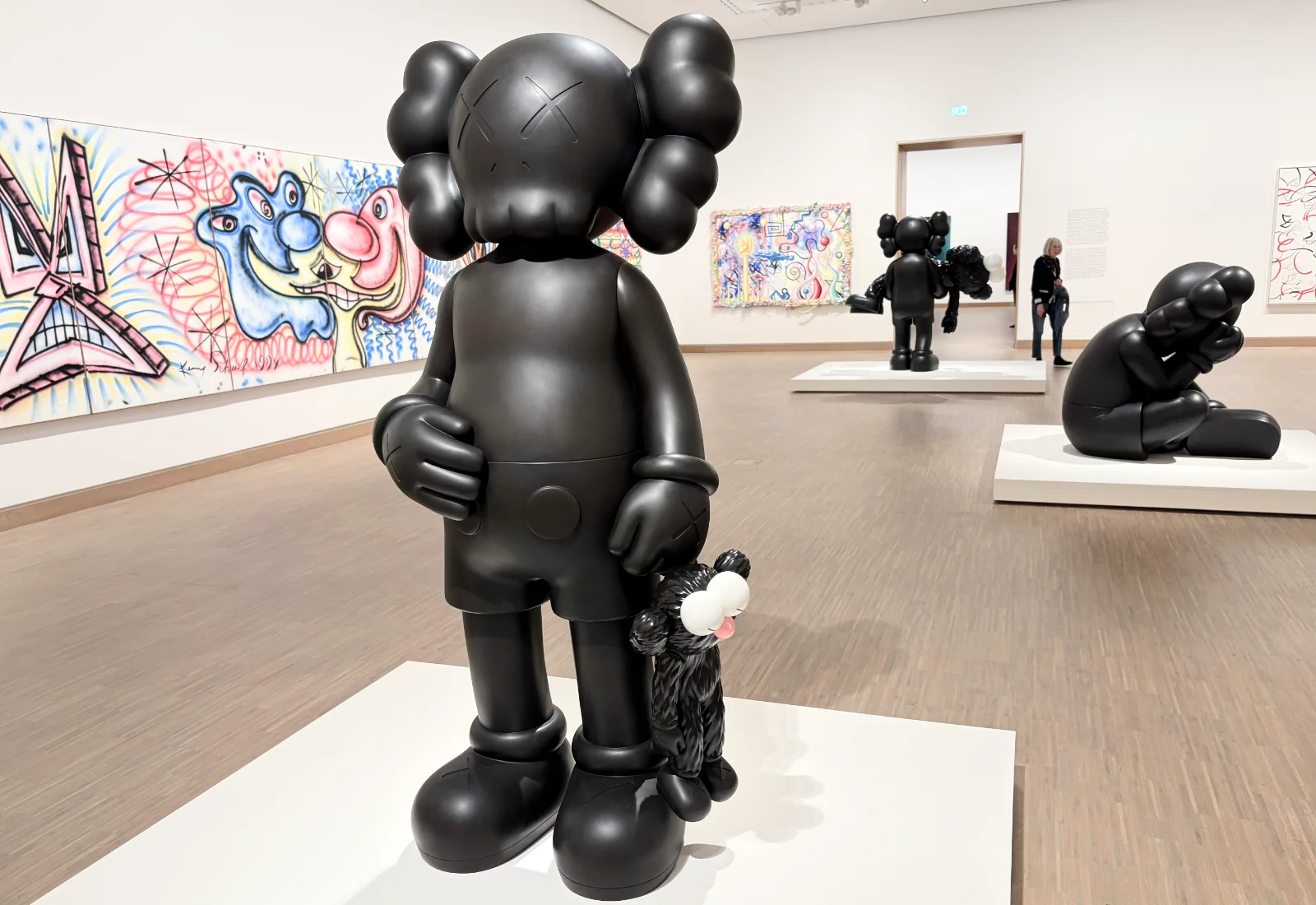
A triptych of cultural obsession with the COMPANIONs by
KAWS.
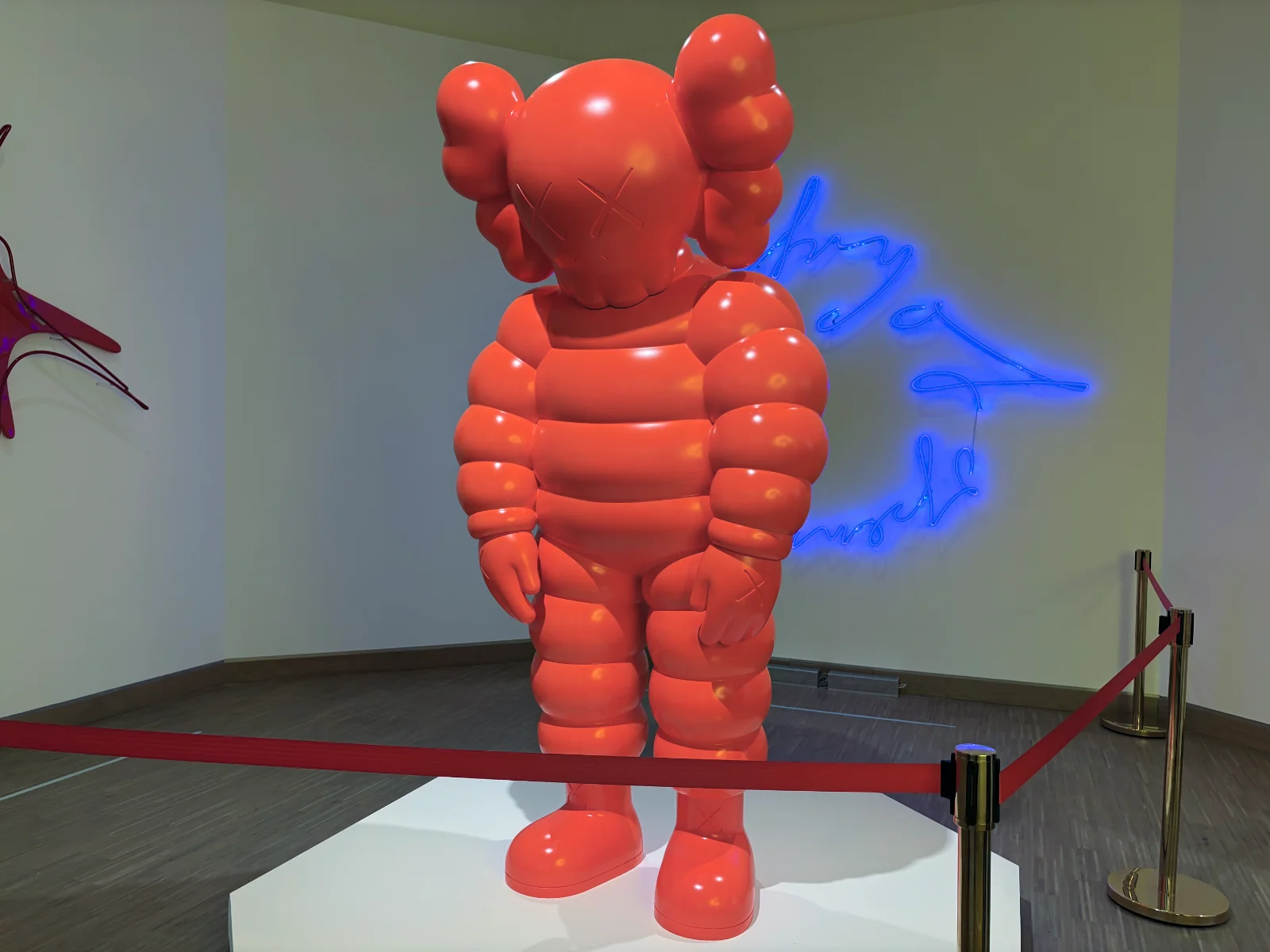
KAWS's COMPANION in red.
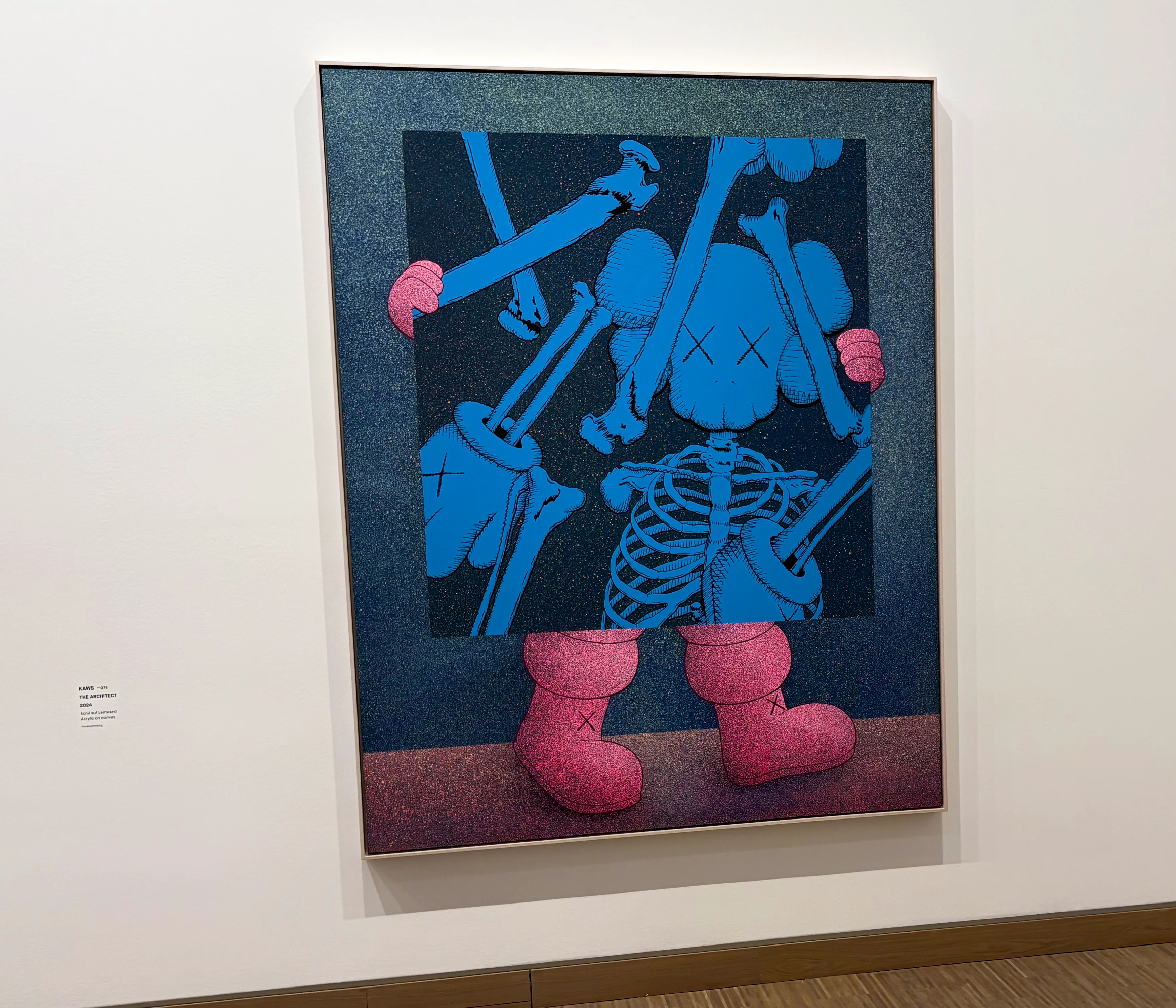
"The Architect": A recent painting by KAWS which harks back to
his earlier graffiti works.
The curators at Albertina Modern decided to juxtapose the sculpture TIME OFF, which features his BFF character in a reclining pose with the Pink Panther by Katherine Bernhardt. This is a direct nod to the classical art-historical tradition of the Venus, using pop-cultural bodies to reflect on ancient aesthetic poses.
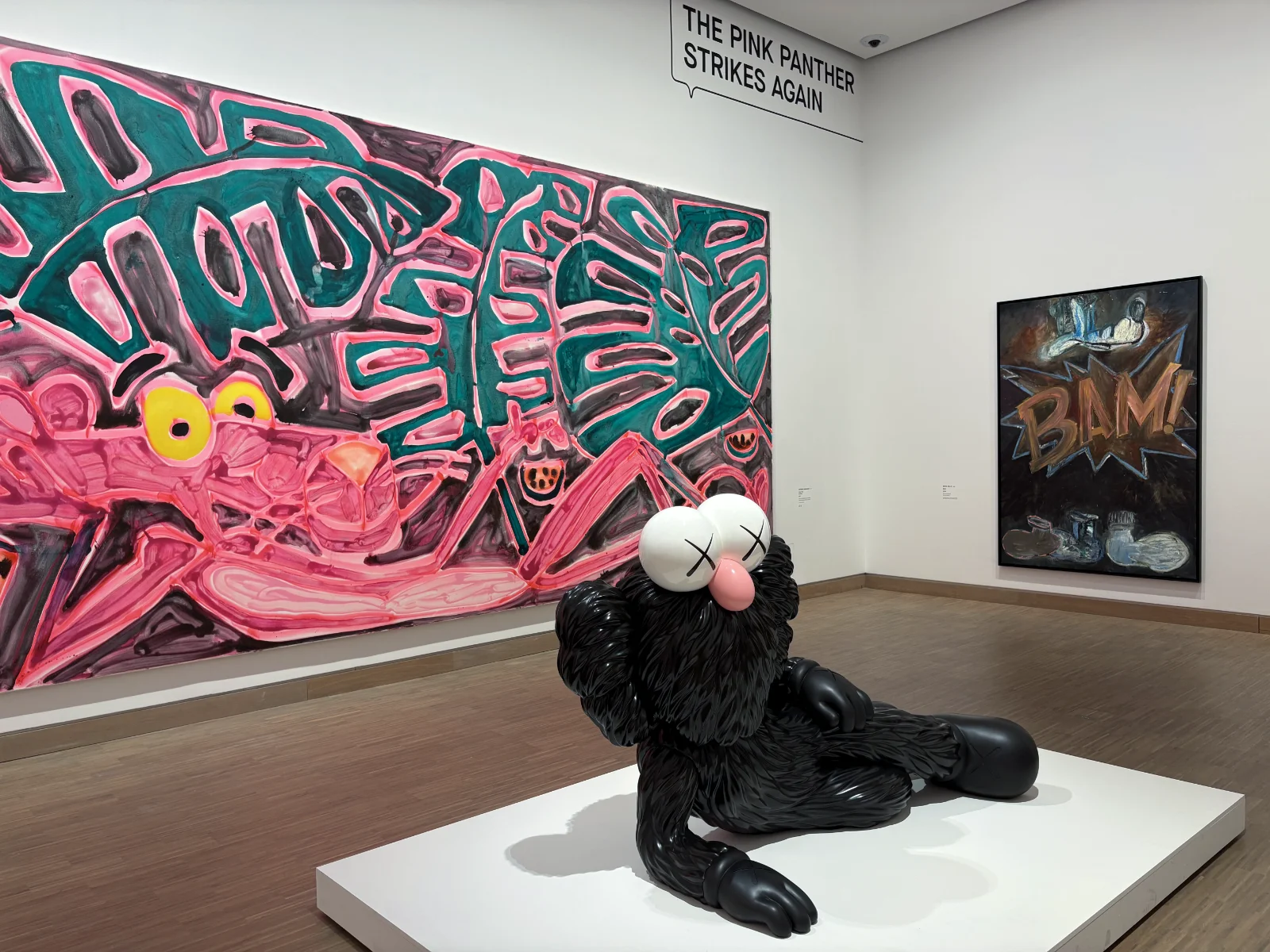
Katherine Bernhardt's neon Pink Panther strikes the same Venus
pose as KAWS's BFF sculpture.
The Beauty of Sketches: Michaela Konrad's Intimate Yet Commercial Comic Language
In contrast, the comic pencil sketches by Michaela Konrad felt remarkably intimate to me even though her drawings were modelled after commercial art. The sketches highlighted the "graphic impulse" and the immediacy of drawing on paper.
I found her work so compelling that I ended up buying her book Embrace the Future at the shop to dive deeper into her narrative world.
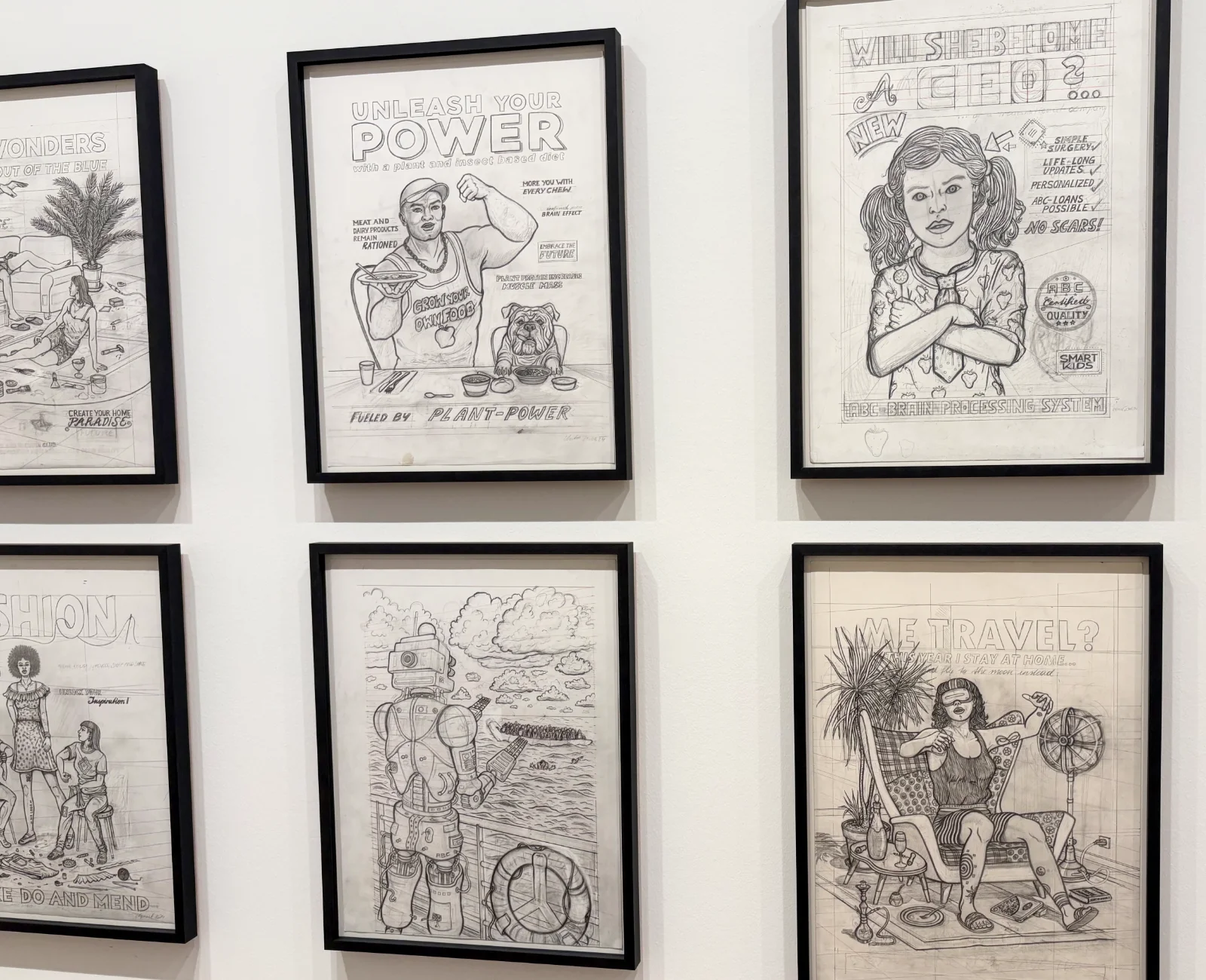
Intimate details of Konrad's drawing technique.
She exhibited the pencil stages of her work for the book. In it she develops a fictional image campaign. According to the Albertina Modern's description this campaign approaches the future as "a mirror of current ideologies". In her drawings and prints she uses the visual language of advertising to reveal its strategies of seduction and persuasion.
The pencil outlines were work stages for the final pieces she printed in Embrace the Future.
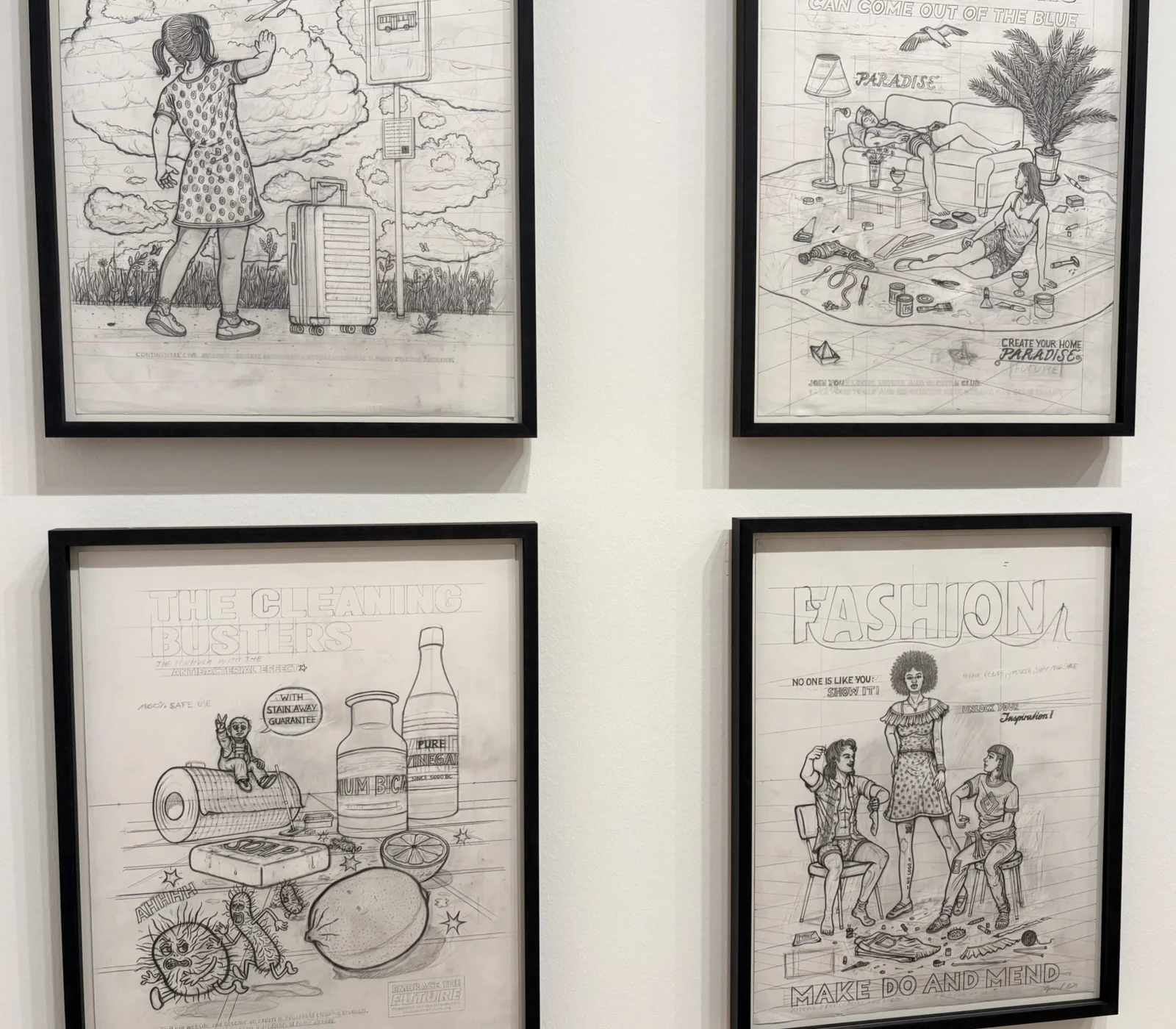
The rhythm and line of the comic language.
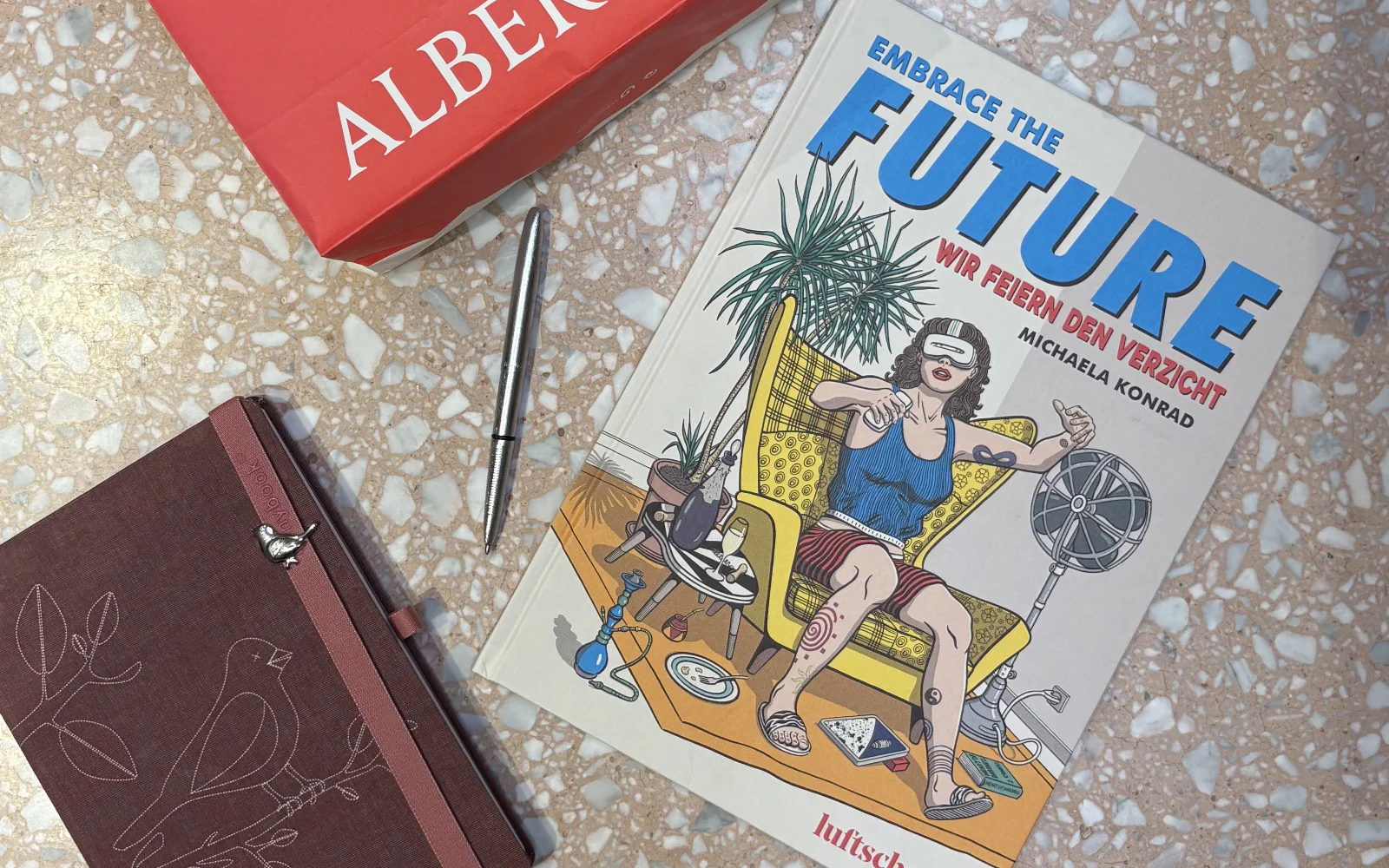
Compelling visual narratives in Michaela Konrad's book.

Every one of Michaela Konrad's sketches tells a story.
More Impressions
This part of the exhibition felt like a rapid-fire collage of comic energy, moving from Kenny Scharf's bright, playful surfaces and Keith Haring's public-symbol language to the raw intensity of Joyce Pensato, Eliza Douglas, and Sue Williams. Alongside Peter Saul, Blalla W. Hallmann, and the framed comic panels, these works show how cartoon imagery can shift from pop fun to satire, critique, and cultural memory in a single room.
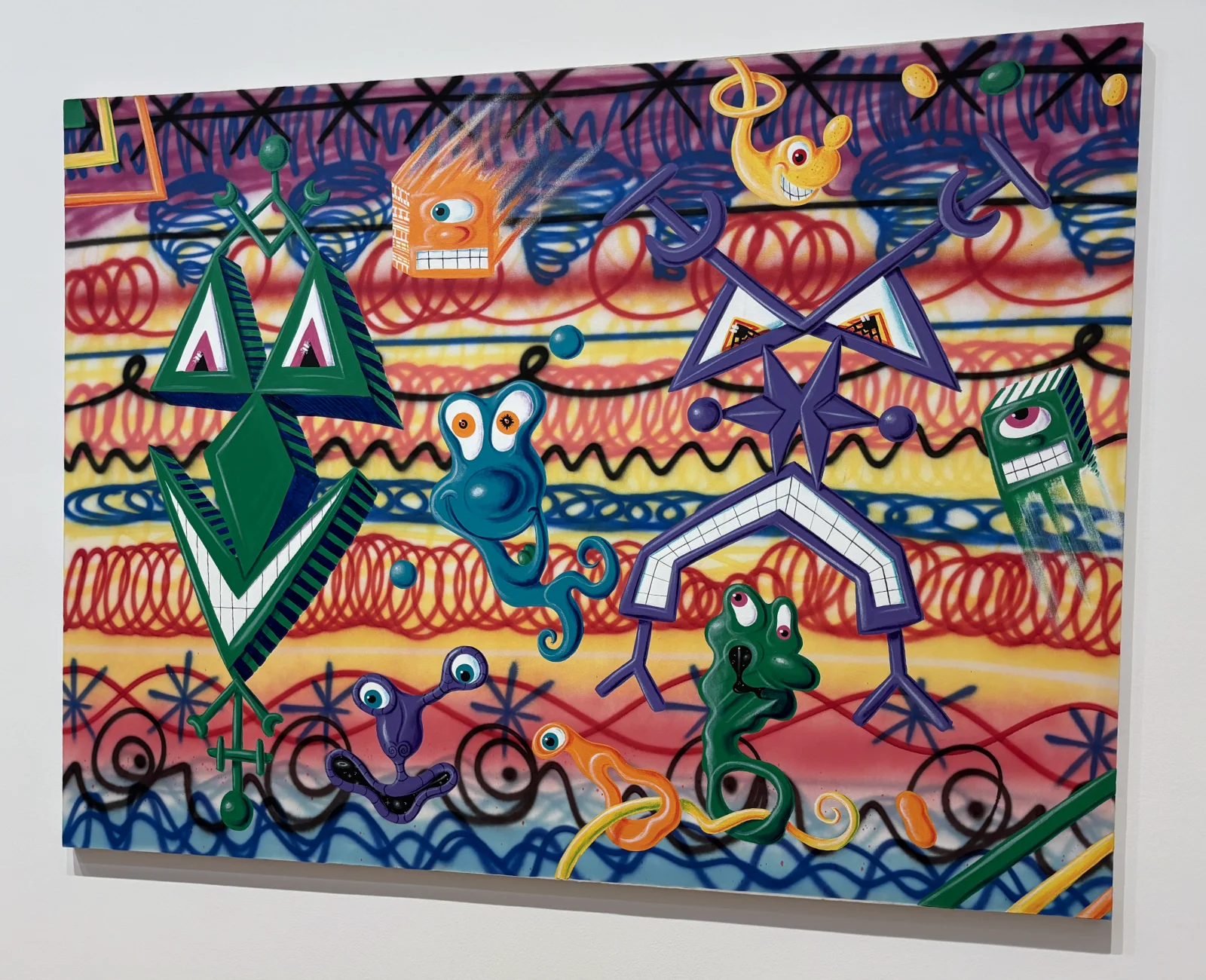
Kenny Scharf's vibrant, comic-inspired street aesthetics.
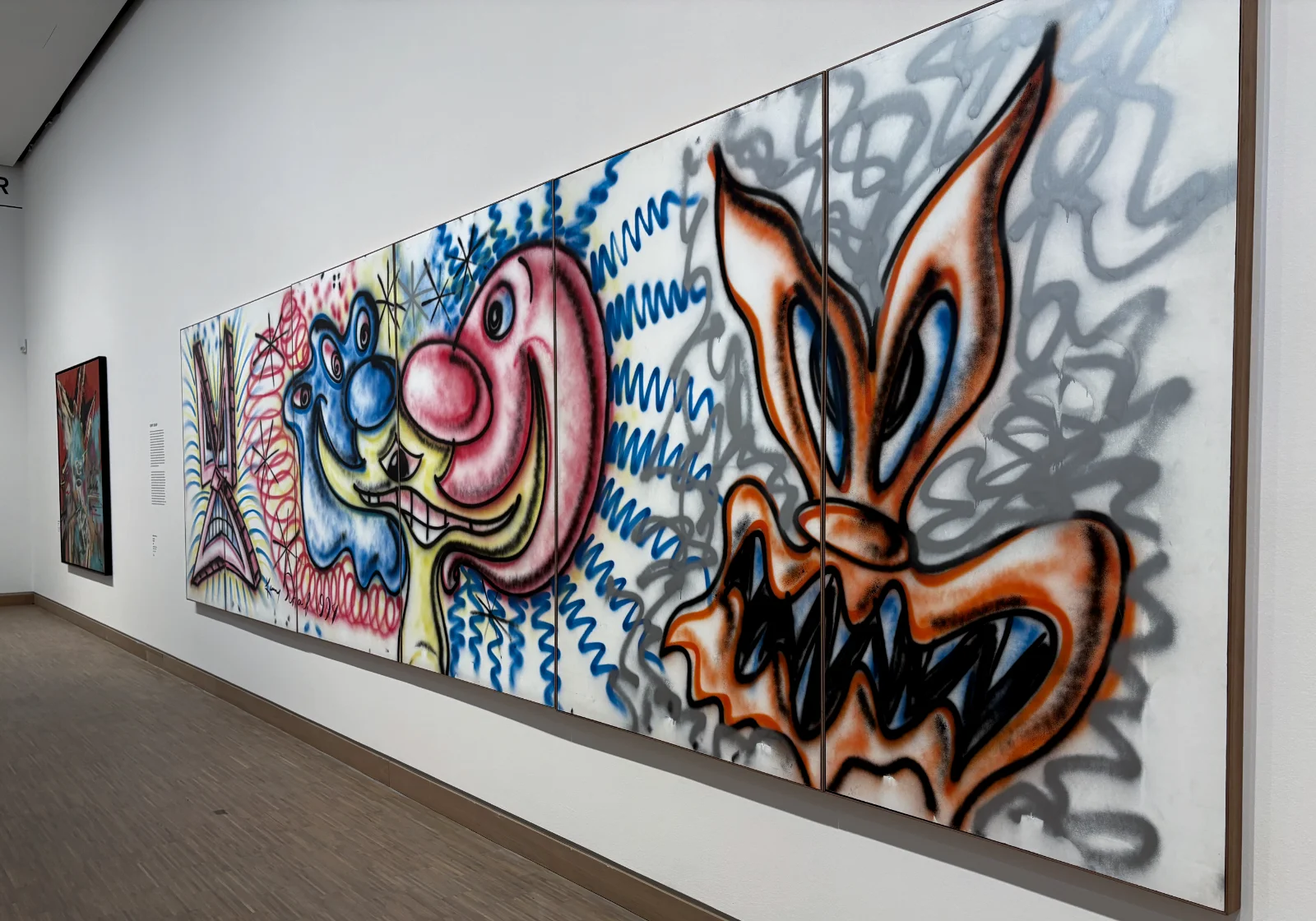
Playful engagement with cartoon imagery.
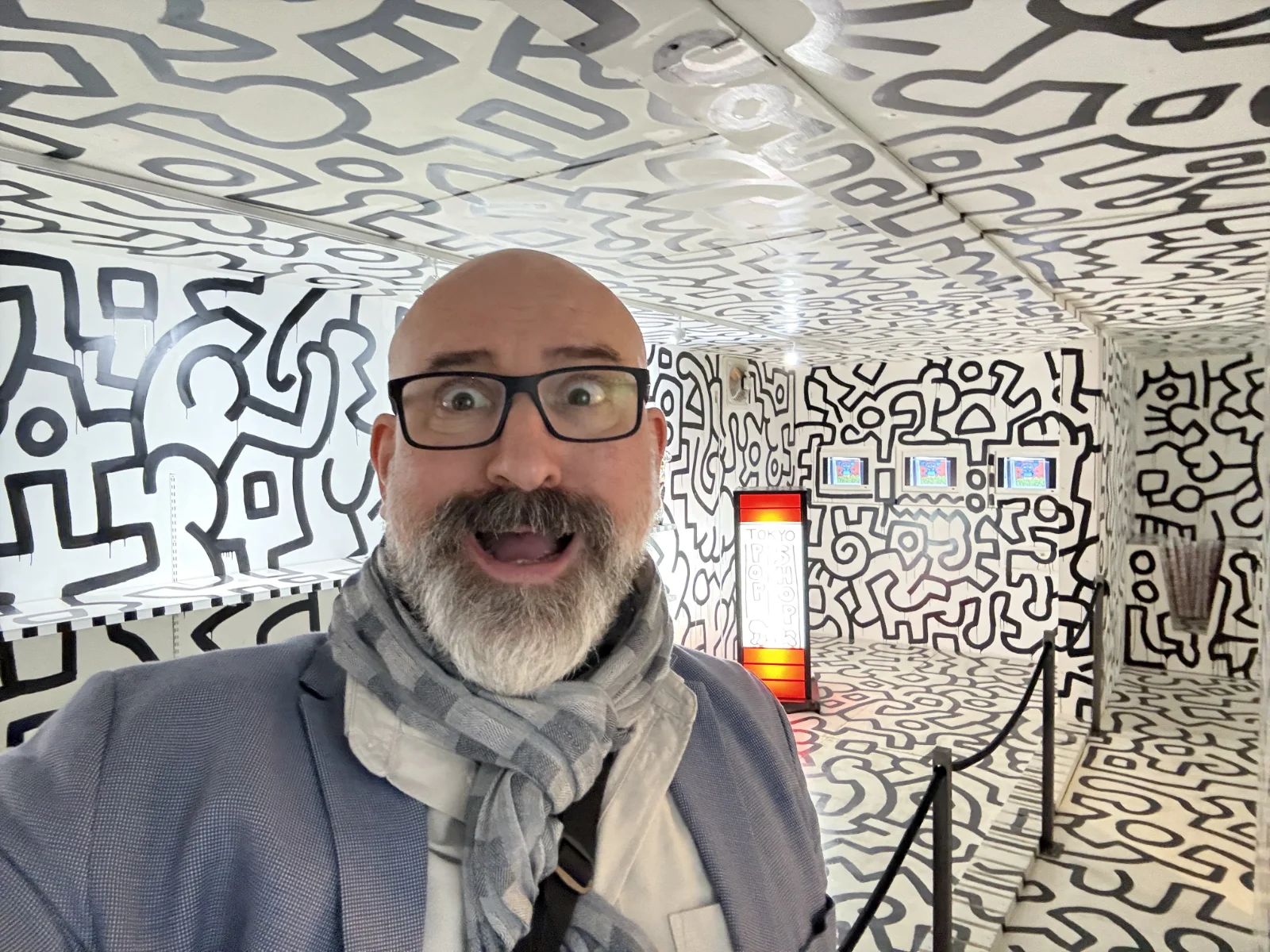
Keith Haring's "Tokyo Pop" and the anti-elitist "Pop Shop"
ethos.
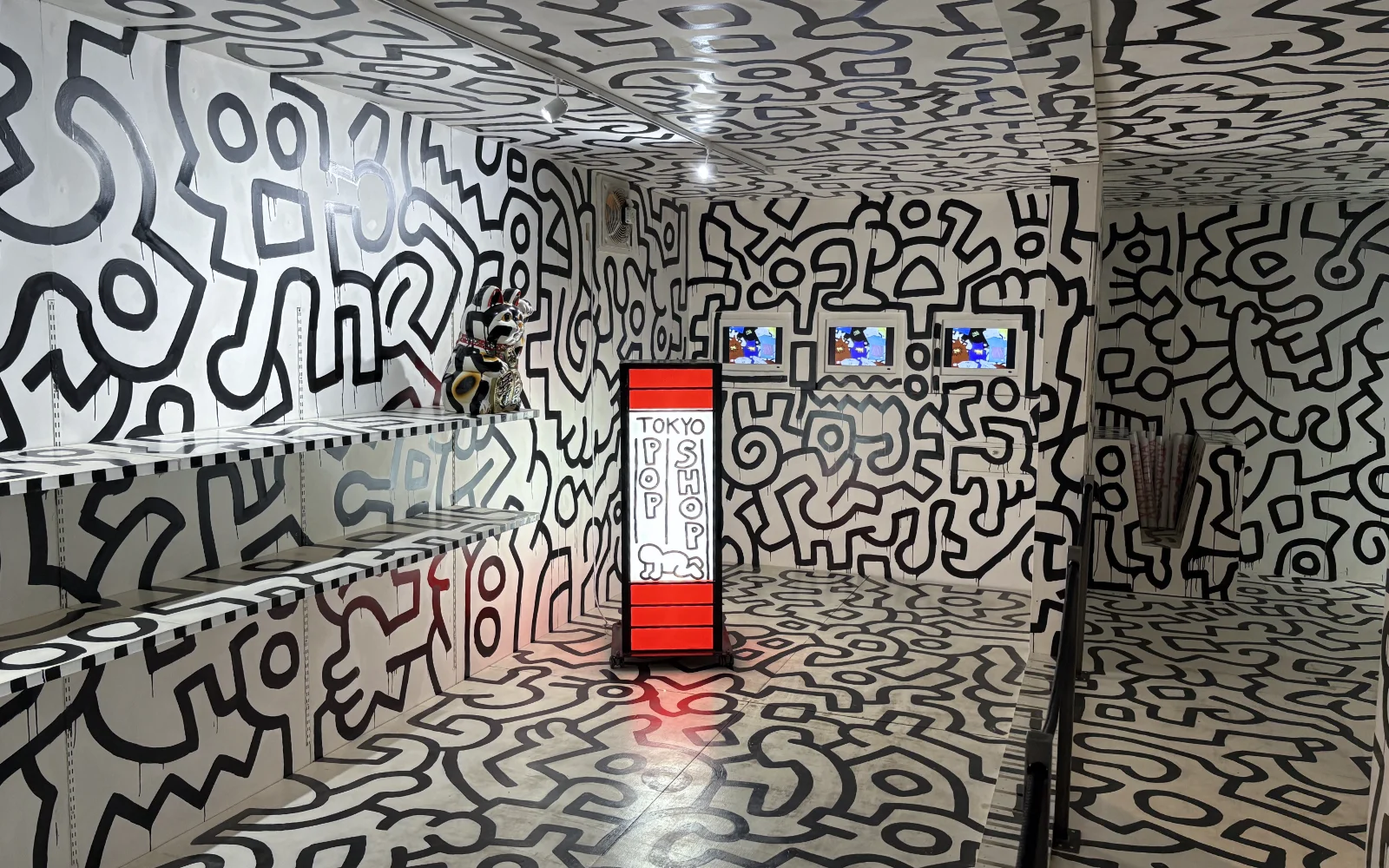
Haring's recurring symbols: art for the public.
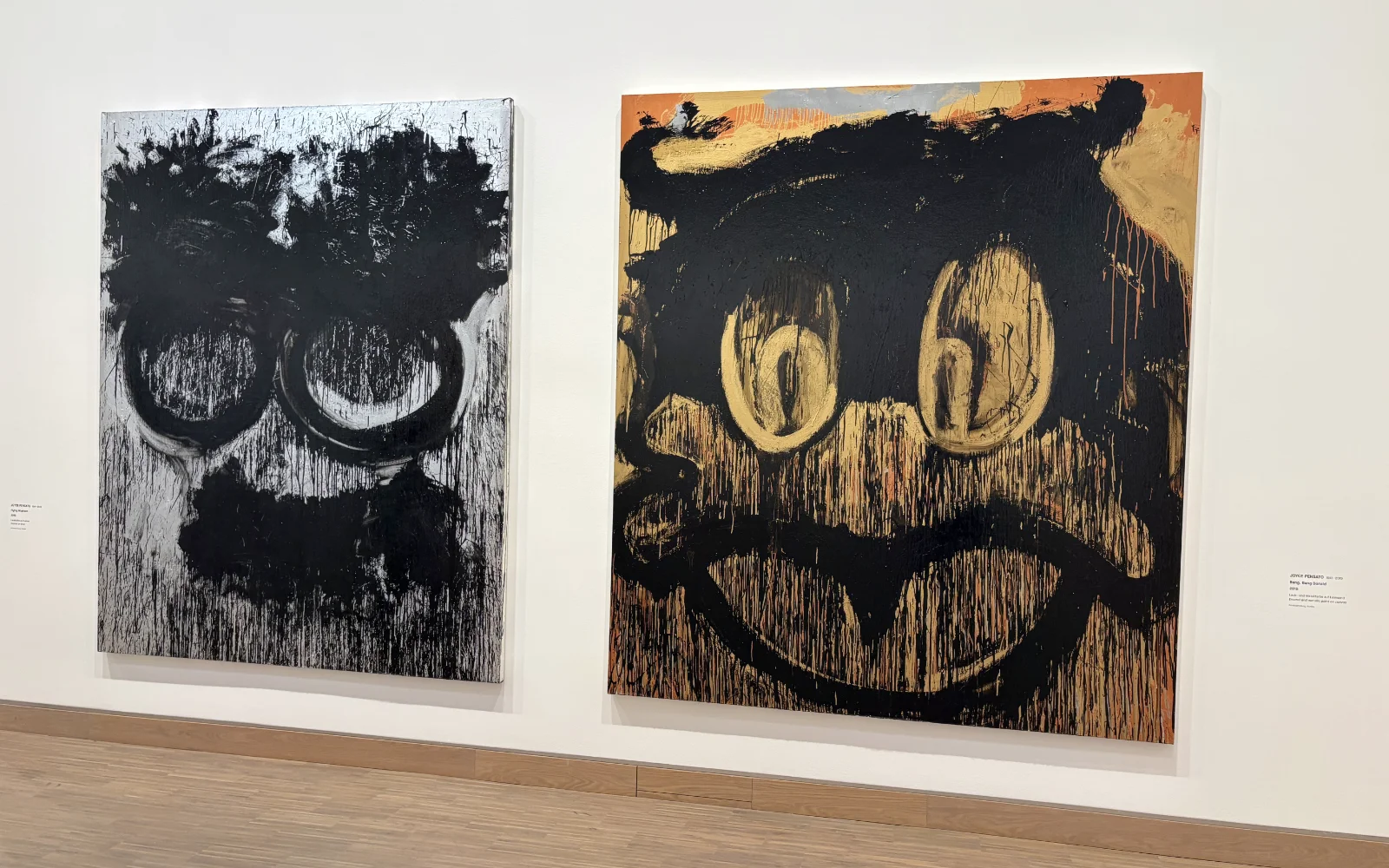
Joyce Pensato's expressive reductions of comic stories.
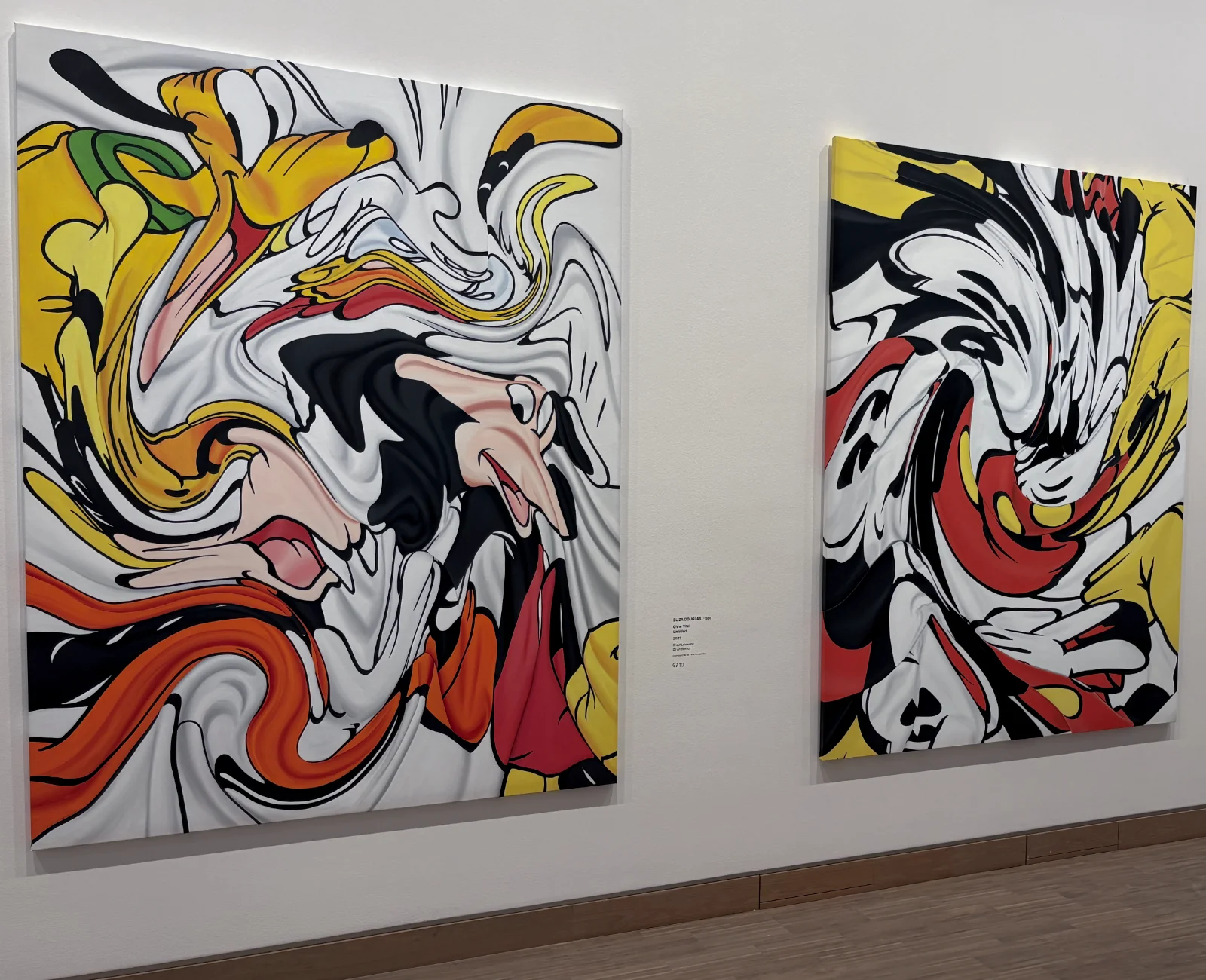
Eliza Douglas detaching characters from their original
narratives.
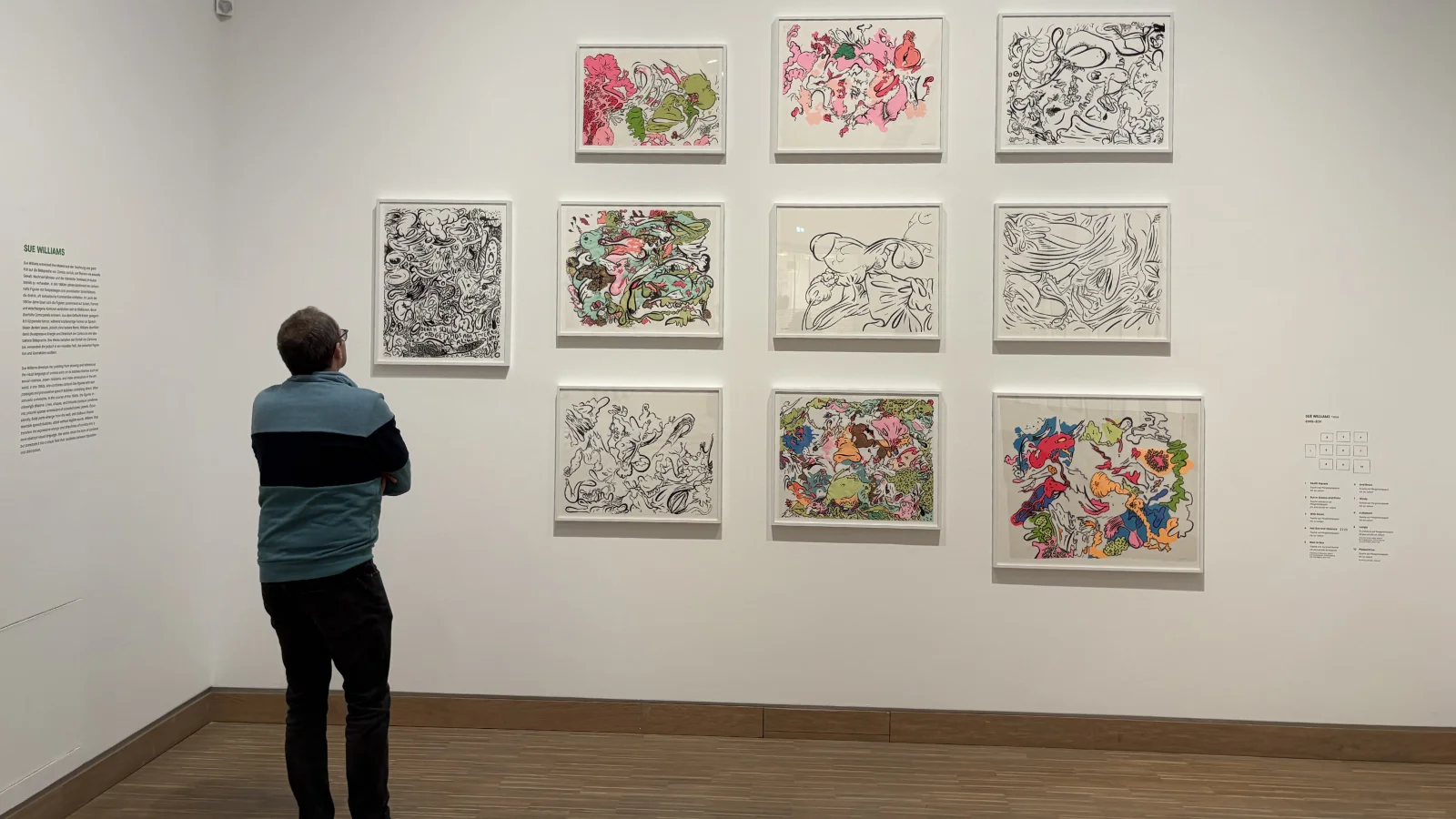
Sue Williams's contribution to the comic-fine art dialog.
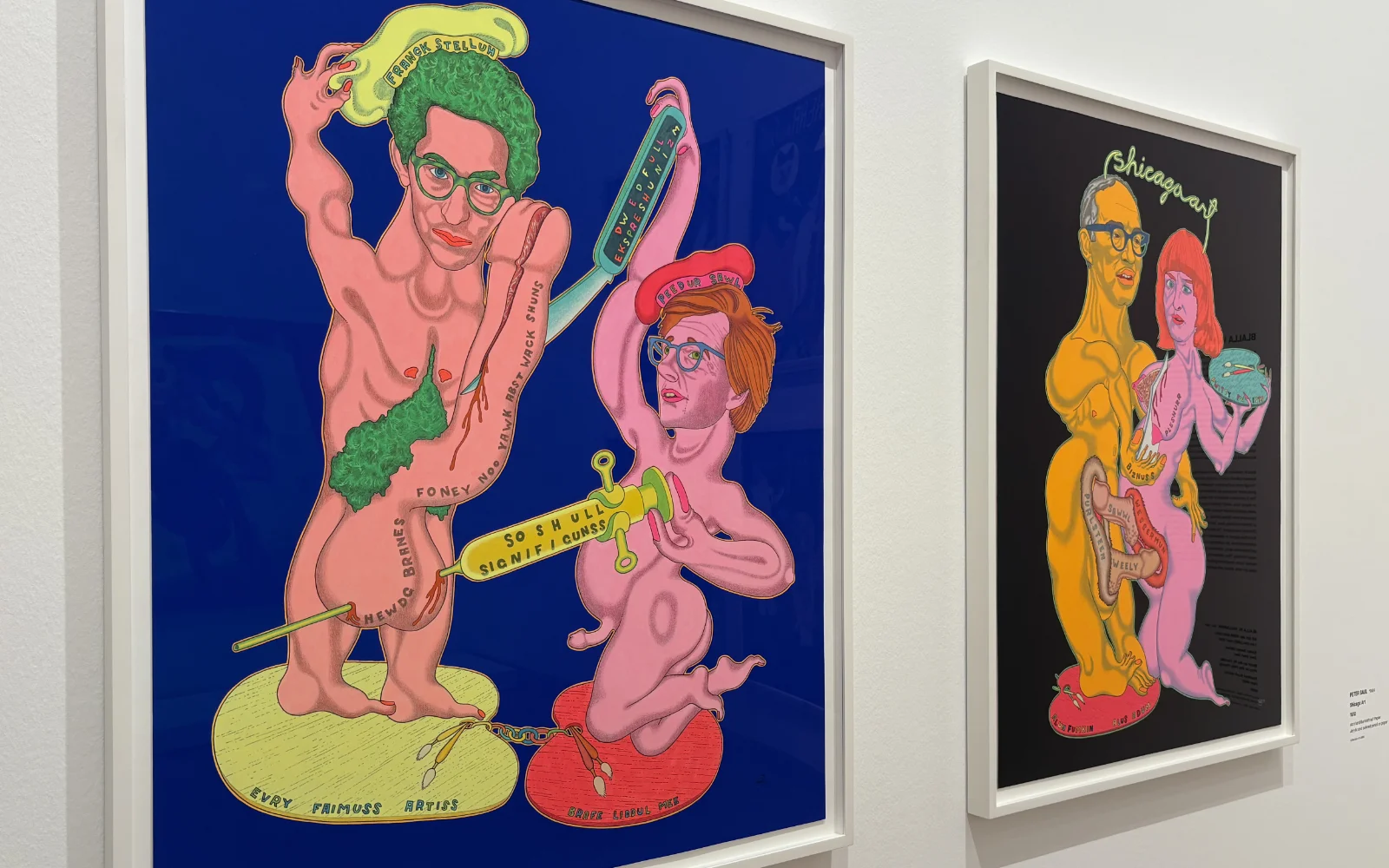
Peter Saul's provocative pop imagery.
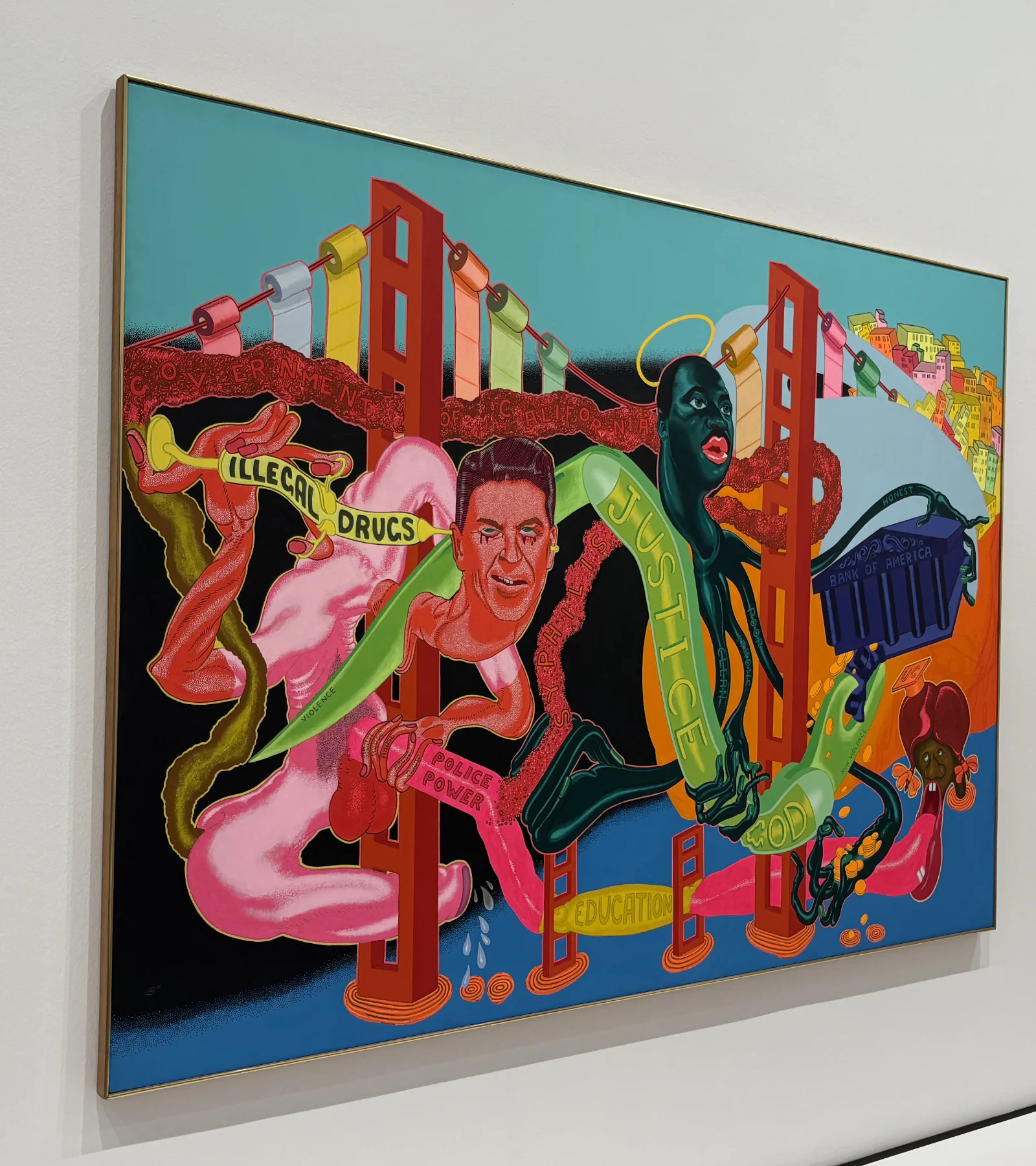
Another glance at Saul's unique style.
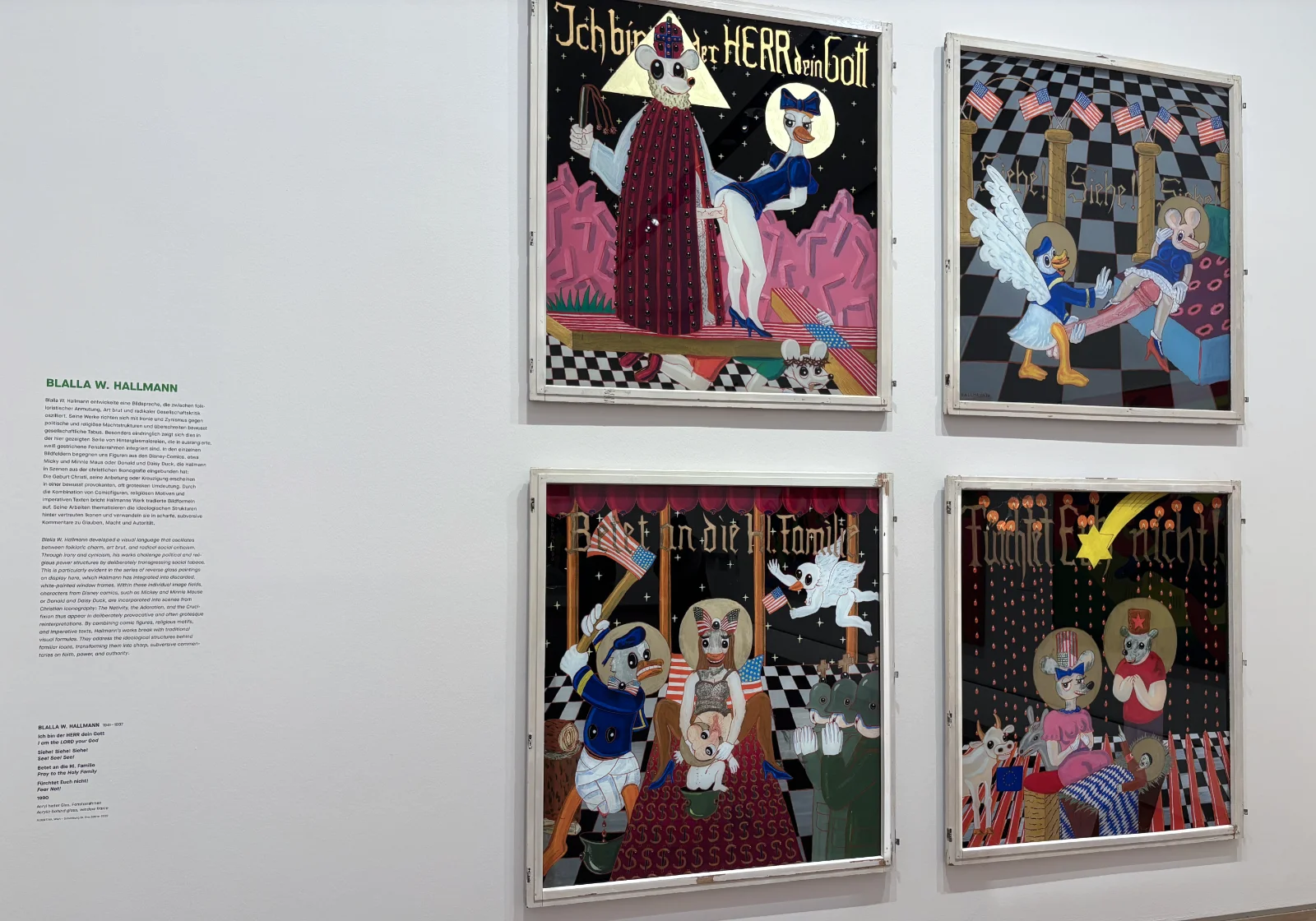
Reduced visual languages reminiscent of garish urban neon.
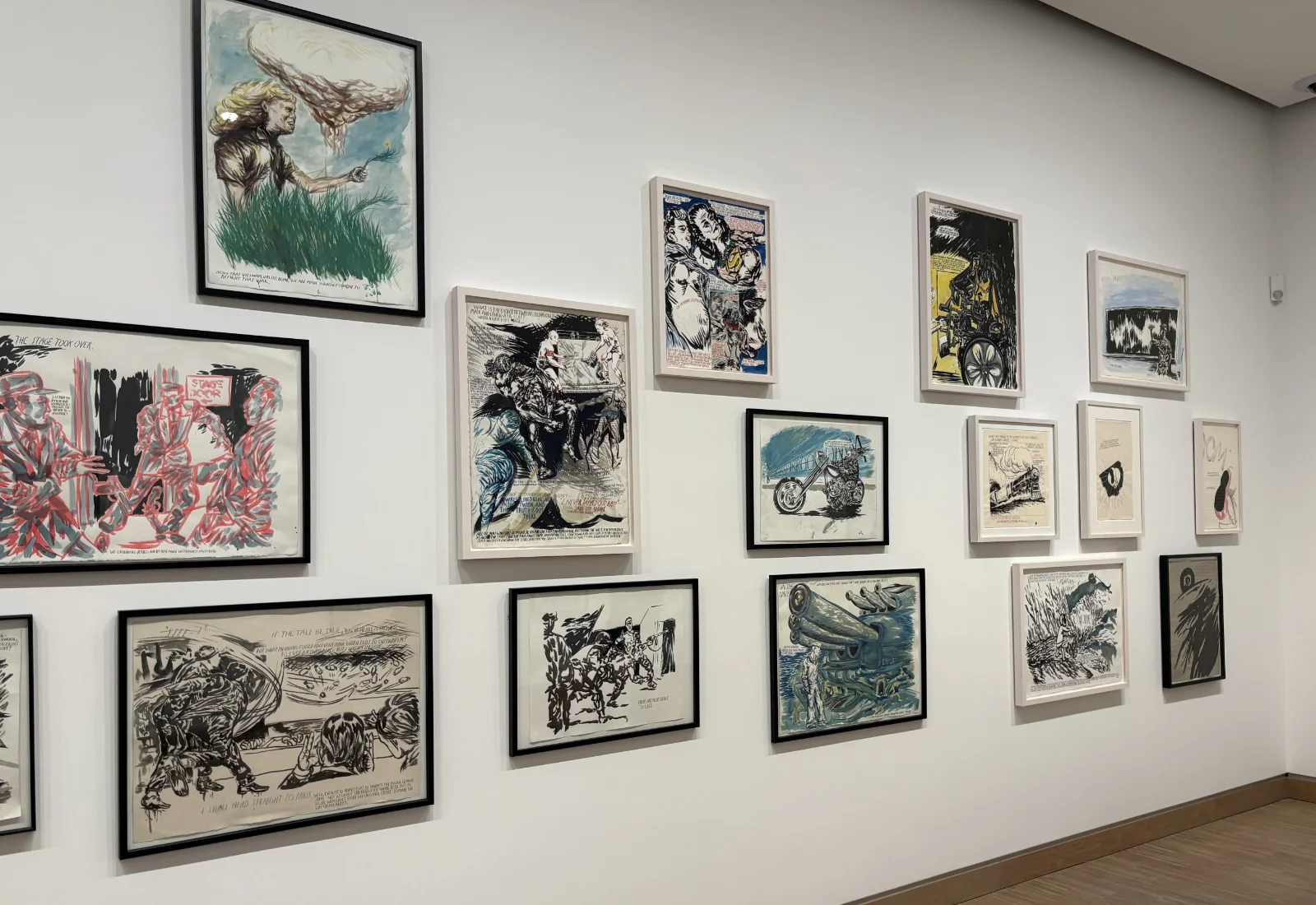
The interweaving of sequential panels and museum spaces.
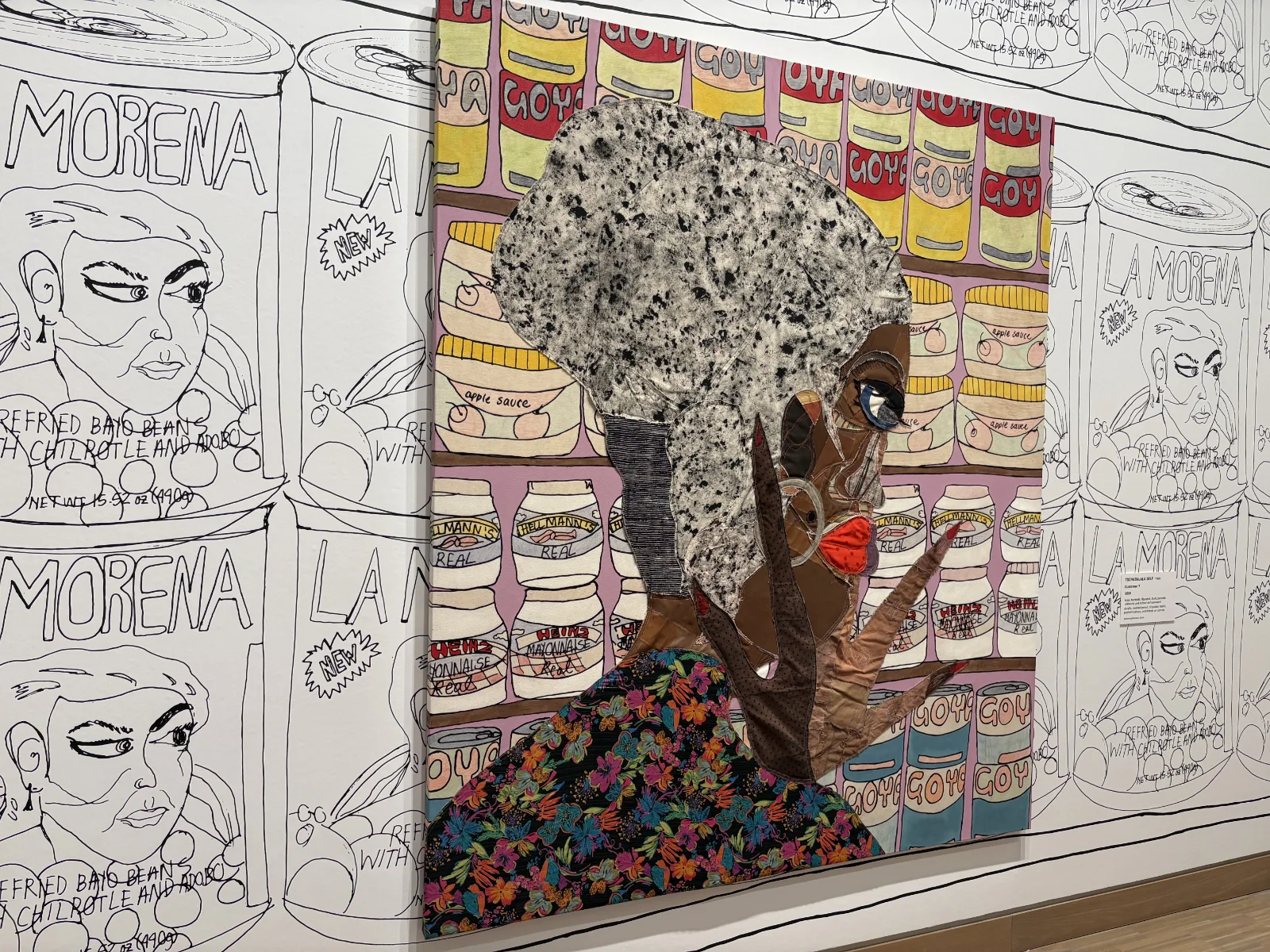
Contemporary comic-inspired works.
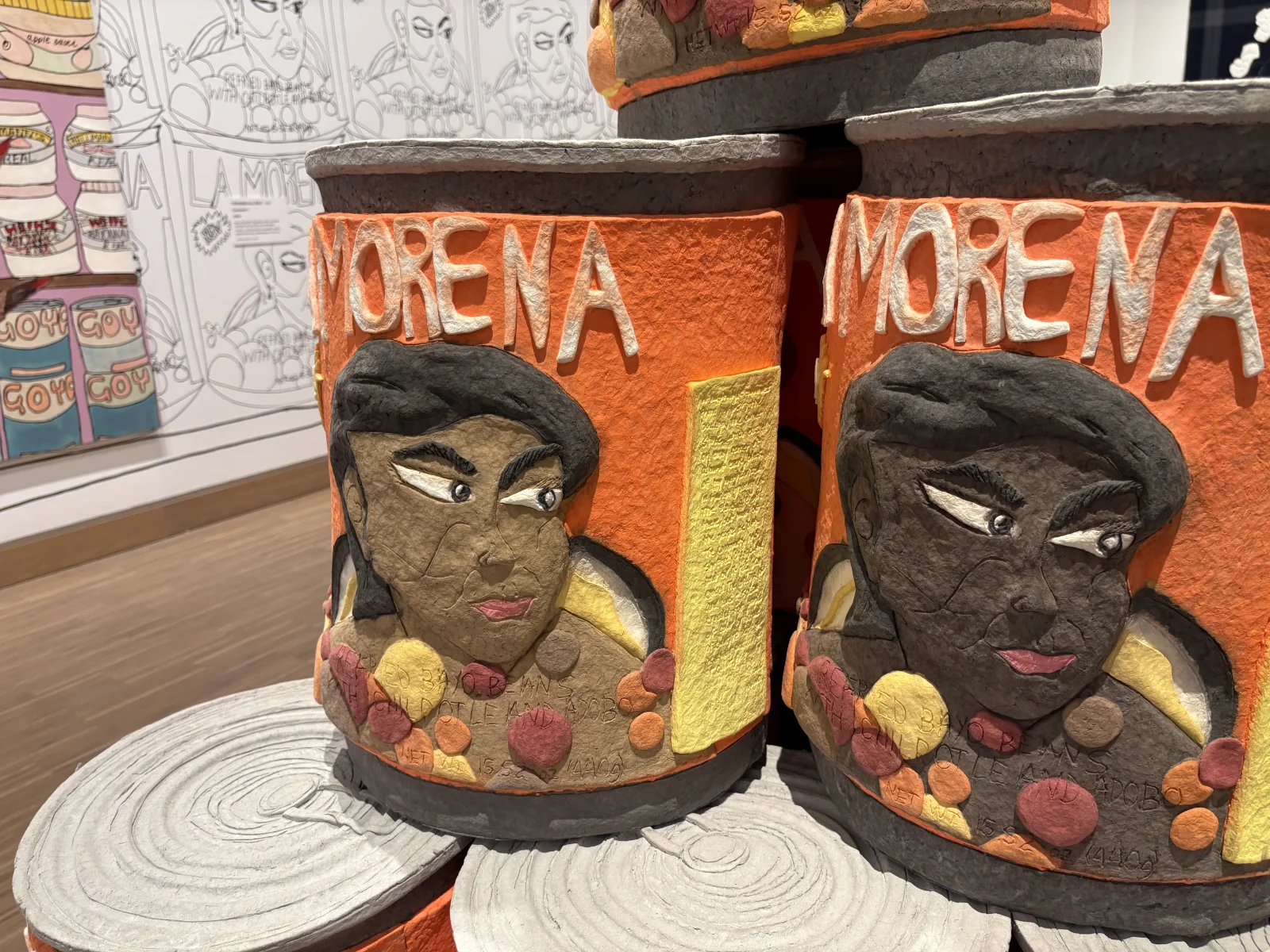
The final piece in the dialog.
The Ruckus Subway
One of the more memorable installations was the cartoonish Ruckus Subway Car that I stepped into. While it was a fun experience, I have to admit the construct creaked a lot under my 100kg weight! It was an interesting impression of the "ruckus" of urban life, and it was a bit like stepping into a comic book world and a time machine at the same time because it was created in 1976 by Red Grooms, Mimi Gross, and The Ruckus Construction Co.
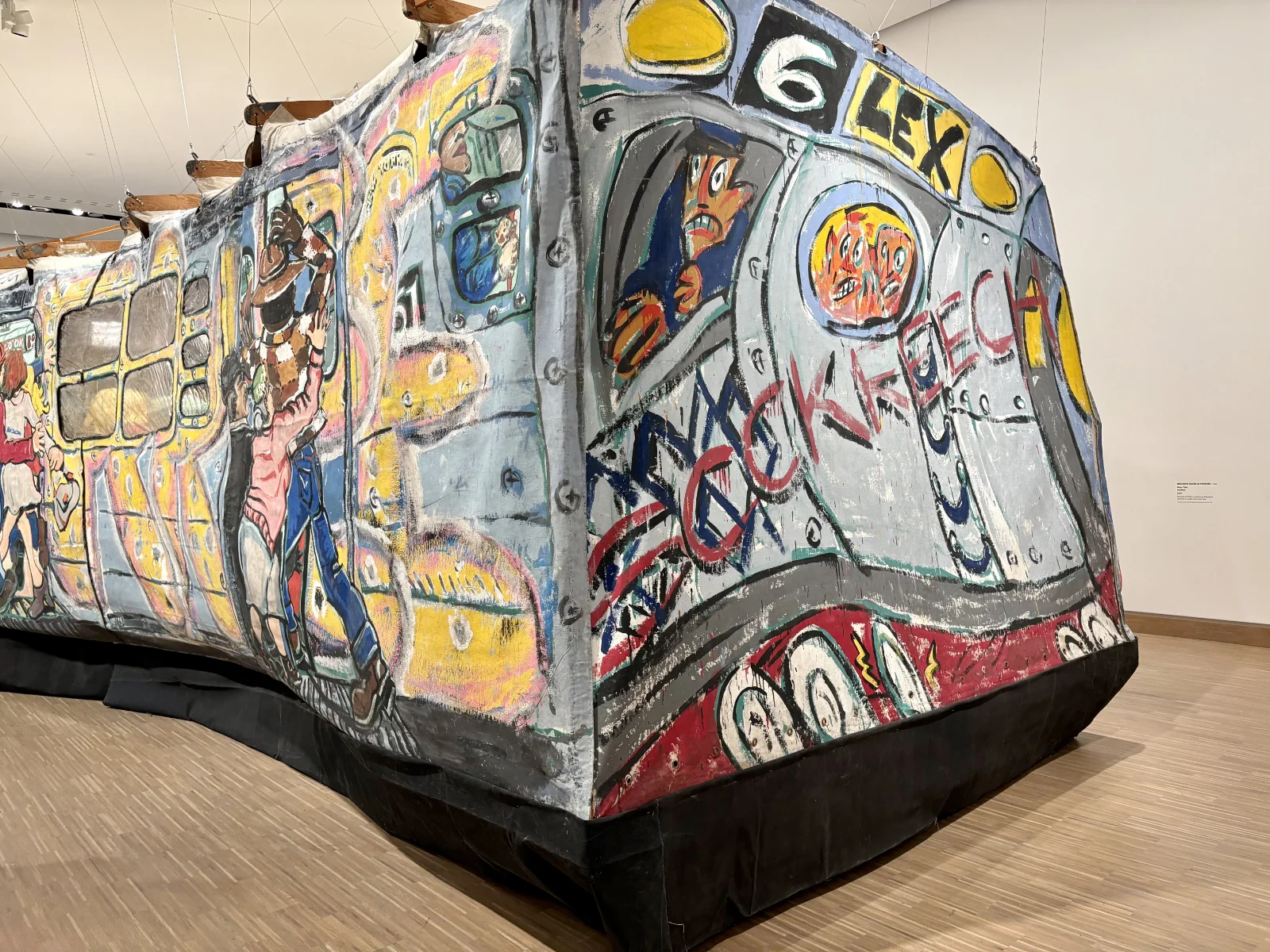
A three-dimensional comic you can physically inhabit.
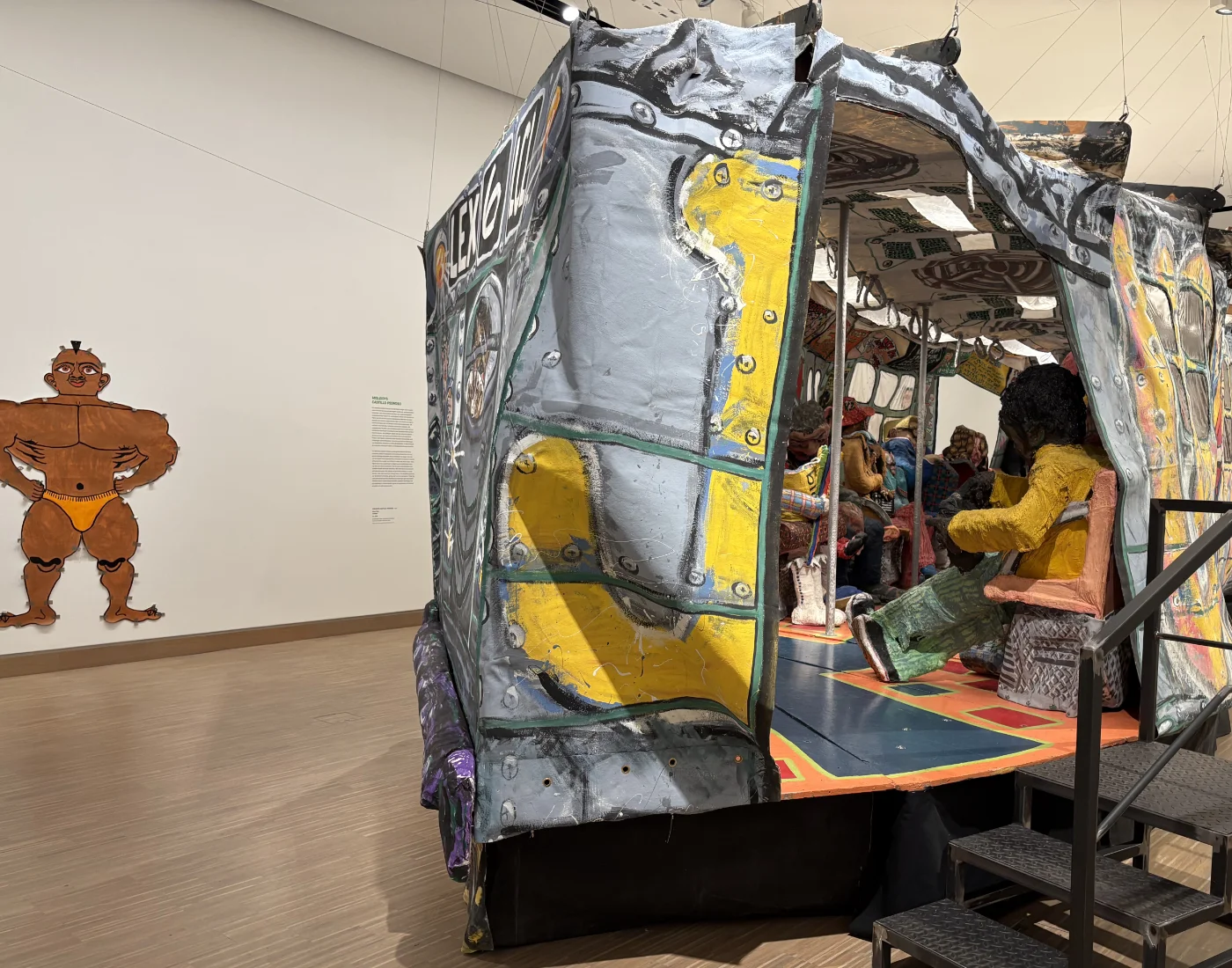
Inside the "Ruckus": Capturing the urban zeitgeist of the
70s.
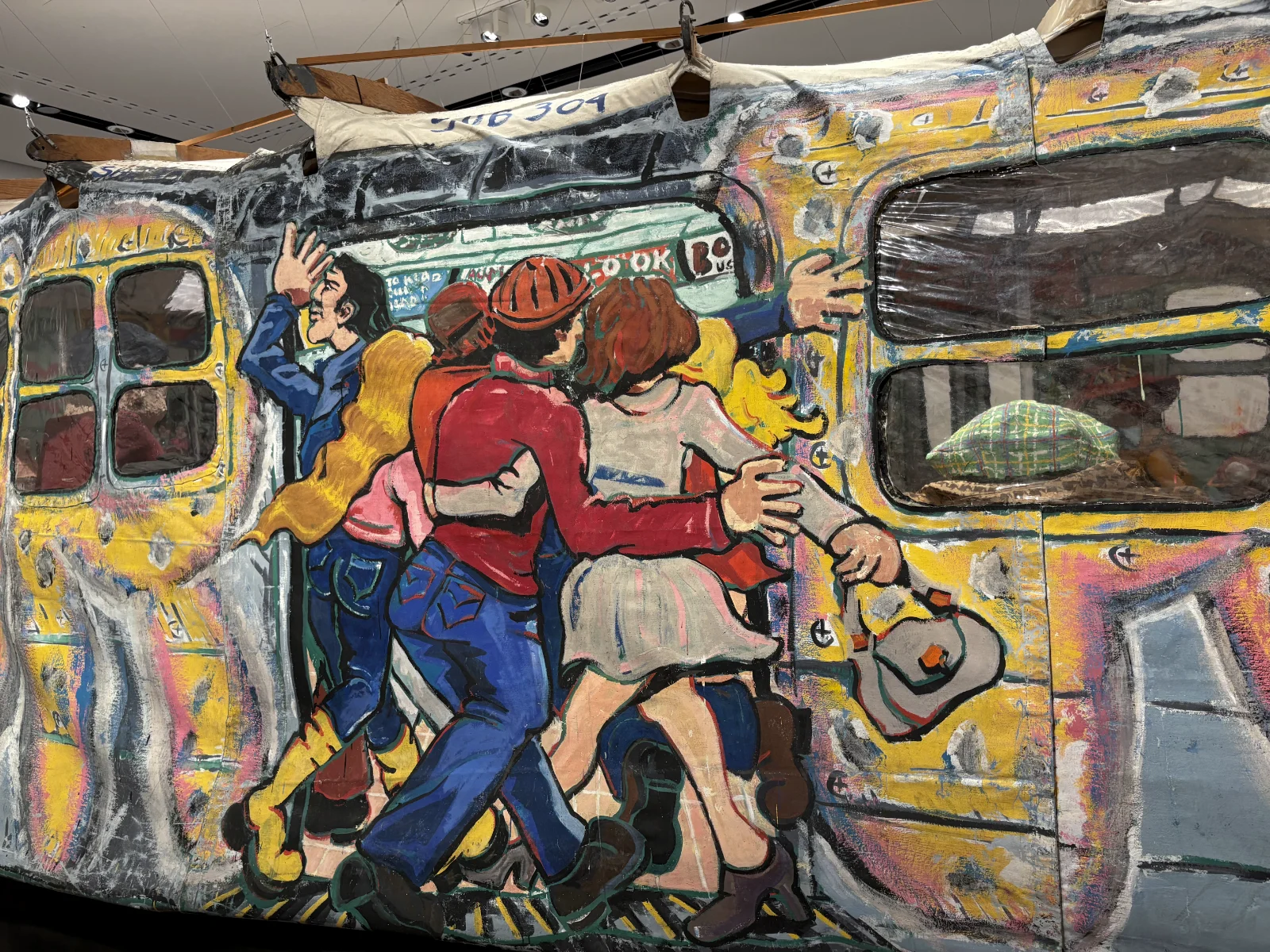
Exaggerated characters populate the wooden car.
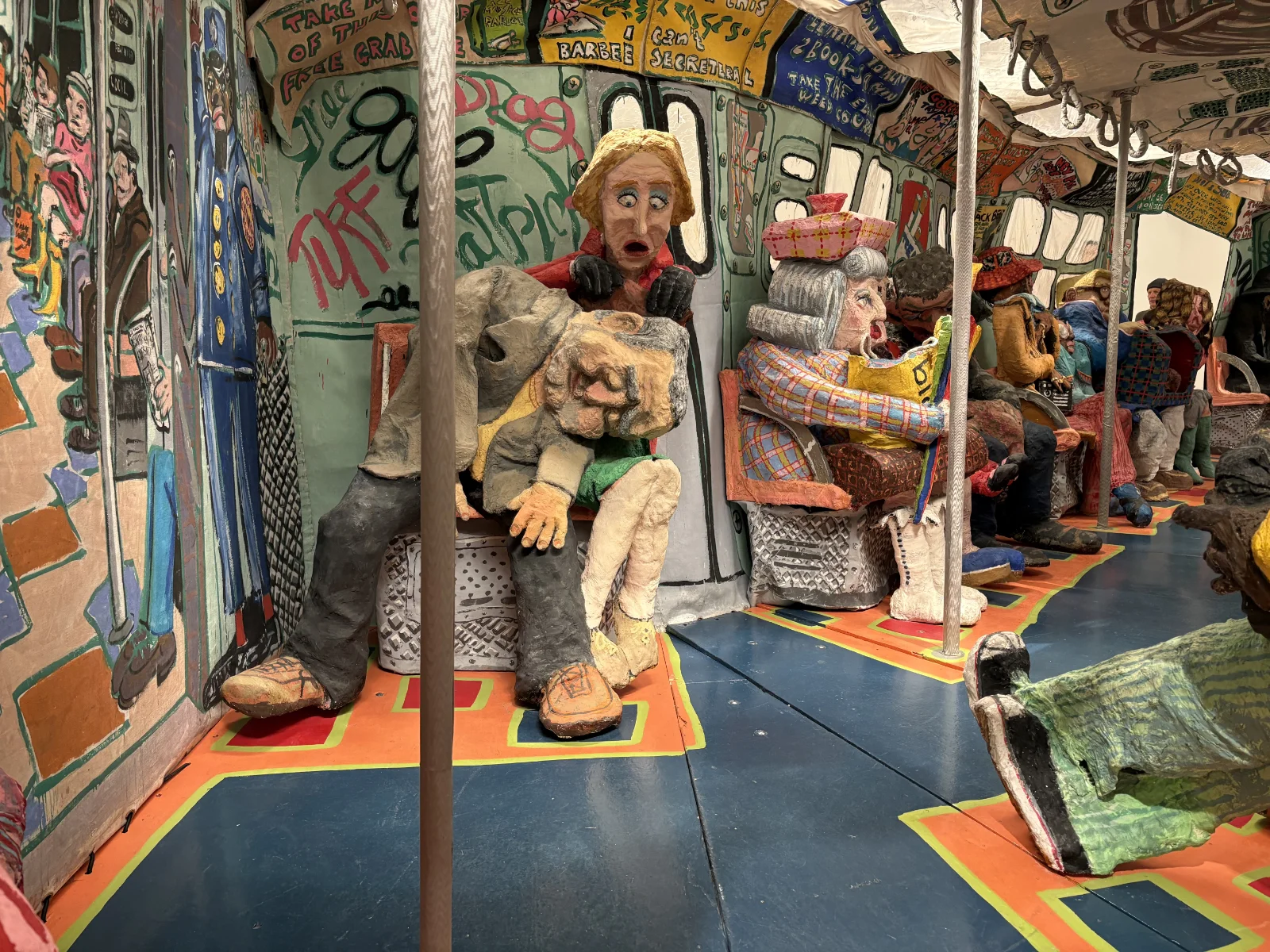
It creaked under my weight, but that only added to the "ruckus"
feel!
The installation invites visitors to "mind the gap"... not just in the subway, but the gap between fine art and comics that this exhibition successfully undermines. That's pretty deep!
Authenticity in the 'Comix'
Öyvind Fahlström's Meatball Curtain (for R. Crumb) stands as a vibrant, chaotic tribute to the spirit of underground comix. It was created in 1969 and acts as a "variable sculpture" with a psychedelic landscape of hanging, cut-out shapes that reflect the countercultural aesthetics of the wonderful Robert Crumb.
The piece functions like a theatrical backdrop of the absurd; it features a forest of bizarre, bulbous forms: the "meatballs". They are interspersed with fragmented imagery and satirical symbols that drift in space.
You are supposed to walk around it and see it in different perspectives so that it tells an interactive story.
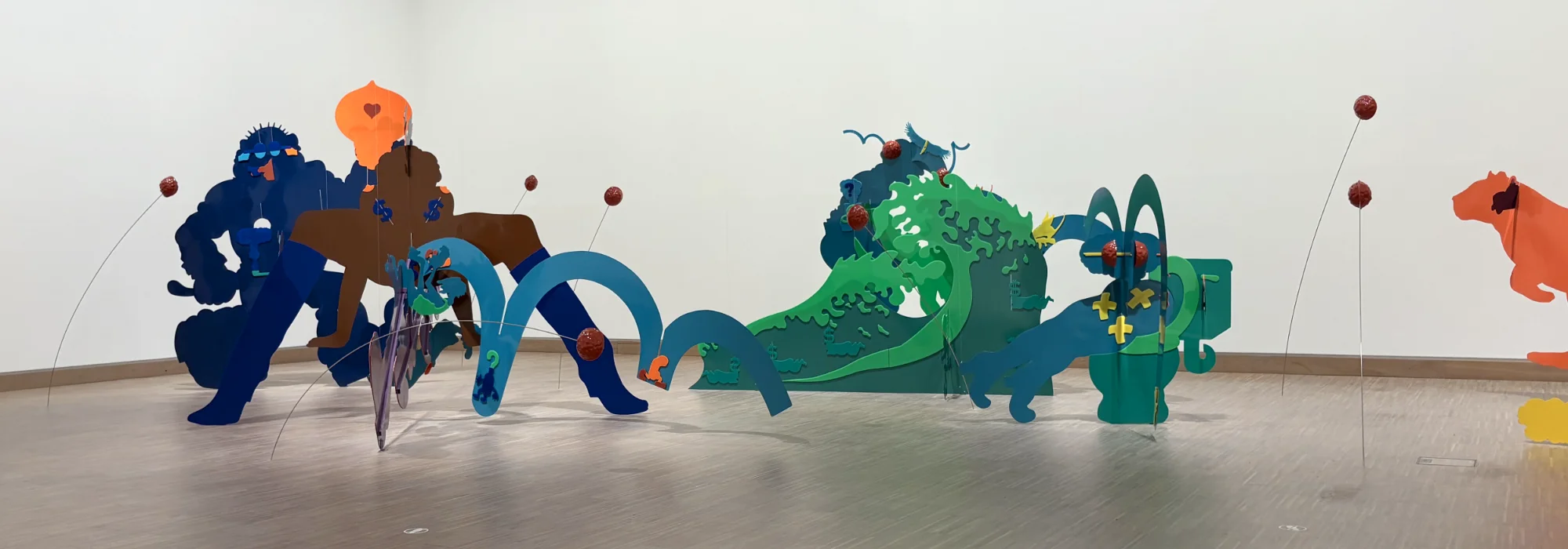
Öyvind Fahlström: Meatball Curtain. A psychedelic descent into
underground comix.
I love how the exhibition had to explain that the "x" in the title refers to the 1970s countercultural "comix" movement. I had been a great fan of the art of Robert Crumb and his contemporaries since I was a teenager. I I guess now museums try to preserve the authentic spirit of rebellion and experimentation that these artists embodied.
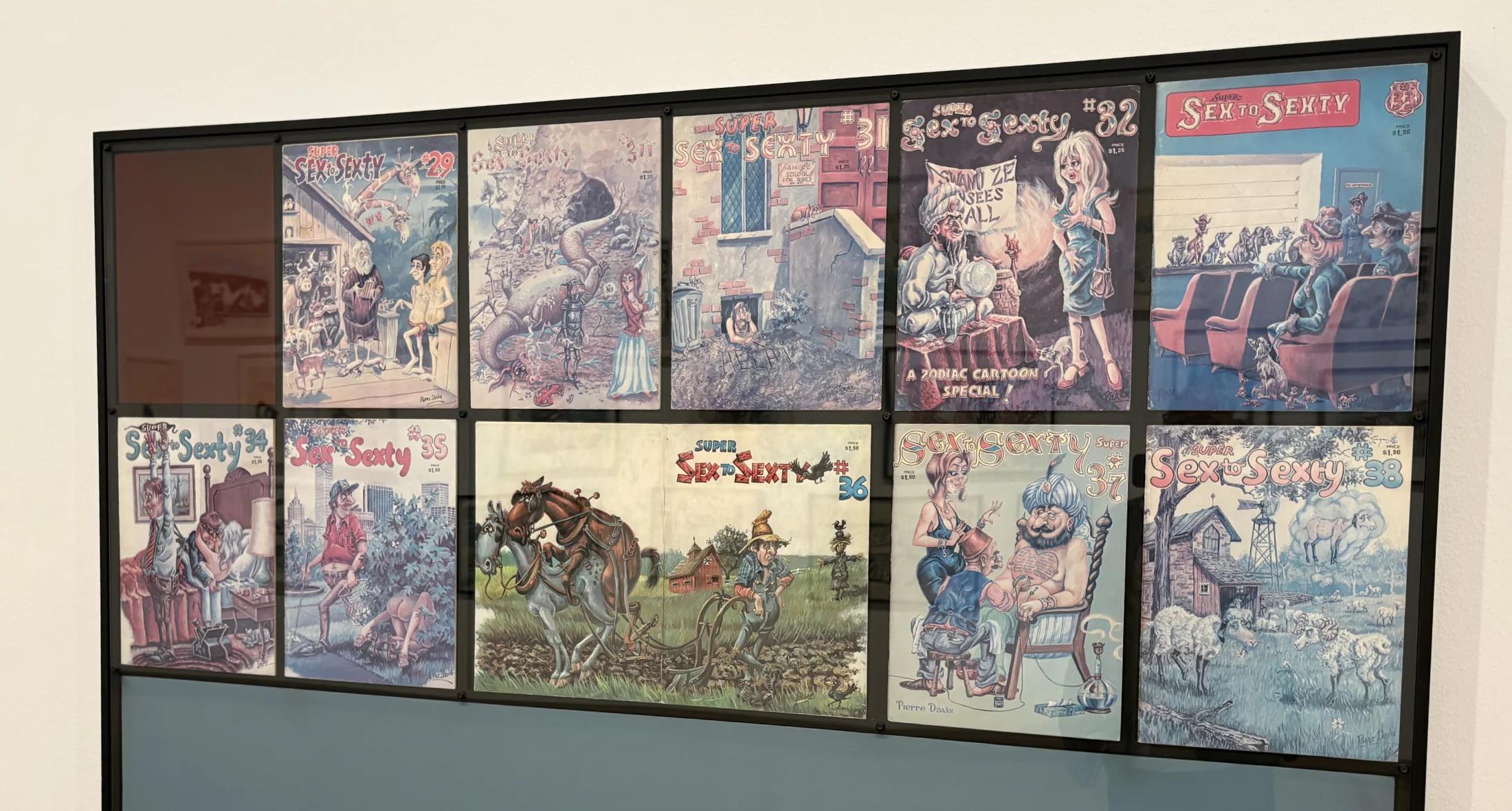
Sex to Sexty by Mike Kelley
Deeply rooted in punk and counterculture, Mike Kelley acts as a visual archeologist of the American psyche. He digs through "low" culture to expose social trauma. In his series Missing Time Color Exercise, Kelley arranges issues of the erotic magazine Sex to Sexty into rigid, minimalist grids, filling the gaps of missing issues with monochrome blocks of color.
These voids represent "missing time", a psychological nod to repressed memories and the fragmented nature of our own histories. By forcing trashy, trivial comics into the strict language of high-end minimalism, Kelley effectively dismantles cultural hierarchies, proving that our collective memories are often defined as much by what we choose to forget as by what we remember.
The Museum Shop
Before leaving, I spent time in the museum shop. The official catalogue, KAWS. Art & Comix, is a deep dive into this anti-elitist understanding of art where street art meets contemporary museum art.
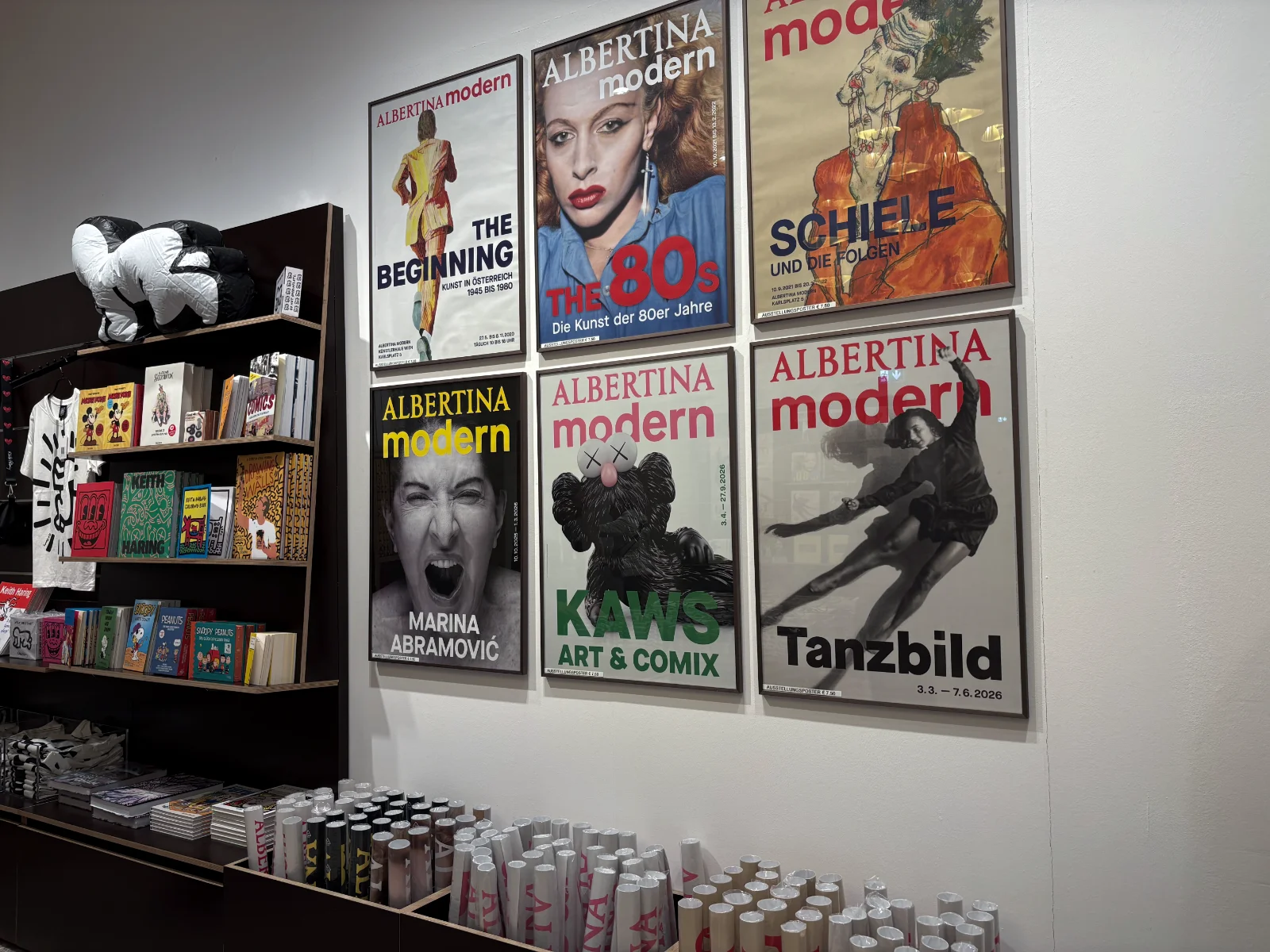
The beautifully curated Albertina Modern shop.
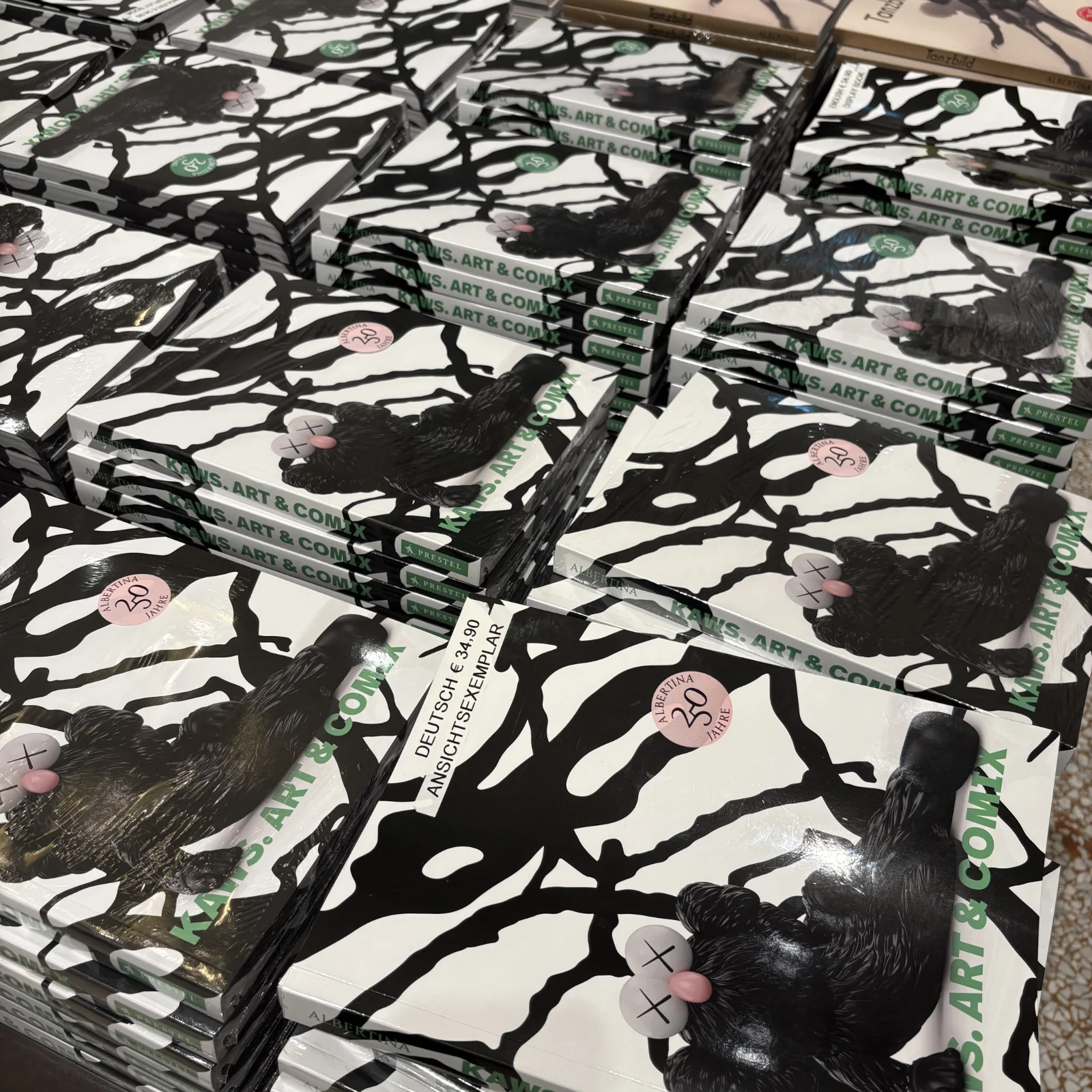
Maybe by their sheer repetition, these books and merchandise
become a kind of "mass-produced art" in their own right, even
further blurring the line between the original works and their
commercial reproductions.
Walking through the shop felt like a final bridge between the gallery's intellectualism and the tangible, commercial world that birthed these works. I left the building feeling genuinely re-energized and inspired. Even though much of the work feels somewhat anachronistic in a world where our daily media has become the cartoon... and the original medium of printed comics fades further into history! There is something undeniably powerful about seeing these "low-brow" icons immortalized on museum walls.
My only minor gripe? For an exhibition that encourages such deep reflection on the passage of time and cultural memory, I wish the Albertina Modern had provided a few more benches. After exploring the vastness of the "Comix" universe, my feet were certainly feeling the weight of the 21st century.
Nevertheless, clutching my new Michaela Konrad book, I stepped back out into the Vienna rain, seeing the city through a slightly more "X-eyed" and colorful lens.
Source: ALBERTINA press release, KAWS. Art & Comix (PDF).