From Pretender to Scener
When Can You Truly Call Yourself A Demoscener?
In a way, we all start as pretenders. Whether we are stepping into a new job, becoming a parent, or submitting our first messy graphic or code to a demoparty, we are essentially wearing a costume and hoping no one notices until we've figured it out. But at a recent demoparty, that internal "imposter syndrome" was given a massive, external voice through provocative billboards aimed at the heart of the community.
April 2026
I didn't go to the Revision demoparty in 2026. I loved my two previous visits, particularly the second one in 2025. This year, I decided to sit it out because I wanted to focus on a special side project. What I did do, however, was watch the live stream and keep in touch with friends who were there in person. In the aftermath of Revision, I read an interesting but rather confused post in a demoscene Facebook group by a distraught former scener called Scamp.
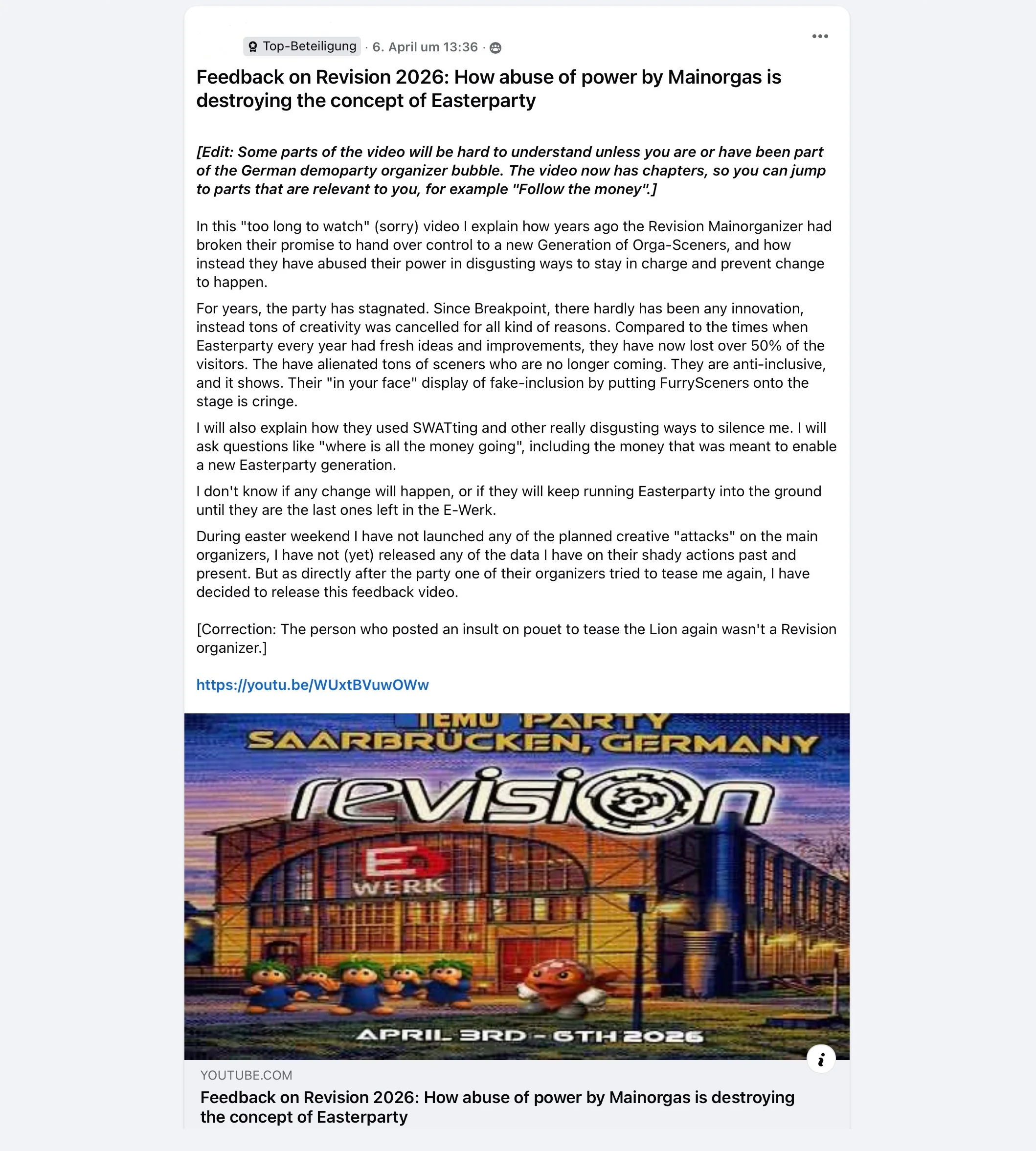
I have no clue what this is
about. To me, it looks an unnecessary and confused rant. I don't know this person and I
don't want to get involved in this. But... I want to focus on one particular aspect of this
conflict.
In his post and video rant, he voiced criticisms toward the Revision organizers and others in the community. I'm not even going to pretend to understand any of it (and I really don't want to get involved in the dispute) but the reactions on Facebook were mixed, to say the least. Most people asked him to cool down and relax, while some fought him outright over his statements. I don't want to share a link to his post because it shows his real name. You can find the post with minimal effort.
But then I learned he had gone much further. He had taken his criticism from the digital world into the material world.
The Billboard Provocateur
Apparently, Scamp had rented billboards near the Revision party venue, the E-Werk in Saarbrücken. I have seen a photo made by a participant, and he announced it himself in his post on Facebook. His message was clear: modern demoparties have stifled the "former spirit" of freedom and artistic provocation. If I understood this sloppy statement correctly, it seems that to him, current participants are no longer true digital artists. They are merely fans dressed up in its aesthetics. He addressed them (us?) as "scene-cosplayers." This is the aspect I want to focus on.
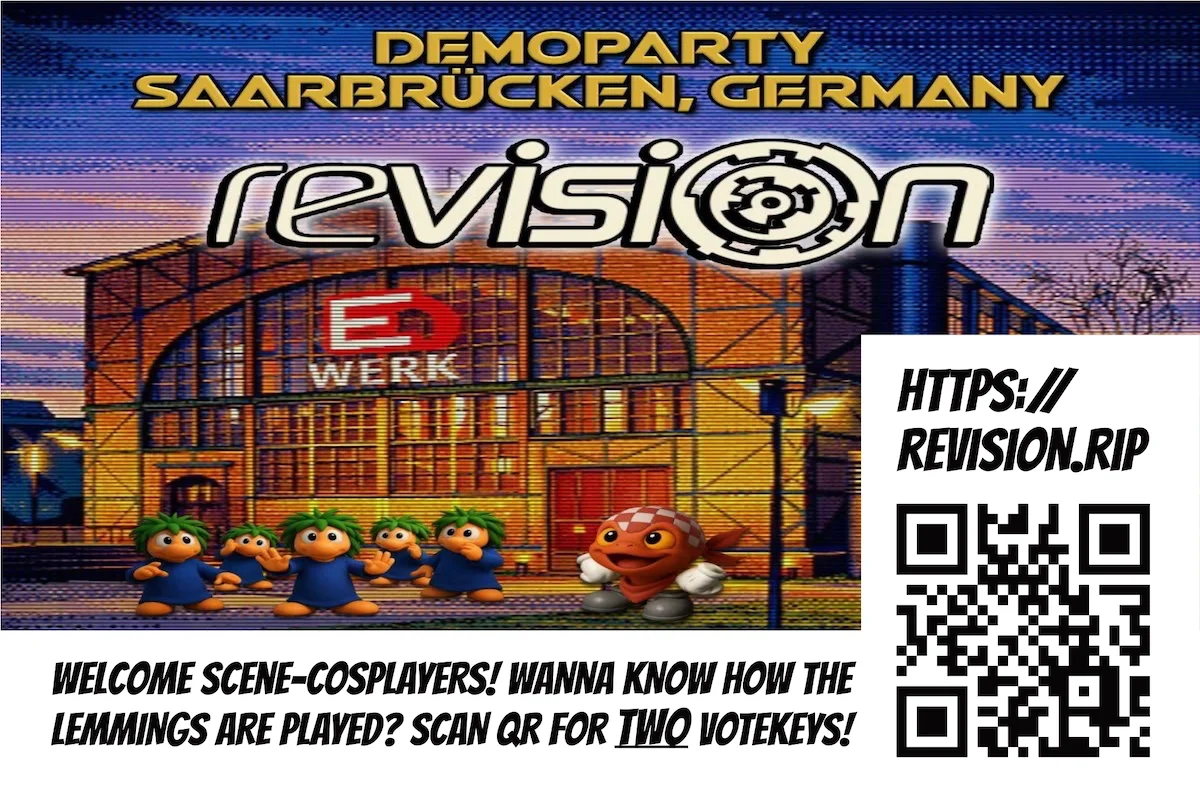
I wasn't at this year's
Revision but apparently this is one of three billboard Scamp actually put the money and
effort to rent in the vicinity of the Revision event venue. As bonkers as the whole thing
is, I want to focus on the message at the bottom of this billboard.
Keep in mind that a cosplayer is an individual who wears costumes to represent a specific character from pop culture, often "playing" that character's personality. They are playing a role. To address people who dedicate months to their code or art as "scene-cosplayers" is a stinging accusation. It denies sceners their identity and accuses them of being inauthentic: of only pretending.
But this critique misses a fundamental truth about human identity: Don't we always "play the part" until we can actually fully embrace it? Kids pretend to be adults until, one day, they are no longer kids; they learn their roles and eventually become what they once played.
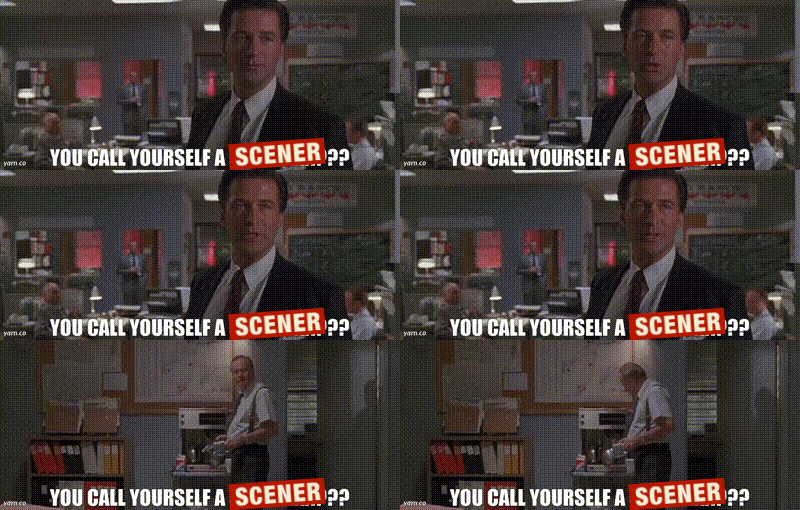
(Nearly) a scene from "Glengarry Glen Ross".
Echoes of the "Fake Geek Girl"
This isn't the first time members of a subculture have turned on one another. About fifteen years ago, a similar toxicity swept through nerd culture with the Fake Geek Girl controversy. Female cosplayers were routinely denounced as "fake fans" who only wore costumes for attention. They were subjected to "nerd-tests". These were rude interrogations of obscure trivia in a specific area of pop culture only designed to prove they didn't "belong."
The "cosplay" insult on the billboards near Revision 2026 is the same brand of gatekeeping. It assumes that authenticity is a static point in history that you either lived through or missed. But in reality, the "fake geek girls" of the 2010s were often the ones putting the most work into their craft, just as modern sceners are today. (Heck... I went to FedCon 2016 dressed as Matt Smith's Doctor and I looked terrible even though he literally wore regularly available clothes and a bowtie... bowties are cool!)
I regard myself as a big fan of Lord of the Rings I feel similar imposter syndrome with Tolkien fans. At RingCon in Bonn (nowadays rolled into MagicCon), some folks knew Middle-earth at such a scary level of detail that I felt ignorant. But they were kind. They didn't see me as ignorant; they were proud of their knowledge but could feel my genuine enthusiasm. They didn't fault me for not being as knowledgeable as they were.
The Sting and Pride of the Middle Ground
I feel something similar happens at a demoparty.
As a web developer, I am surrounded by code daily. Yet, when I walk through the rows of tables at Revision, I feel a familiar pang of insufficiency. My coding skills don't touch the hem of the wizards squeezing impossible effects into mere kilobytes. I lack that "cherry on top", the innate talent that separates the proficient developer from the legendary one.
But when we engage in lively conversation, those master coders don't treat me like a dork. They are enthusiastic about explaining how things work. I once listened to Qetu for half an hour as he explained his self-constructed analog computer. I only understood fragments, but I was swept along by the beauty of his impromptu lecture. I still think an analog computer basically runs on fairy dust, but I loved every second of it.
I found my own place in pixel graphics. I am not a "great" like Steffest. At most, I am a middle-of-the-pack artist. But over time, I've gotten the hang of it. I've earned respect in competitions. I've learned that voting often isn't just about the graphics. Often it is about personal taste, the context of the competition, and the social bonds we build. (Heck, I had a great skull graphic at the Oldskool compo at Evoke 2024 but then another really good graphician also submitted a skull sujet. I wonder how many points each of lost in the vote due to this duplication.)
My first party was Evoke in 2022. I knew some of the history of the demoscene, but I certainly didn't regard myself as a "real" demoscener. Not even when I went to my second demoparty at Revision 2023. The transition is a journey, not a switch. I started submitting more (including a demo, I was quite fond of). I joined a demogroup on a dare. I worked on a system I knew little about (the C64), learned, and we submitted our first production. Today, I am proud to call myself a real demoscener. This made me realize that I wasn't "cosplaying" when I started... I was aspiring.
When the Costume Becomes Reality
When does a person stop "acting" a role and simply become it? In the demoscene, the transition happens when you stop being a spectator and start being a participant:
- The Social Fabric: You belong when the people at the long tables at a demoparty stop being "legends" and start being folks you look forward to sharing a beer and having a conversation with.
- The Labor: You belong when you invest the hours into a piece of work, knowing it might only rank 15th, but doing it because the craft itself matters. And you know that only the folks at a demoparty would have the capacity to appreciate it.
- The Community: You belong when you contribute to an environment that is open, diverse, and protective against the bigotism that sometimes plagued the "freedom" of the past demoscene. While it looks "cool" in a historic context, some of the behaviour in the past probably bordered on bullying and gaslighting. And that is not cool at all!
Of course, you'll fail occasionally. You'll miss a deadline or get into a heated argument. You'll turn green or red with envy when someone you dislike releases a masterpiece (depending on which version of the Hulk you are). That is part of being human. The best way to handle our insufficiencies is to learn from them and evolve.
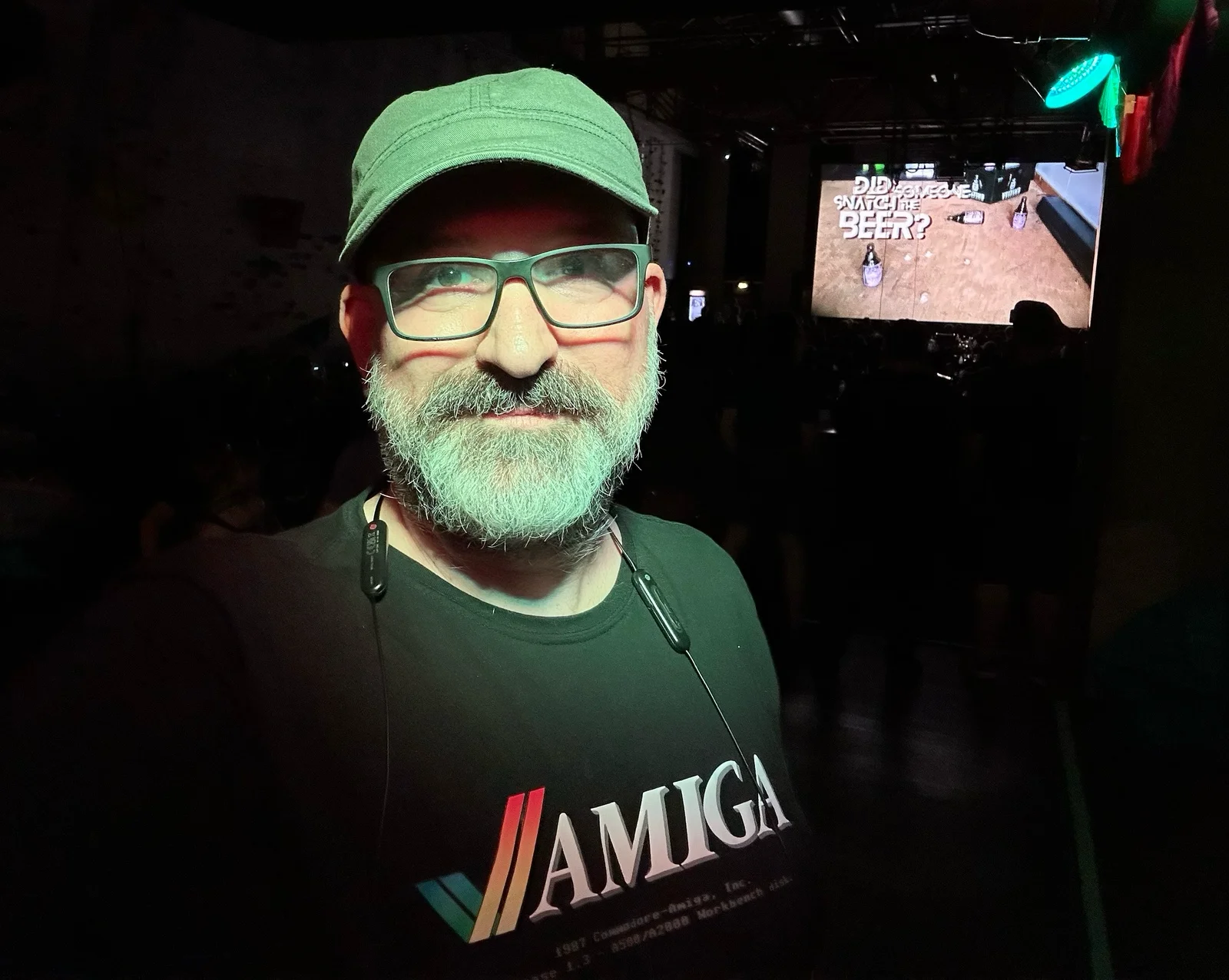
Yeah, I'm cosplaying as a
mysterious demoscener at Evoke 2025.
Authenticity is an Action
The billboard critic mourns a "freedom" that often came at the cost of excluding others. If "innovation" only counts when it is born of chaos and conflict, then we are indeed in trouble. But at Revision, I saw innovation in every corner of the E-Werk: in the inclusive atmosphere and the willingness of true experts and demosceners to teach newcomers.
We are not cosplaying. A cosplayer wears the outfit for a day and takes it off when the convention is over (and darnit, I respect cospalyers!). A scener is someone who keeps showing up, keeps failing, keeps learning, and keeps contributing to the "constant transformation" of the medium and the scene. And you can still be a scener even if you don't do as much as some of the amazing organizers, dilligent contributors and magnificent live-coders on stage (those folks rock!). At some point you become authentic through your actions.
And finally... you know what!?! You don't have to like everyone in the scene to be part of it. You just have to be there, doing the work, and showing appreciation for the other sceners who are doing the same.
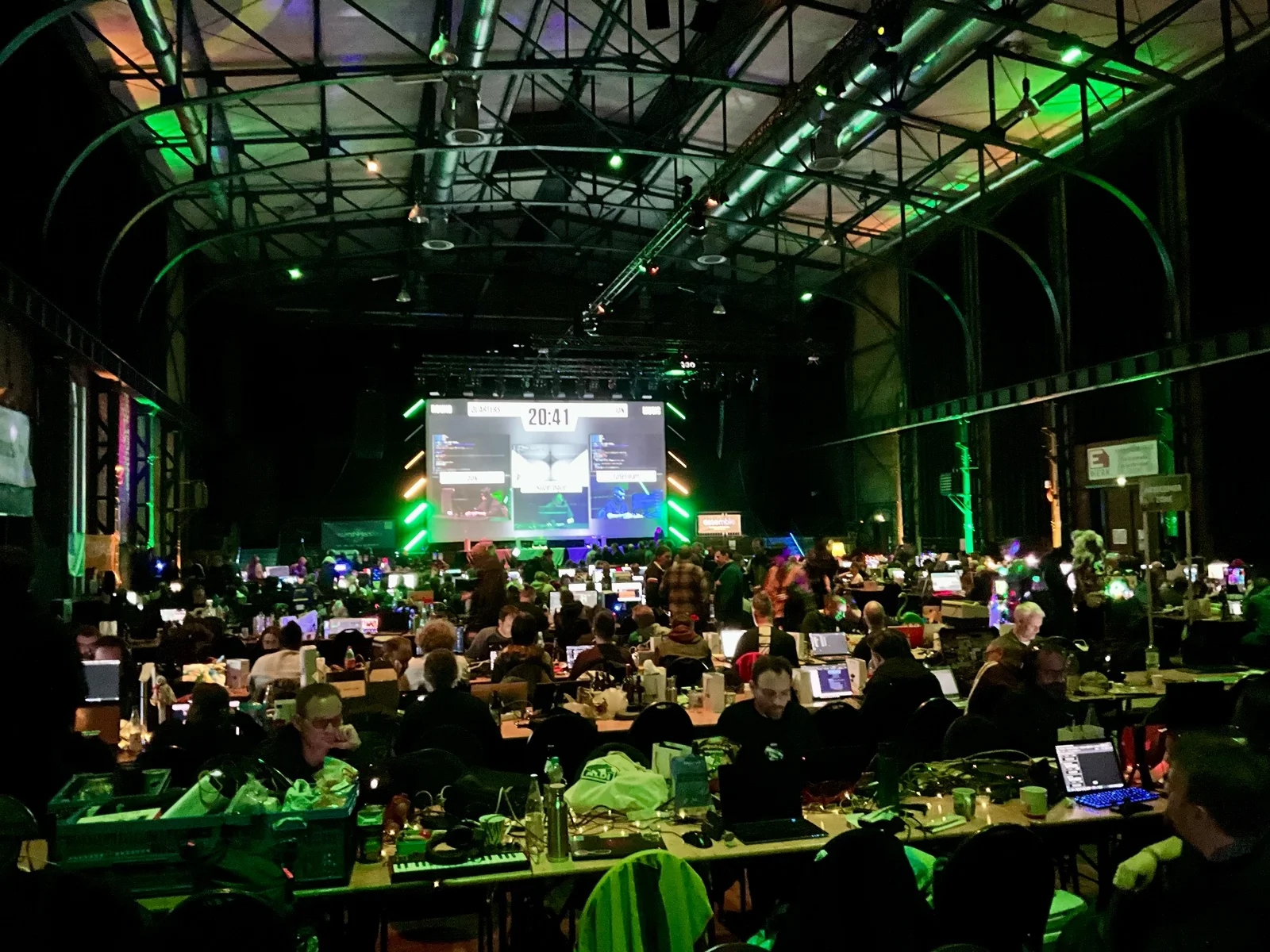
The Revision party-hall: a
place where your effort fuels your identity.