Chunky Little Squares
The Fabulous Appeal of Pixel Art
I have a great affection for pixel art. Yes, it's also nostalgic! But it's more than just warm fuzzy feelings about the good old days of video games and home computers: it is actually a visual language that was born from limitation and somehow got refined into a timeless aesthetic. Let me share with you what I love about these chunky little squares.
March 2026
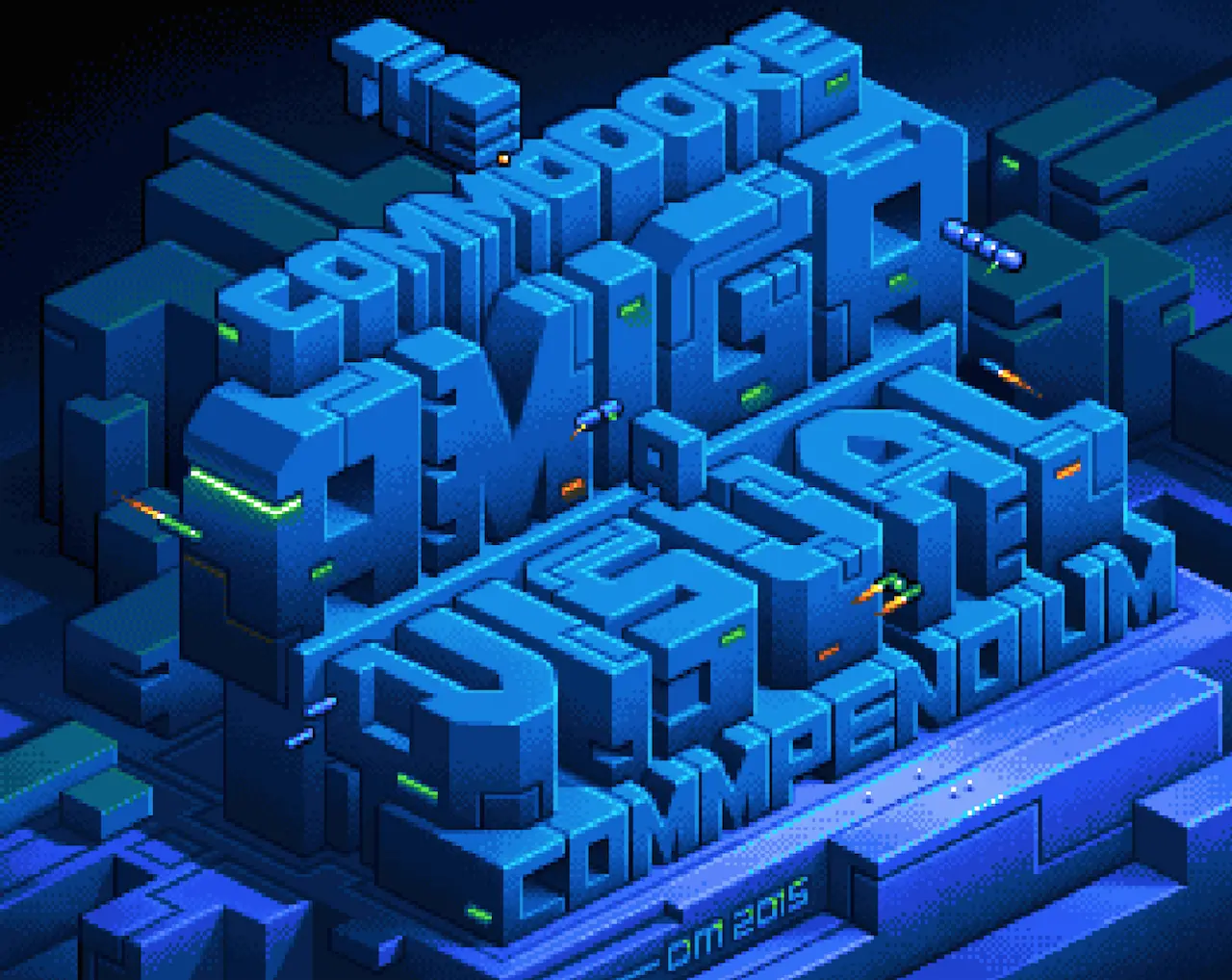
An alternate cover for a limited edition of Commodore Amiga: A Visual Compendium pixeled with great care by Dan Malone.
Pixels are the picture elements that make up every image on a digital screen.
They are the tiny, differently colored dots that form the pictures we see on monitors, phones, and televisions. Today these dots are almost imperceptibly small. They blend together in our perception, forming smooth images in which the individual pixels are usually invisible unless you look extremely closely.
This was not always the case. In earlier decades, pixels were large and clearly visible. Although we often imagine them as perfect squares, they were not always square at all. Many early computer displays used rectangular or otherwise non-square pixel shapes. The images produced by those machines therefore looked noticeably blocky, jagged, and crude by modern standards. But that was simply the best computers of the 1980s and early 1990s could do.
Technology has long since moved beyond those limitations. Modern screens are so dense that their pixels disappear into seamless images. Yet some artists deliberately choose to bring those building blocks back into view.
Since real hardware pixels are now far too small to notice, artists simulate the old look by grouping many pixels together into larger blocks, creating graphics that appear deliberately zoomed in.
Combine this with strict color limitations and you arrive at a very distinctive visual language: pixel art.
Let's explore its appeal.
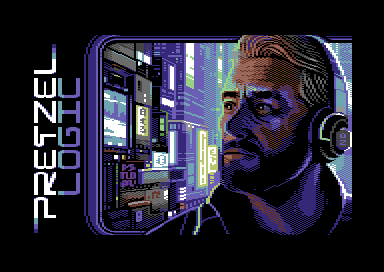
Neon by ND of Pretzel Logic (Commdore 64), the winner of the graphics competition at the BCC#20 demoparty in 2026.
What Exactly Is Pixel Art?
Pixel art is digital art created and edited at the pixel level. This is a fancy way of saying you zoom way in and obsess over individual dots. It grew from the constraints of early home computers and consoles. Limited memory, color palettes, and resolutions forced artists to make every dot count. Today, it is no longer a necessity. It is a deliberate aesthetic choice. Pixel Art is valued for its clarity and simplicity. In other words, what started as "we literally can't do better than this" became "actually, we don't want to do differently right now."
Classic editors that shaped the craft include Koala Painter (C64), Deluxe Paint (Amiga), and NEOchrome (Atari ST). Modern tools keep the pixel art lineage alive: Aseprite, Pyxel Edit, GrafX2, Pro Motion NG.
And a special shout-out to the amazing DPaint.js by Steffest. This is a modern web-based much expanded recreation of Deluxe Paint. It's functionality is no much better than the original and adapted to the requirements of moden pixel artists.
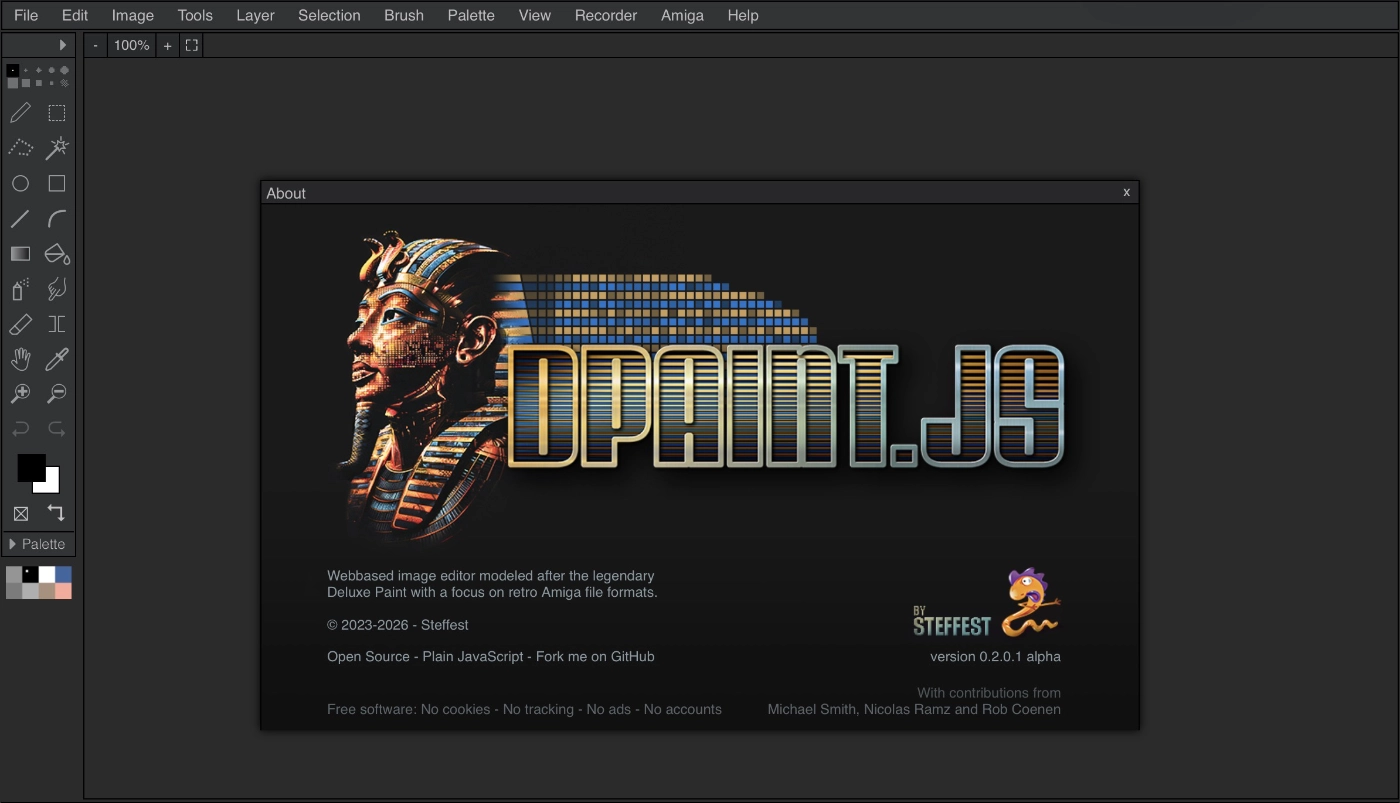
Dpain.js by Steffest
PixelJoint and Pixilart are just two of many great communities to learn from. They are useful for curated critique and challenges and Pixilart even has a web-based integrated pixel graphics application. While Lospec is another helpful community for tutorials, palettes, and handy online tools.
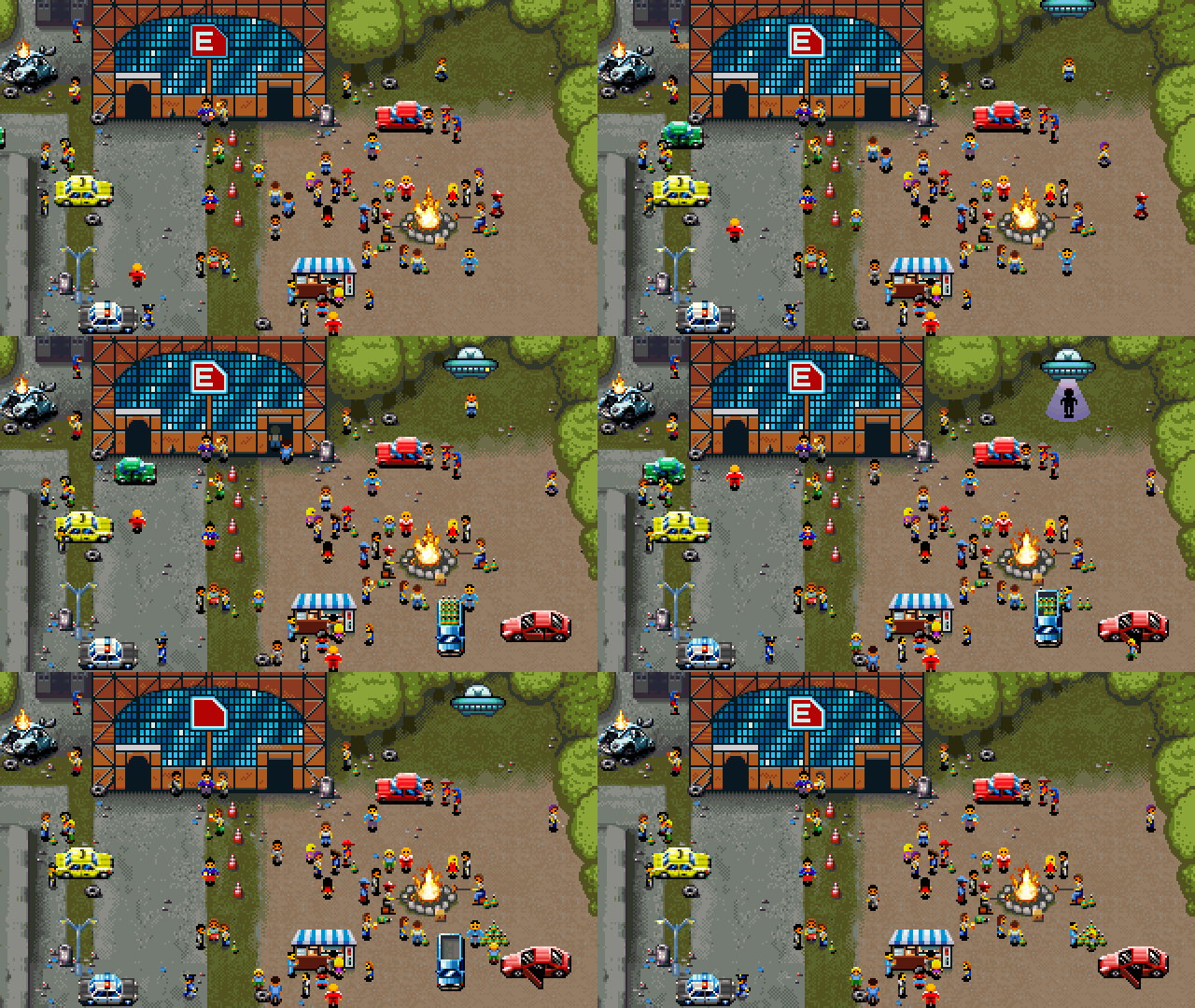
Back to the E-Werk by the amazing Slayer of Ghosttown
From Hardware Limits to Timeless Aesthetic
Let's take a look at how over the years hardware limitations accidentally created an art form.
1970s: The Dawn of the Pixel
Arcade pioneers establish the blocky, readable look that becomes pixel art's DNA. Space Invaders wasn't trying to look retro. It was just trying to exist.
1980s: The 8-Bit Renaissance
- Home micros (C64, ZX Spectrum, Apple II) and consoles (NES) bring pixel graphics home.
- Dedicated editors arrive: Koala Painter (Commodore 64), later McPaint, NEOchrome and many others.
- Artists work miracles with tiny palettes and approx. 320 x 200-class resolutions. (Today's phones have more pixels in the status bar.)
1990s: The 16-Bit Mastery
- PCs with VGA graphics, SNES, Mega Drive/Genesis expand color and animation potential. Suddenly you have dozens or even hundreds of colors! Artists go wild.
- Studio-grade tools define workflows: Deluxe Paint (Amiga and MS-DOS) and Adobe Photoshop (Macintosh).
2000s: The Retro Revival
As 3D dominates the mainstream. Pixel art becomes an intentional stylistic choice for indies and hobbyists. Turns out polygons aren't everything.
2010s - Today: The Modern Pixel Aesthetic
- Contemporary editors carry the torch: Aseprite, Pyxel Edit, GrafX2, Pro Motion NG.
- Communities help artists level up: PixelJoint (curated gallery & challenges), Lospec (tutorials, palettes & tools).
What Came After Pixel Art
As computer hardware improved in the early 1990s, graphics technology began to move beyond hand-crafted pixel art.
One of the first steps was polygon graphics, where images were built from simple geometric shapes. Early examples used wireframe graphics like the the home computer conversions of the Star Wars arcade cabinet in the early 1980s, the legendary Elite and Flight Simulator II.
The objects were composed of triangles. These could be rotate and rendered in three dimensions. Their size could be increased and reduced as necessary. They looked crude but provided a much more flexible way to be displayed.
Later games used filled polygons such as Starglider II, Star Fox or Virtua Fighter perfected this new approach. Though the models were still very simple and angular.
Another technique to produce graphics starting in the 16-bit era were pre-rendered 3D graphics. Detailed three-dimensional scenes were created on powerful computers and then rendered into flat images ahead of time. These images were used as backgrounds or sprites in games, allowing for visuals far more detailed than real-time hardware could produce.
Famous examples that used pre-rendered graphics in the early 1990s are Donkey Kong Country for the Super Nintendo and Myst for the PC and Mac.
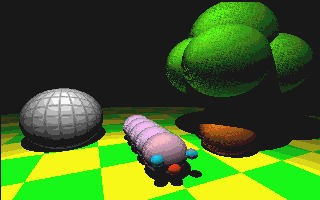
Of course, pre-rendered 3D graphics were composed of pixels. But like this early example they were not hand-drawn, they were hand-modelled in 3D and then rendered using raytracing.
First person shooters like Doom and Quake as well as space sims like Wing Commander and RPGs like Ultima Underworld and combined pre-rendered 3D graphics, hand-drawn sprites and 3D polygon graphics with texture maps.
Once the first Sony Playstation was release, games market moved to 3D graphics.
Today, modern GPUs make it possible to render complex scenes directly in real time. Contemporary games rely on fully real-time 3D graphics with detailed models, textures, and lighting.
Eventually, display technology advanced to the point where individual pixels all but vanished. The building blocks of digital images became invisible. Pixel art, once born of technical necessity, turned into an anachronism... yet an interesting one.
The Magic of Drawing on Your Screen
When 8-bit and 16-bit machines like the Commodore 64, Apple II, Atari ST, and Amiga first brought color graphics into people's homes, it felt like actual magic.
For the first time, you could draw and paint directly on your TV screen. This was the same screen that usually just showed movies, news, cartoons and game shows. Creation on a computer was no longer limited to typing cryptic BASIC commands. Now you could draw. This is one of the most immediate and fundamental interactions humans have, something even toddlers do instinctively with crayons.
Programs like Koala Painter and Deluxe Paint turned ordinary users into digital artists (or at least made them feel like ones).
Apple understood this magic. In 1984, MacPaint shipped with the original Macintosh. They invited users to explore, to move that weird new mouse thing, to click, to draw. It taught users that a computer didn't have to be intimidating.
It could be a creative machine.
In 1992, Nintendo's Mario Paint did something similar for a new generation. It was bundled with the Super NES Mouse (yes, that was a real thing). It let kids compose music, animate sprites, and paint freely on their TVs. Who knew that the same console you used to stomp on Goombas could also be an art studio?
It was a playful gateway that blurred the line between game and art.
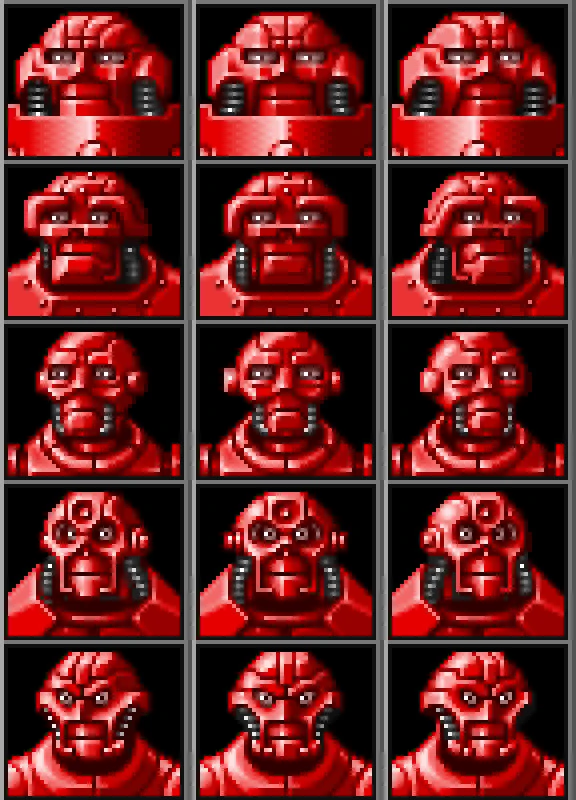
Game art from the computer game Z on MS-DOS/VGA by Dan Malone.
A Language of Clarity and Simplicity
Pixel art has a clarity that modern, high-resolution art often lacks. Every color and every shape must be deliberate. You can feel the craft behind each line, the struggle against the grid. And a simplicity: stripped of excess detail, a few well-placed pixels can express a whole world.
Its charm lies in the tension between precision and imagination. A single 16 x 16 sprite, basically 256 little squares, can suggest a hero, a monster, or a memory. Your brain does half the work, filling in gaps and adding details that technically aren't there.
I'd argue that it is as collaborative art as the act of reading is. The artist provides the dots, you as the onlooker interpret them and provide the wonder.
There is also a bold, heavy-metal energy born of technical constraint. Limited palettes and low resolutions weren't great for subtle gradients (read: impossible), so artists leaned hard into what did work: high contrast, chrome-like reflections, glowing edges, and metallic sheen. Can't do soft? Do chrome. What began as "well, this is all we've got" evolved into a signature look of grit, gloss, and gleam that still looks cooler than some modern AAA game graphics.
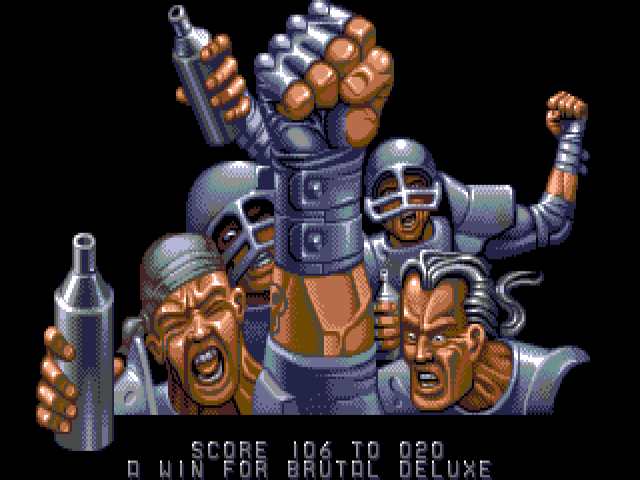
Look at the metallic gleen in this still image from the Bitmap Brothers game Speedball 2: Brutal Deluxe created by Dan Malone for the Commodore Amiga.
Instead of blending seamlessly, each pixel contributes to the surface of the picture, giving the graphics a distinctive, almost tactile quality. Artists often enhance this effect by dithering, arranging pixels of two different colors in alternating patterns. From a distance, the eye blends these pixels into a new intermediate tone, while up close the pattern remains visible.
This interplay between structure and illusion creates a rich visual texture that gives pixel art much of its charm and character.
Working within limits is, paradoxically (and also well-acknowledged by anyone who's ever stared at a blank page) creatively freeing. Boundaries provide focus. When you only have sixteen colors, every hue matters. When your canvas is 320 x 200 pixels, every decision counts. Pixel artists learned to turn scarcity into style. They discovered that invention thrives not in infinite possibility but in well-defined space.
Sometimes having a million options is just paralyzing. Sometimes you need someone to say "you get 16 colors and a tiny canvas, now go make something beautiful."
The Talented Crafters of Pixel Perfection
Pixel art rewards patience and discipline rather than expensive tools or formal training.
You don't need a design degree or a high-end workstation; you need grit, focus, and a willingness to stare at the same 16x16 grid for three hours straight because that one pixel just isn't right.
The rhythm of placing pixels, adjusting and repeating is very likely a discipline (some might call it obsession) familiar to the following iconic pixel artists. Did I mention that they are iconic?
Henk Nieborg is probably one of the longest working pixel artists ever. He is best known for The Misadventures of Flink, Lionheart, and recently Terminator 2D: No Fate. His art is notable for exquisite details, a staggering amount of frames for the fluid animation, and meticulous color choices!
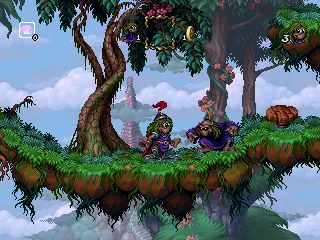
The Adventures of Lomax by Henk Nieborg (Sony Playstation and PC)
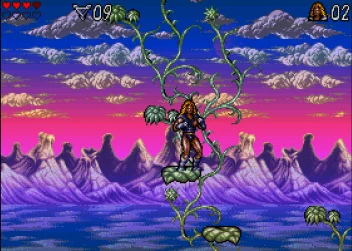
Lionheart with graphics by Henk Nieborg on the Commodore Amiga
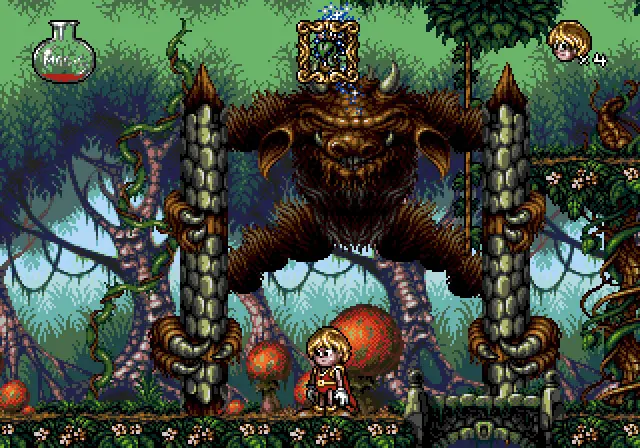
Flink with pixel art by Henk Nieborg on the Sega Megadrive / Genesis
Dan Malone was a member of the legendary game development team Bitmap Brothers. Together with Mark Coleman, he created the stunning metallic visual style of the team. He was the driving force behind The Chaos Engine and pixeled the graphics for Speedball 2: Brutale Deluxe. In the earyl 1990s, his pixel art was characterized by Steampunk grit and metallic brilliance!
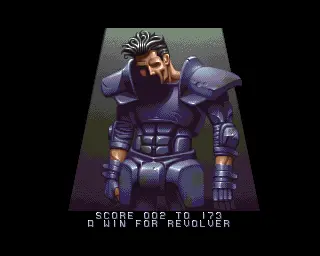
Haunting image from Speedball 2: Brutale Deluxe showing that the player's team lost. Created by Dan Malone (Commodore Amiga)
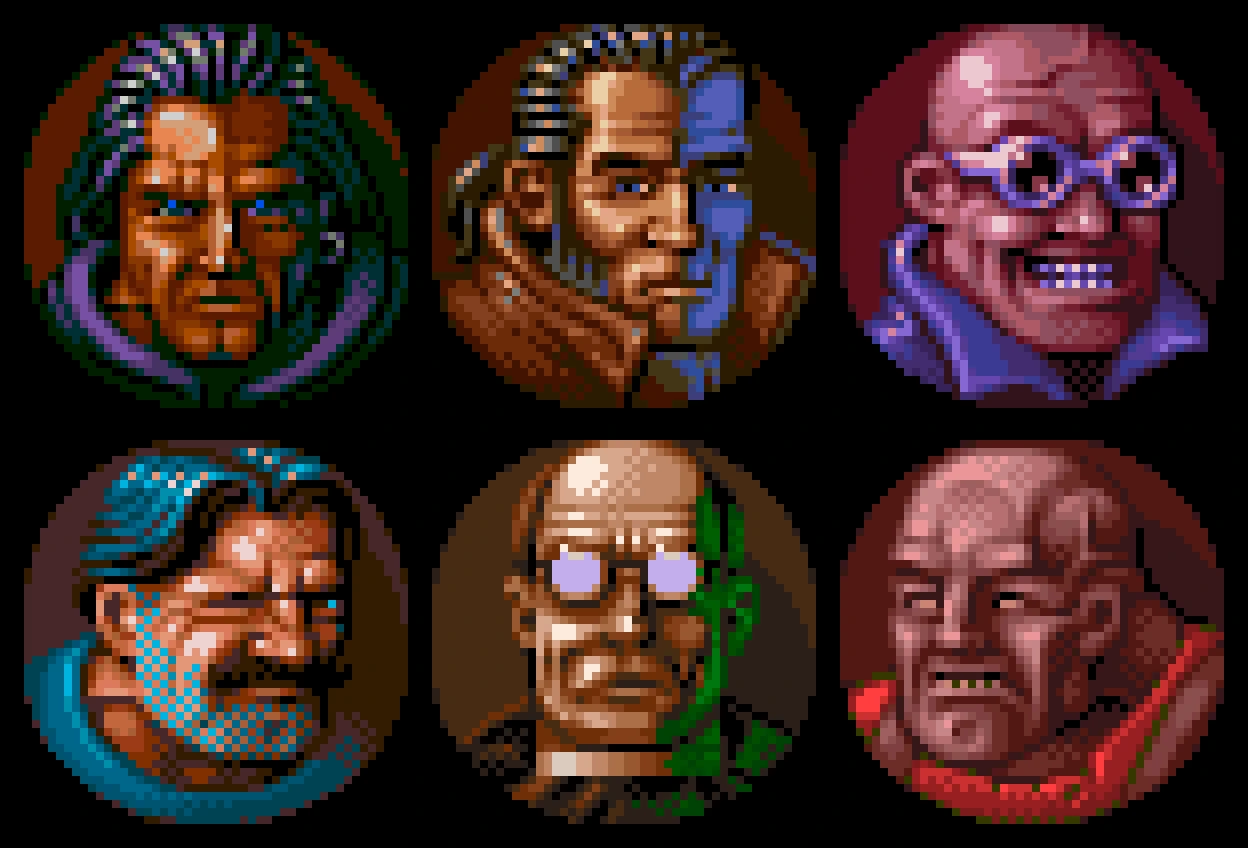
Character gallery from The Chaos Engine by Dan Malone (Commodore Amiga AGA)
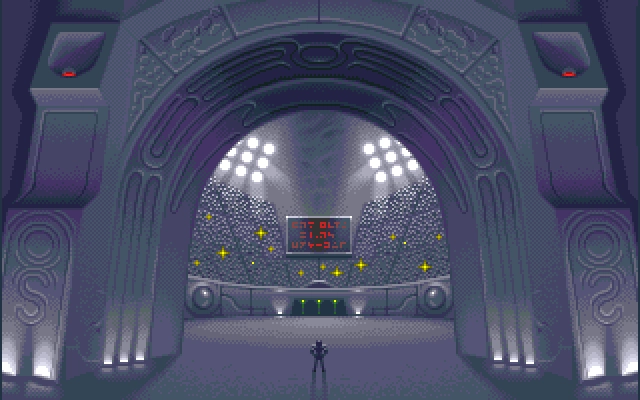
Beautiful splash screen from Speedball 2: Brutal Deluxe by Dan Malone (Commodore Amiga)
Mark Coleman was also one of the Bitmap Brothers. His atmospheric work on titles like Xenon 2: Megablast helped define the Amiga/ST era. He introduced a metallic cool that blended bleak futurism with a pinch of counter-culture sensibilities
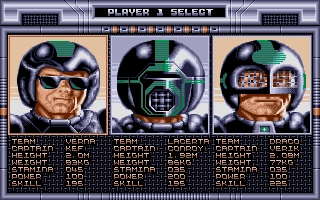
Player types in Speedball by Mark Coleman (Atari ST)

The accessory shop in Xenon 2: Megablast by Mark Coleman (Atari ST)
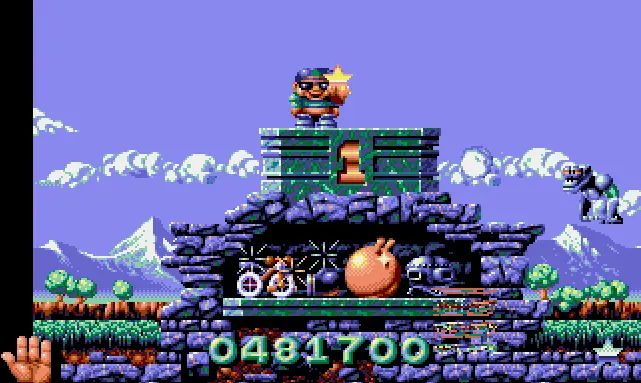
Game graphics in Magic Pockets by Mark Coleman (Atari ST)
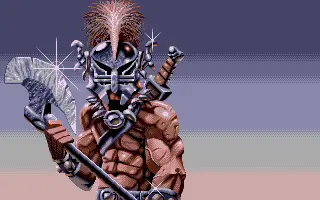
Splash screen in Gods by Mark Coleman (Atari ST)
Erik Simon is early an German demoscener. He was member of The Exceptions, an Atari ST demogroup that definded the platform. He turned professional artist/producer on Dragonflight, bridging underground pixel culture and the commercial Atari ST and Amiga world. Later on he became an accomplished game producer.
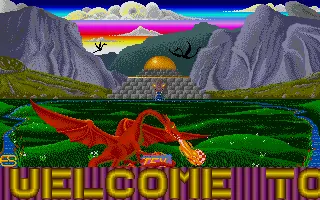
README.PRG was the first demo on the Atari ST. It featured graphics by Erik Simon. This introduced the red dragon... here breathing fire onto the Amiga ball from the Boing Ball Demo.
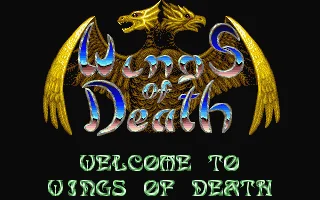
The logo of the shoot-em-up game Wings of Death created by Erik Simon (Atari ST).
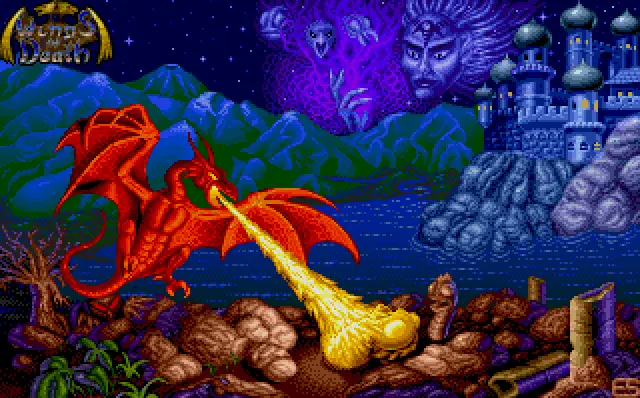
Splash screen from Wings of Death by Erik Simon (Atari ST).
Jim Sachs is probably the most acclaimed Amiga artist. He worked on the breathtaking visuals of Defender of the Crown. He was a true master of rich landscapes, realistic subjects and objects, as well as atmospheric backgrounds.

Scene from Defender of the Crown with beautiful graphics by Jim Sachs (Commodore Amiga).
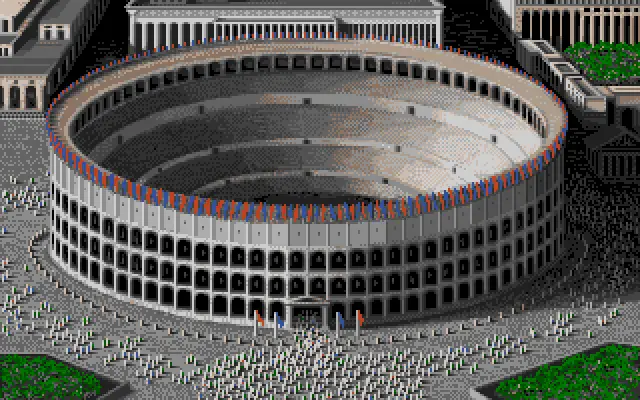
A still from the game Centurion: Defender of Rome by Jim Sachs (Commodore Amiga). And he only used 16 colors!
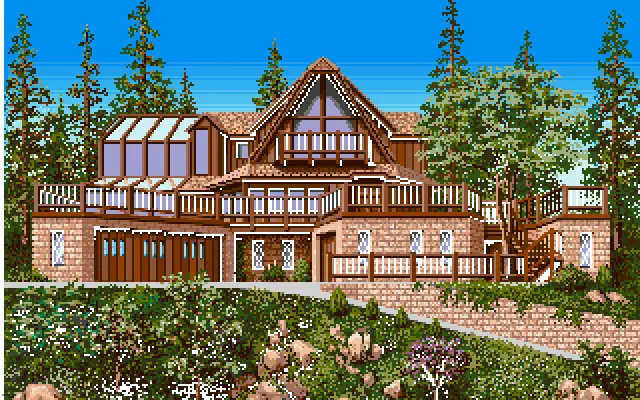
Jim Sachs drew his own house (Commodore Amiga).
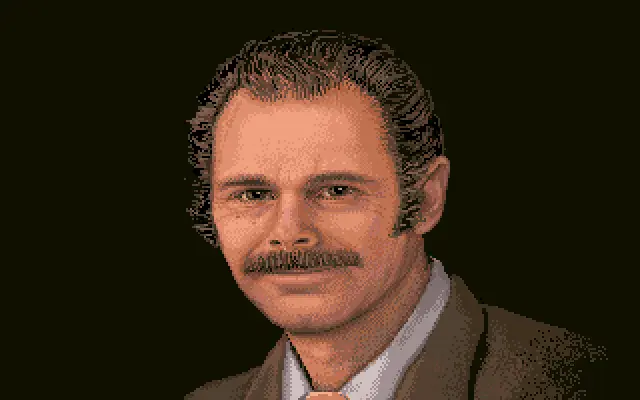
A self-portrait of Jim Sachs (Commodore Amiga).
For more pixel artists from the Amiga era, explore the Amiga Artists Archive and Demozoo to discover artists and incredible demosceners like Critikill.
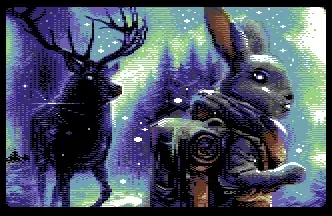
Hiking Home for Christmas by Critikill (C64)
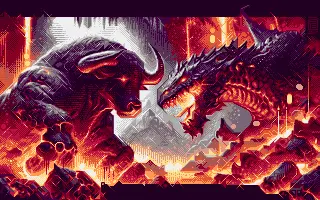
Firestarter by Critikill (Atari STE)
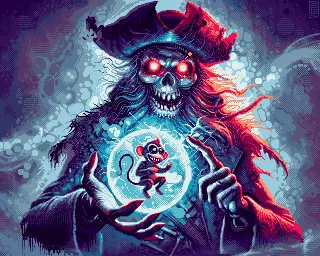
The Fate of LeChuck by Critikill (Commodore Amiga)
Celebrating the Masters: The Artbooks
If you want to see these pixel legends properly celebrated, check out The Masters of Pixel Art book series. They're better than a digital gallery. They are proper coffee table hardbacks that treat pixel art with the respect it deserves.
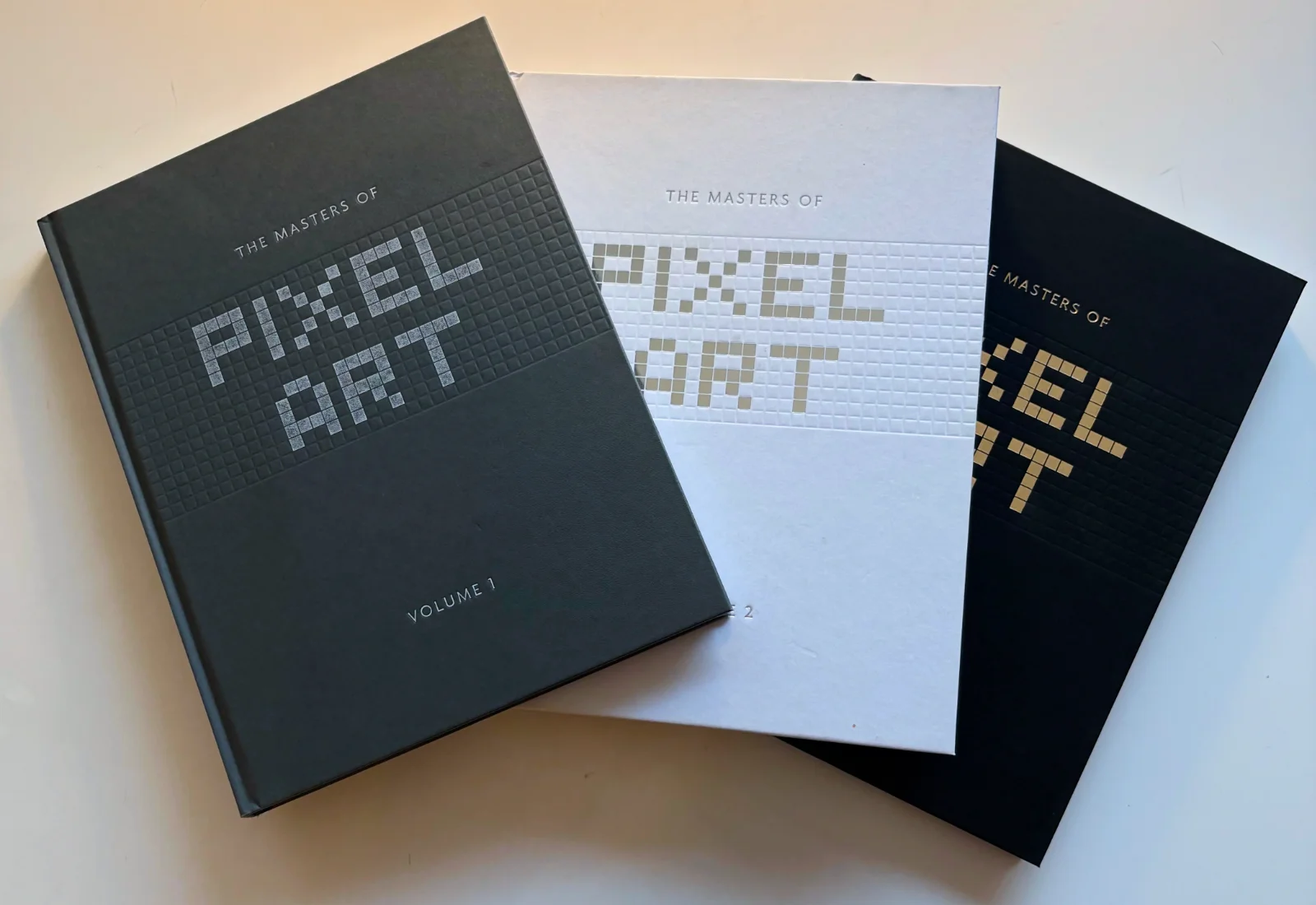
The three volumes of The Masters of Pixel Art book series.
Volume 1 (2016) is a gorgeous 216-page collection featuring a bunch of pixel artists and over 400 images, focusing on 5-bit to 8-bit color depth work from the Amiga, Atari, and PC era. What makes it special isn't just the art itself, but the stories behind it. Artists like Titan, MRK, Bridgeclaw, and Electron share background information and personal anecdotes about their masterpieces.
The book was Kickstarter-funded by people who wanted to preserve this era properly.
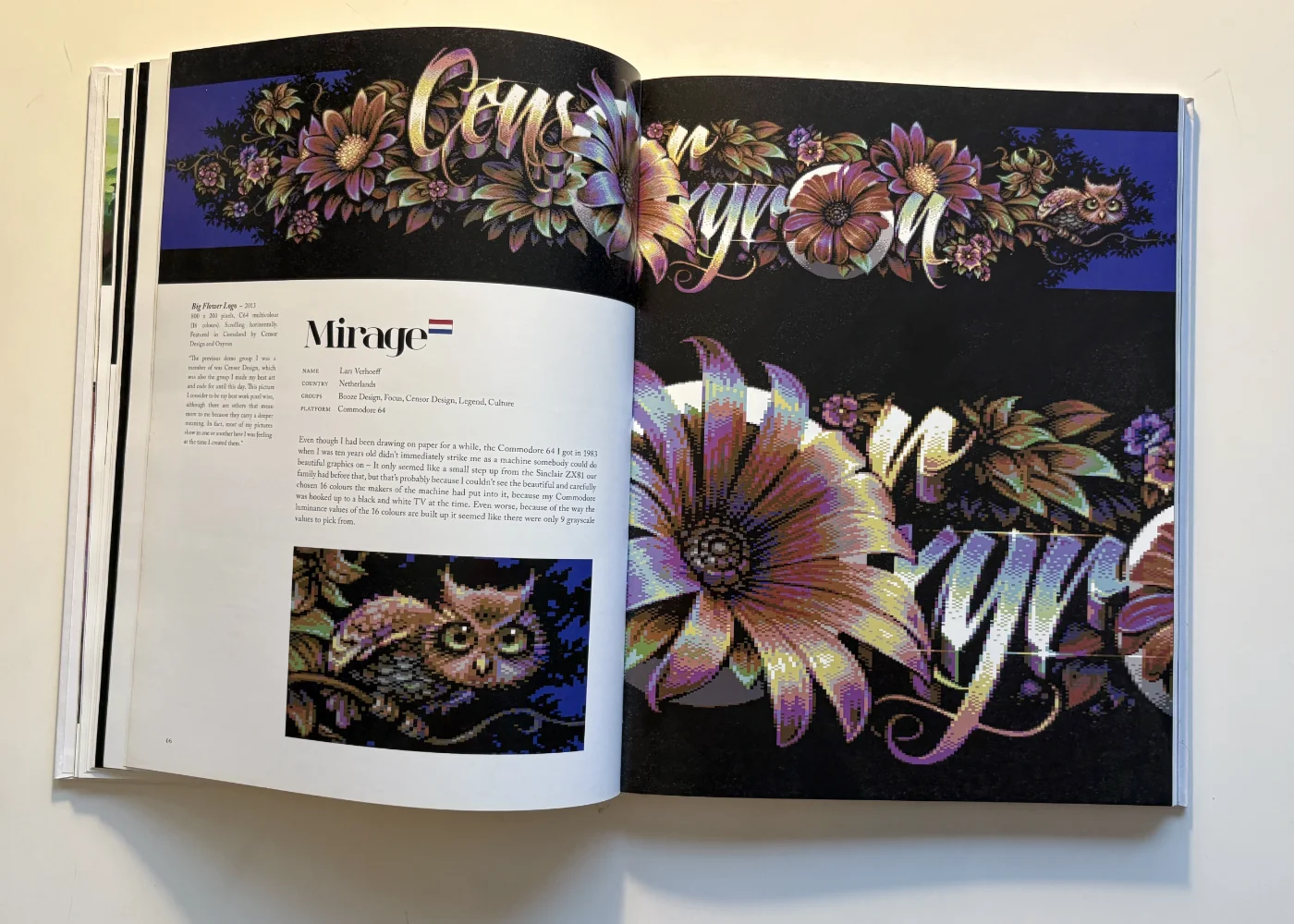
The Masters of Pixel Art books are a beautifully produced trilogy.
Volume 2 shifts focus to the Commodore 64 and other "exotic low-end" 8-bit machines like the Amstrad CPC, ZX Spectrum, Atari XL-XE, Commodore Plus/4, and MSX. Featuring even more artists including Carrion, Made, Prowler, and Slayer Grafix, it celebrates the raw creativity that emerged from working with even tighter constraints.
Because if 16 colors was a challenge, try doing magic with fewer colors and more restrictions!
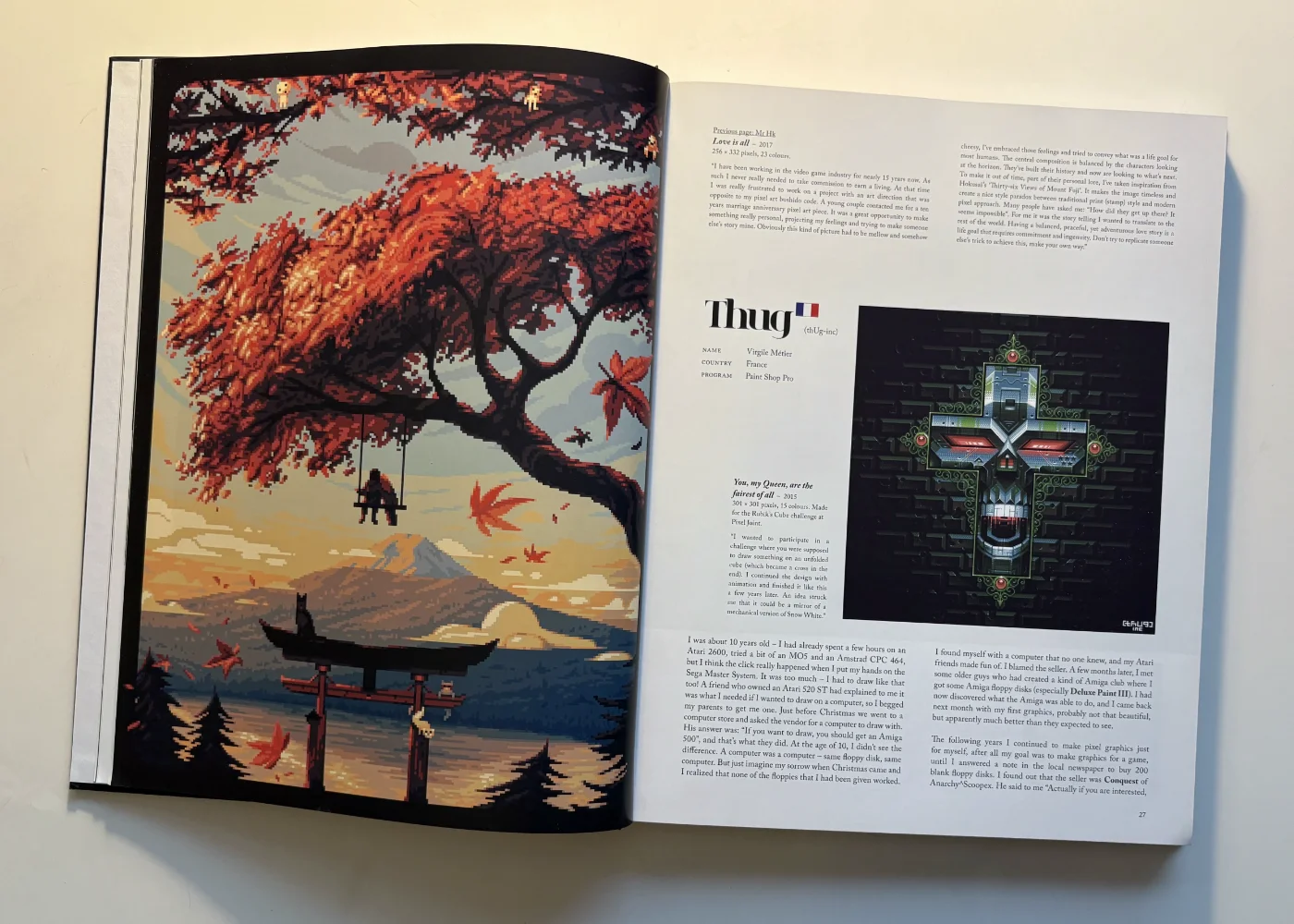
Interior pages from one of the volumes The Masters of Pixel Art.
Volume 3 (2018) takes a bold step forward by featuring contemporary pixel artists. They are the next generation working today. With over 40 artists from 18 countries including Spain's Octavi Navarro, legendary color cycling master Mark Ferrari, and rising stars like Kirokaze, waneella, and Helm, this volume explores how modern artists choose pixel art limitations intentionally.
They're not constrained by old hardware; they deliberately create boundaries to achieve their vision of retro aesthetics.
The pixel art scene more than just alive, it is positively thriving and global.
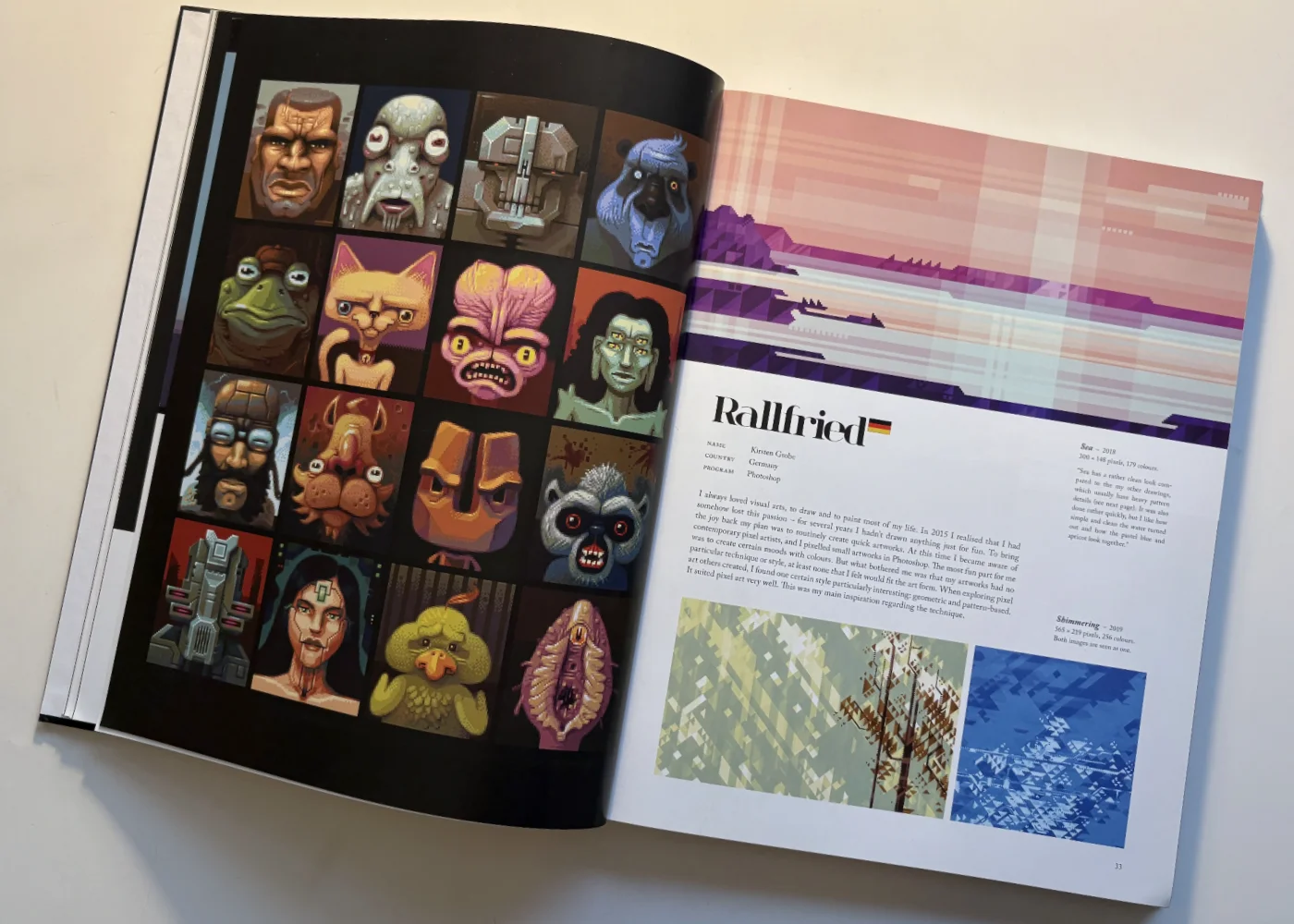
The change of format from screen to page gives us a new and noteworthy perspective of it.
All three volumes share the same interesting approach: giving space for artists to tell the stories behind their work, explain their techniques, and share what inspires them. You can find them at nicepixel.se.
The Demoscene: Where Pixel Art Became Culture
Beyond commercial games, pixel art found a second life in the demoscene. This is a subculture of coders, musicians, and artists who looked at their computers' technical specifications and said, "But can we make it do more?"
On the Amiga, Atari ST, and C64, demosceners compete to create the most beautiful images under strict technical conditions: fixed color modes, memory caps, even time limits. Pixel artists became visual storytellers, working hand-in-hand with coders to sync images to music and motion.
Demo groups like The Black Lotus and Fairlight treated the pixel as sacred. They optimized every bit, every color ramp lovingly handcrafted. For many of us who grew up watching these productions, it was true art. And it was proof that creativity could bloom from code, constraint, and a healthy dose of competitive nerding.
An Example of Graphics Limitations: the Commodore 64
The Commodore 64’s multicolor bitmap mode was the most commonly used graphics mide. Unfortunately, it came with significant limitations. Some sound completely arbitrary and silly by today's standards but they were technically necessary for such a reasonably priced mass-market machine in 1982.
The screen resolution was effectively reduced to 160 x 200 pixels, because each pixel was twice as wide as it was tall. In addition, you could not place any of the available colors feely anywhere you liked on the screen. The display was divided into 8 x 8 pixel character cells, and within each cell only four colors could be used: one global background color shared across the whole screen, two colors shared by the entire cell, and one color that could vary per cell.
These restrictions meant artists had to carefully plan color placement and shapes. Sometimes experimenting and often carefully outlining to help limit the number of colors used per cell.
Despite these limitations, pixel artists have produced wonderful artwork in this tiny little world of 160 x 200 scan line fragments.

Sped-up recording of the C64 graphic called "Reflected" drawn by the talented James Svärd.
The Joy of Fantasy Consoles
In recent years, the spirit of classic home computing has been reborn through so-called fantasy consoles like the PICO-8 and the TIC-80. These are not emulations of old systems, but entirely new platforms with deliberately tiny specifications: limited colors, memory, and screen resolution, often just 128 x 128 pixels.
Yes, people voluntarily choose to work with less power than some 1980s microcomputer. That's the whole point!
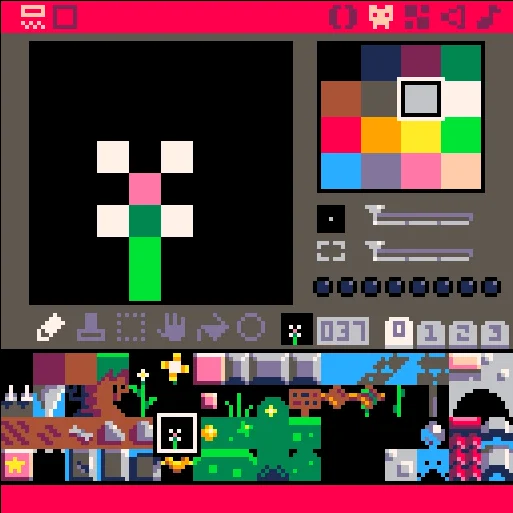
The sprite editor in PICO-8.
Each fantasy console comes with its own built-in code editor, sprite editor, sound tracker, and cartridge format. They recreate the feeling of sitting at an 8-bit computer, but without the part where you wait five minutes for a cassette tape to load. It's a single, self-contained creative playground. And they provide all the tools including a sprite editor, a tile editor and a music tracker. Thousands of artists and hobbyists love crafting games, animations, and experiments for these systems. And then sharing them online as "virtual cartridges" that anyone can play in a browser.
Just like early pixel art, their appeal lies in constraint and immediacy. With a PICO-8 or TIC-80, you can code, draw, and compose music without ever leaving the environment (or getting overwhelmed by a million options).
It is a joyful return to hands-on creativity on a pure, small-scale, and bursting with retro charm.
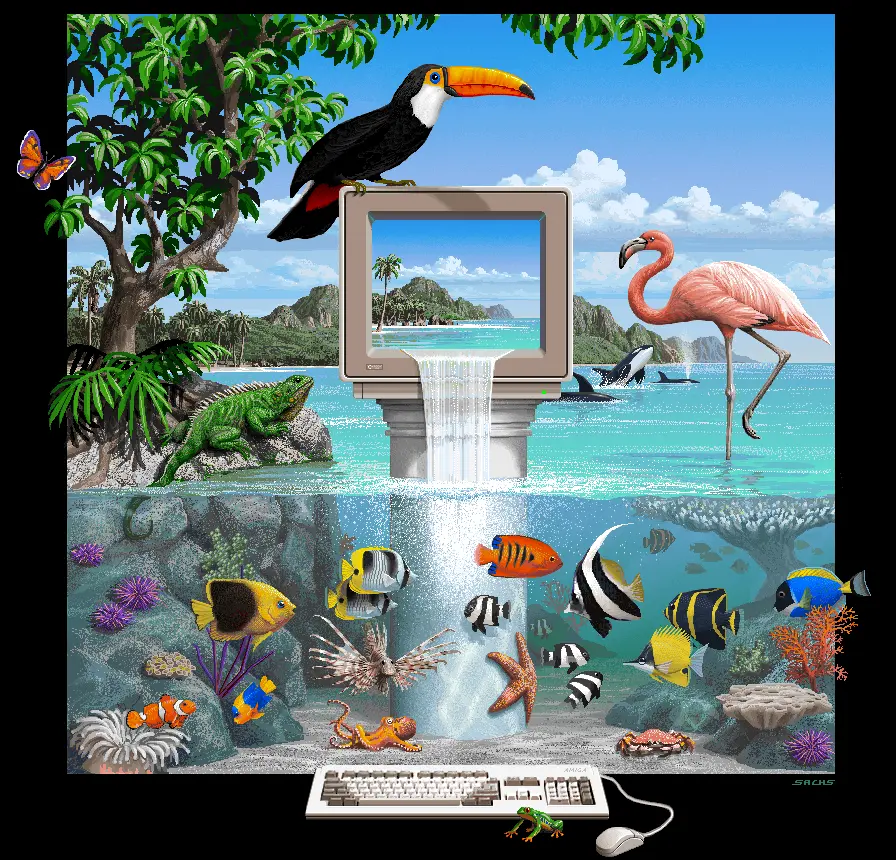
Promotional pixel art for the paint application Brilliance painted by Jim Sachs (Amiga AGA, 256 colors). This is not in the format of a screen but produced for print. Every pixel was still placed with painstaking care. Sheer brilliance!
A Modern Craft with Ancient Roots
Today, pixel art thrives again. Contemporary tools carry the spirit of classic editors: Aseprite, Pro Motion NG, GrafX2, Multipaint. You'll find pixel art everywhere: indie games, animation, UI design, and illustration.
It turns out those chunky squares never really went away. They just got more deliberate.
The appeal endures because it's achievable and human. Open a pixel editor and start creating. You'll make mistakes. You'll zoom in too far and lose perspective. And somehow, you'll rediscover that early digital spark. This is the wonder of making views into a new world appear... one stubborn pixel at a time!
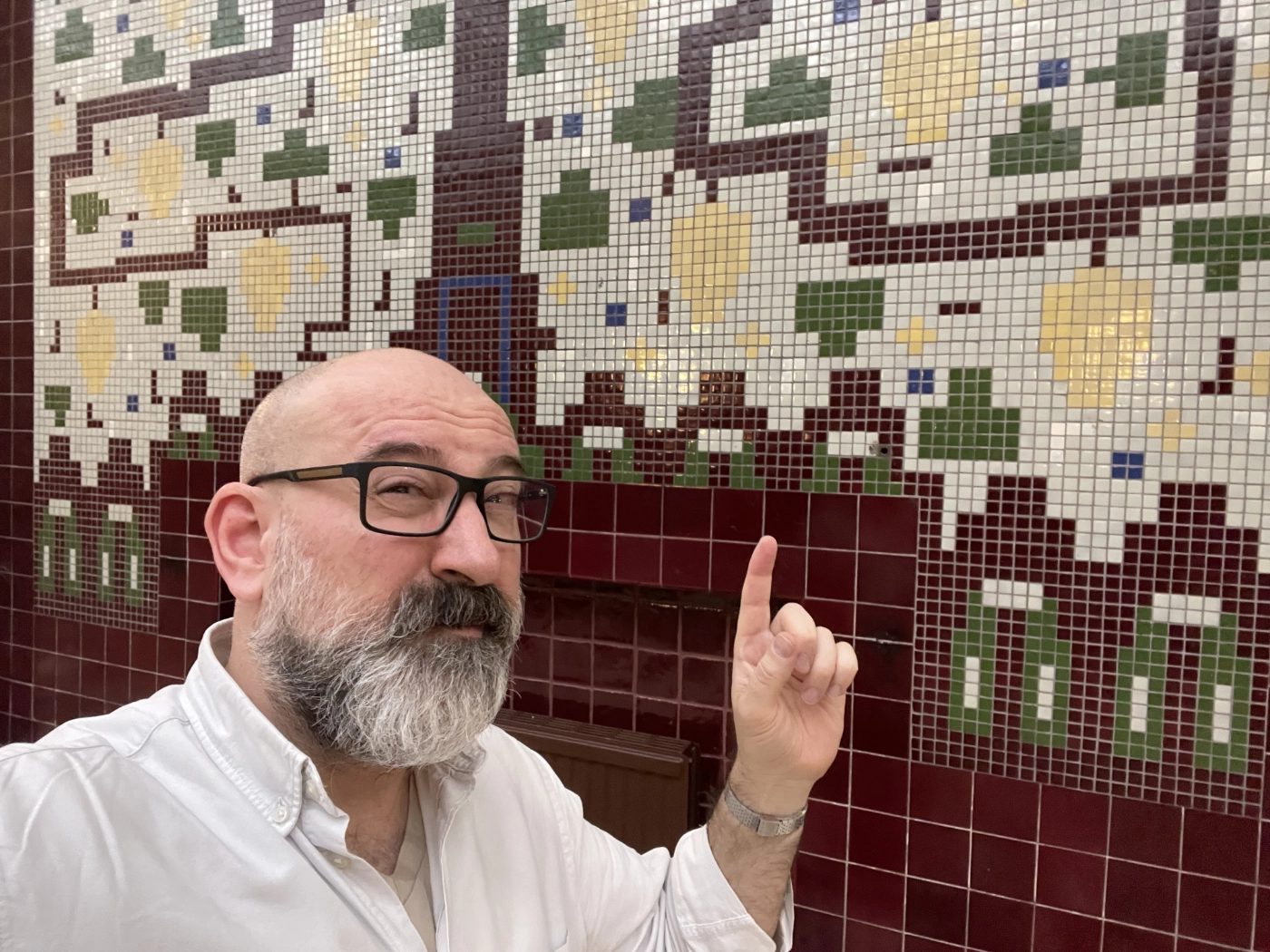
If you squint then the mosaic looks like pixel art. (Photo taken in the entrance hall of the Amalienbad bath house in Vienna, Austria.)
Perhaps this fascination with building images from tiny, colored units is older than we think. Long before screens, mosaics, tapestries, and woven carpets used tiles or threads instead of pixels. Each fragment is a building block of a greater image. I think the human desire to compose pictures from small elements is timeless. Pixel art is simply its digital continuation. We've always been obsessive about tiny details. Now we just have Ctrl+Z to undo our tiny little mistakes.
Long ago, when a movie wanted to show something on a computer, it would look pixelated. This was visual shorthand for something digital. This is no longer true.
In the end, pixel art is no longer what we used to do when computers were simpler. It is what we still choose to do when we want art that's pure, expressive, and unmistakably human.
Even if it means dithering using a 16-color palette until 3 AM.

Every pixel meticulously placed by Dan Malone.
Bonus: My Project Pixeling a Five-Page Comic
Back in 2019, I worked on a project called In Pixeling in the Retrosphere. I conducted an artistic experiment: creating a five-page comic using an authentic 1980s computer.
For this project I turned to a classic Atari Mega STE, which I upgraded so it could operate reliably today. Once set up, the machine became my complete creative studio. Instead of modern illustration tools, I deliberately worked with the original software and technical constraints of the era.
My goal was simple: to demonstrate that vintage hardware can still be a powerful medium for storytelling and visual creativity.
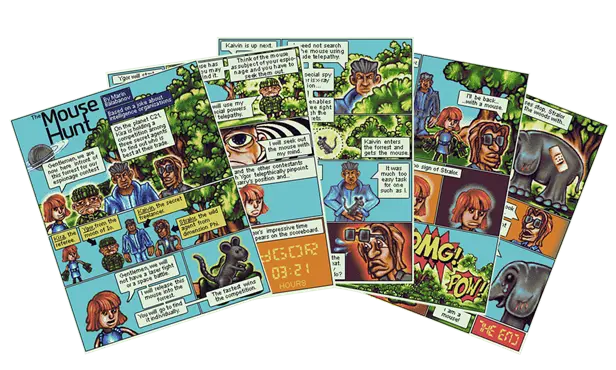
The finished comic
Most of the artwork was created using the classic paint program NEOchrome. Working within the strict limitations of the Atari STE’s graphics system and a palette of only sixteen colors, I constructed the comic’s panels pixel by pixel. Techniques such as dithering, color blending, and careful pixel placement helped create shading and expressive characters.
While I certainly do not claim to reach the level of the legendary pixel artists listed on this page, the project allowed me to explore the methods they used to achieve striking visuals despite severe technical limitations.
The result is both a finished comic and a detailed documentation of the entire pixel-art process on video and in a project report. By embracing the limitations of the original hardware, the project tries to highlight some of the ingenuity that defined early digital art.
It also reinforces a lesson that I still firmly believe in today: constraints often inspire innovation, and even decades-old computers remain capable of producing expressive artwork when used effectively.
You can find the project here with three videos showing the process of how I upgraded the Atari STE, how I planned and sketched the comic story, and finally how I painted it on a retro machine: Pixeling in the Retrosphere.