Why I Love the Demoscene
The Digital Subculture That Keeps Surprising Me
Imagine a fun community of passionate makers creating art within tight technical constraints. That's the demoscene. A simply amazing subculture of creative coding and digital art. In this personal essay, I explore why the demoscene has captured my heart and continues to inspire me.
January 2026
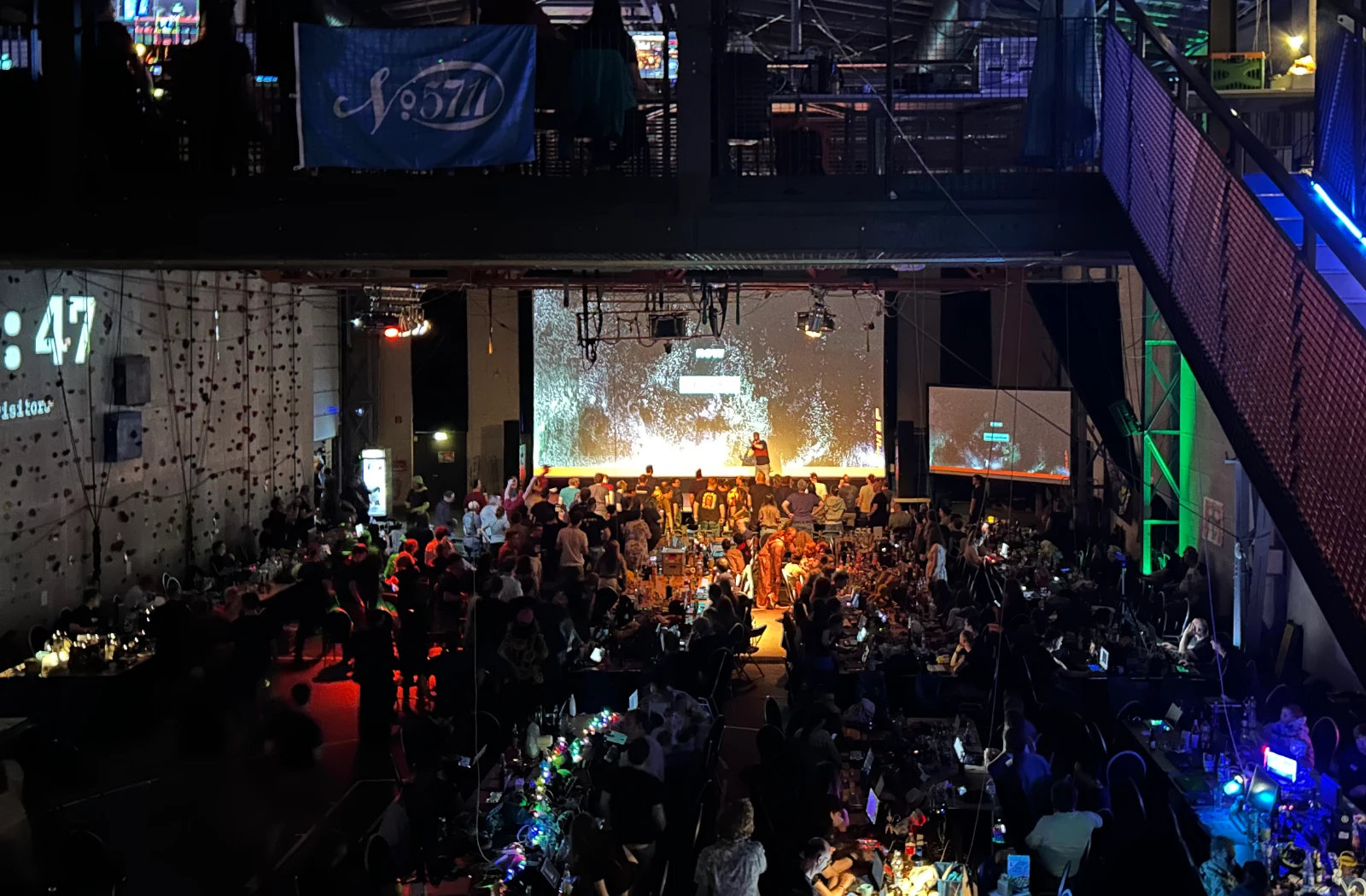
Evoke 2025 in the AbenteuerHallenKALK, Cologne
Over the last years I've written a series of demoparty reports and making-of articles on this site: Evoke in Cologne, Revision in Saarbrücken, the Meteoriks awards, Graffathon in Finland, and the Transmissions64 remote party. And that was in 2025 alone.
At some point, I realized that these reports were all part of a larger story I wanted to tell. And I might not have established the starting point: I love the demoscene. Not just specific events or releases, but the entire culture. Of course, I don't love everything about it (I doubt any community is perfect) but the parts I do love are deeply meaningful to me.
And I wanted to make that explicit before we start.

Scene from Scott Pilgrim vs. the World
A Strange Kind of Home
Let me paint you a word picture.
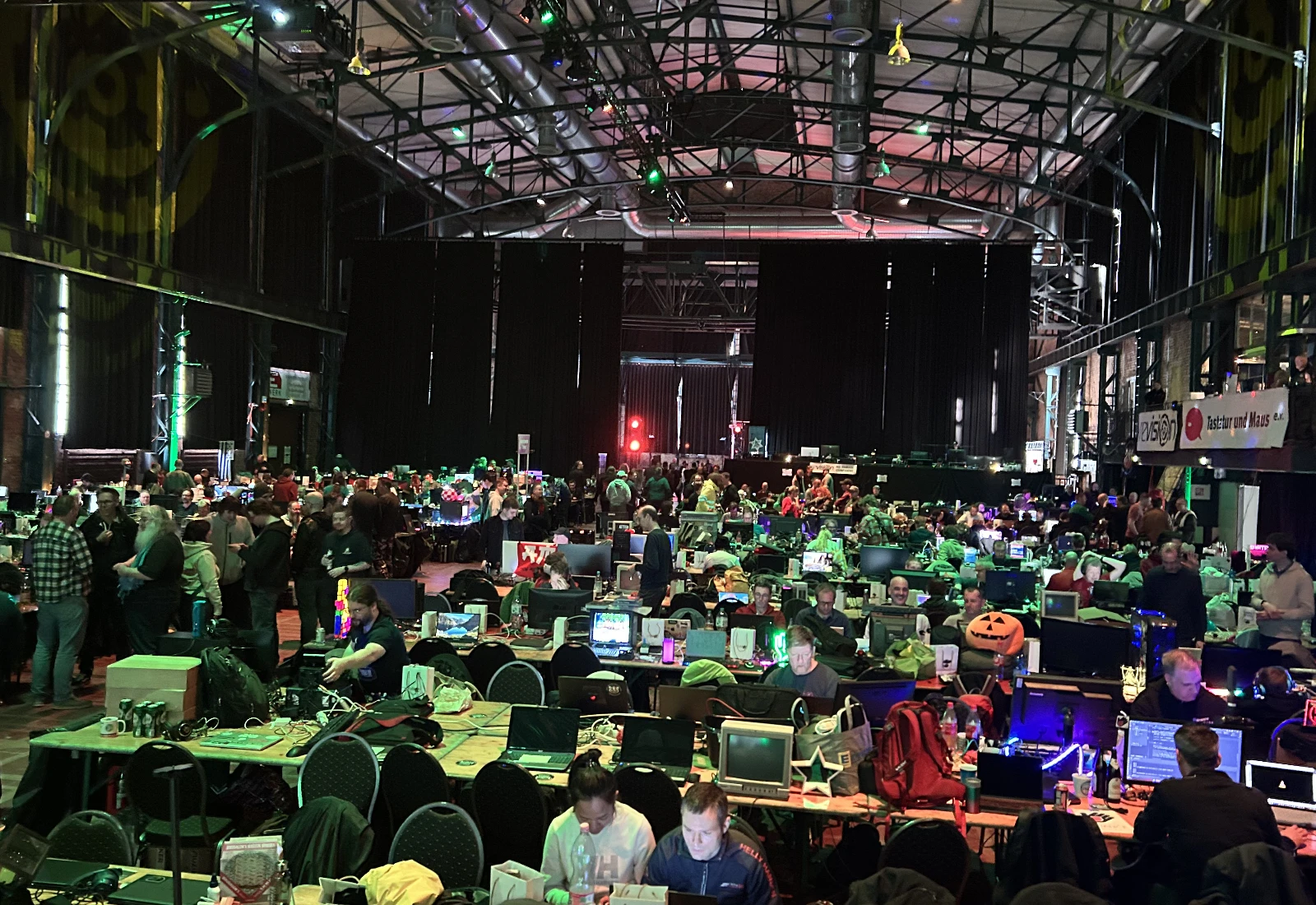
A demoparty has a very particular atmosphere. The ones I've been to usually take place in vast halls, factories, former power stations, spaces built for industry rather than comfort. There are no lights hanging from the ceiling. Darkness rules the room, cut only by the glow of countless screens, LED string lights, and pimped gamer PC cases, their integrated lighting screaming luminance into the night. In that light, long rows of tables stretch across the hall, packed with laptops, retro machines, tangled cables, and the familiar CRT, LCD, and OLED screens that gift us their glow... and sometimes a soft, comforting hum.
At the far end of the hall, towering above everyone, stands a gigantic sacred projection screen, looming like an altar or a crucifix in a cathedral.
And maybe a demoparty really is a bit of a religious experience.
To each side of the giant screen, massive loudspeakers bleed basslines into the air and blast chiptune music into the crowd. The crowd? Oh yes, the hall is full of sceners.
Coders, graphicians, musicians, and other creatives sit shoulder to shoulder, half-hidden behind their monitors. Some wear hoodies, as if cosplaying as hackers. Others don't need to pretend: they are coding furiously, eyes locked to the screen, concentration radiating from them. Nearby, others dance spastically to the electronic music. Others still are slumped exhaustedly in sleeping bags, headphones on, trying (often in vain) to ignore the explosive music and get a few hours of sleep.
If you try to explain what a demoparty is to a civilian, the word "IT conference" might come to mind. But no... this is not a conference. It's closer to a temporary autonomous zone, a digital campsite where time dissolves and nights turn into mornings completely unnoticed.
This hearty party becomes our home for a few intense days. The entire hall exists for one shared purpose: the thrill of creating and seeing something new appear on the screen for the very first time. It starts on your own monitor. If all goes well, it ends up on the gigantic screen... for everyone to see!
"Normal" life is taking a break.
You arrive with a backpack, maybe a laptop, maybe a retro computer, and suddenly you're part of this world of makers.
You're at home, baby.
I heard someone once say: "The demoscene is the only place I
know where a room full of laptops can feel like a
campfire."
Video: The Incredible Demoscene - Making Art with Code
Below is a great overview of the demoscene by Modern Vintage Gamer from a perspective that covers nostalgia, technology, and creativity.
Before I Knew It Had a Name
In the late 1980s and early 1990s, I had an Atari 520ST. I adored it deeply. It was my first serious creative machine. I painted graphics in NeoChrome, Degas Elite, and Spectrum 512, discovering color, form, and limitation one pixel at a time. I took my first tentative steps into 3D with CyberStudio CAD-3D and RezRender, watching wireframes turn into shaded shapes with a sense of astonishment. And of course, I played games: Time Bandit, Dungeon Master, Xenon 2: Megablast, The Pawn, Turrican I and II, The Chaos Engine, and many other. They were like new worlds with challenges for different moods.
But there was something else... something that seemed to combine all of this.
In our local public-domain library, I found something called demos. They were little programs with real-time audio-visual performances. Vibrant, unruly, and impossibly beautiful: sound, code, and image locked together in a way that felt alive. They didn't just show graphics or play music; they made the machine perform.
When a German ST magazine (oddly enough called ST Magazin) ran a series written by demo creators themselves, I realized something. These works didn't emerge fully formed from the brow of some benevolent computer god. They were made by real people! Curious, obsessive, playful people. People who pushed machines far beyond what they were meant to do.
Later, I moved on to a Commodore Amiga 600 with an integrated harddisk, and once again I marveled at demos. This time round I saw them on a machine that would later become almost mythical within the demoscene. At the time, I thought this was the peak. Atari and Commodore faded away, PC compatibles took over, and I assumed my fascination with these real-time audiovisual feasts was a fad.
Life took me elsewhere, and for a long time I lost track of the demoscene.
In 2017, I began studying Media Art Histories at Danube University Krems (now the University for Continuing Education Krems). I plunged headlong into digital art and media history. And wouldn't you know it!?! I rediscovered the demoscene, this time with new eyes. So much had happened. The culture had grown, diversified, and endured. I didn't just want to observe it. I wanted to understand it, to honor it.
I wrote my master's thesis about the demoscene. Specifically about The Exceptions, the first demogroup on the Atari ST. I loved every moment of it.
And after the pandemic, I finally did what felt inevitable in retrospect: I started going to demoparties. And eventually I found a new home.
What makes demoparties so welcoming for me isn't comfort in the usual sense. It's the opposite: it's the opportunity to be completely, unapologetically nerdy. No-one bats an eyelash if you care about weird things... If you ask strange questions... If you obsess over a tiny detail.
I am there to make something just because it's fun and/or because it is difficult.
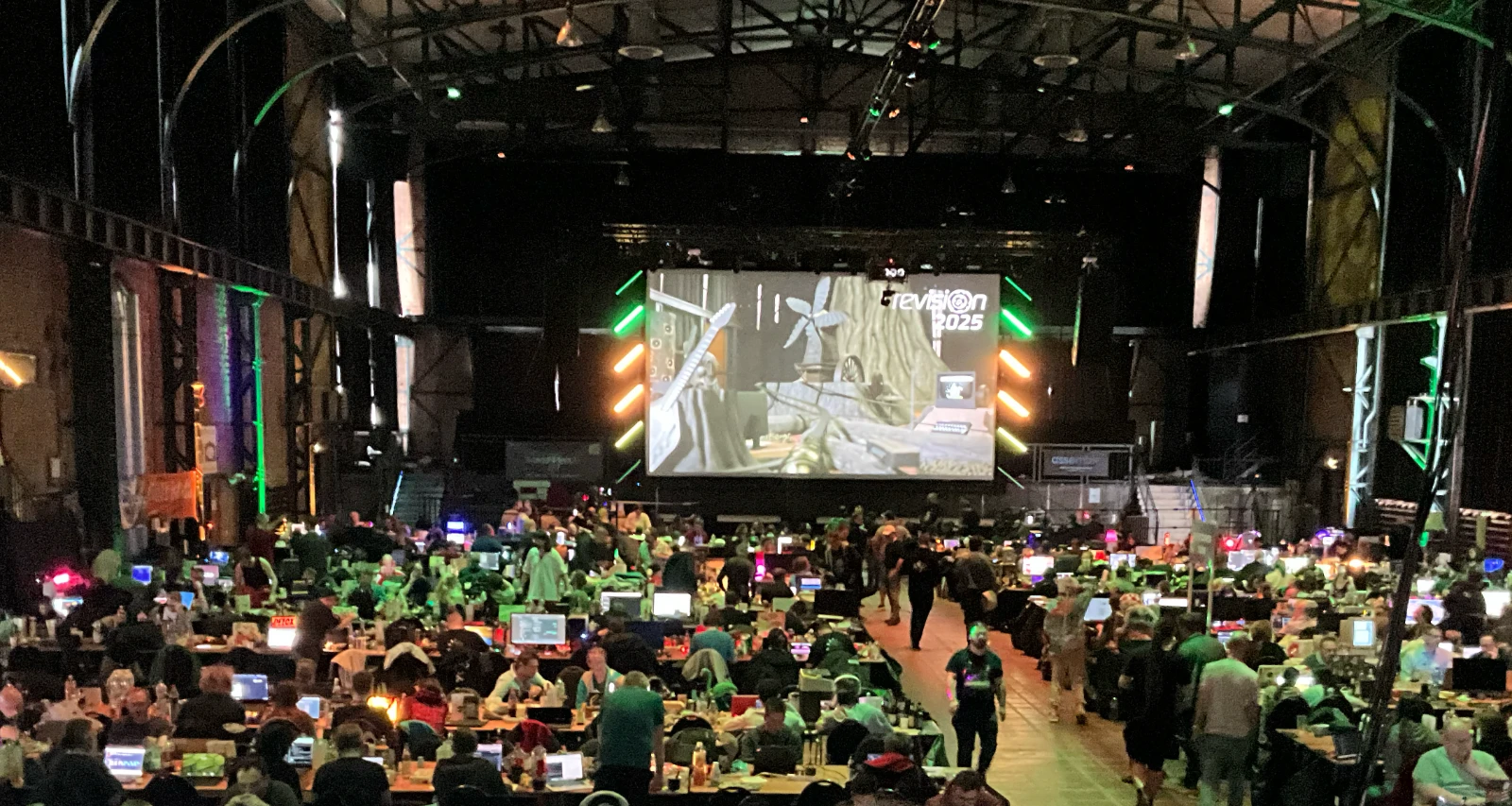
At Revision usually around 900 people attend. Here is another
perspective of the main hall.
Constraints That Don't Feel Like Cages
I've always been drawn to creative constraints. In the demoscene, constraints aren't a drawback; they're the point. I've written a whole master's thesis making this point.
The limitations of classic computers, artificial constraints in size, and other restrictions are the rules of a game that make the game interesting. The old adage that "limitations breed creativity" paradoxically boost a skilled creator's ability to innovate by forcing new ways of thinking, preventing the overwhelm of the blank canvas, and totally focusing efforts. This turns boundaries into catalysts for resourceful, novel solutions rather than roadblocks. These could be anything like a limited color palette, a fixed screen resolution, a strict file size, or the quirks of 40-year-old hardware.
I have grown to appreciate these limitations when I work on my deliverables for graphics compos at a demoparty. This wasn't always the case. During Evoke 2022, the first demoparty I ever went to, I loathed the strict color palette and did not understand how I should handle it. Then I saw how other artists had solved the same problem in wildly different ways, far superior ways. After a couple of tries, limited color palettes really grew on me. I started to like working with them. It was liberating. I could focus on form and composition while finding interesting ways to use the limited colors to delineate the different subjects in an image. I added this toolset that I learned from the demoparties to my repertoire and regard it as a kind of super power. I even went ahead and created out-of-competition graphics like this recreation of a painting by Boris Vallejo I drew in only four colors. Additionally I used this new found skill for a completely unrelated graphic I had submitted for the 38C3 congress in Hamburg (spoiler: it was not accepted, even though I quite like it).
I learned creating graphics for the C64 the hard way by joining the demogroup Vintage Computing Carinthia (VCC) while they were already in the process of creating a demo. And again once I got past the initial frustration, the limitations of the C64 multicolor mode became a puzzle I genuinely enjoyed solving. (I guess that is simply a roundabout way of saying that I learned...)
There's something deeply satisfying about wrestling with limits until you stop fighting them and start collaborating with them.
Playlist: Demoscene Videos
A curated collection of videos about the demoscene, demoparties, and creative coding. In the top right corner of the video player you can click on the playlist icon to see the full list of videos included in this playlist. Please enjoy!
People Before Platforms
The demoscene is often described through its outputs: demos, intros, music, graphics, wild real-time effects. But the real reason I keep coming back is simpler: people.
The scene is full of generous, curious, highly opinionated, very funny humans who build things because they can't not build things.
You meet someone who's doing something completely unexpected like patching together an analog computer with a tangle of cables, or drawing manga-style illustrations at a party table, or painting using Deluxe Paint on a Commodore Amiga 1200. And then, without noticing, you've spent an hour talking. About what? About creative tooling. About the history of some obscure machine. About a technique. About a demo you both love. About what it means to make art in public.
I think I either read somewhere in a demoscene forum someone write: "A demoparty is a place where your niche is not a niche."
There's so much kindness in the scene. It's not always obvious at first glance. People can look intensely focused, or tired, or socially overloaded. But once you talk to them, you notice the care. The willingness to explain. The energy of "oh, you should see X" or "you should meet Y". The shared understanding that making something is hard, and finishing something is even harder.
Sometimes the greatest battle is the battle against your own doubts.
If you'd like to read another personal take on the demoscene and demoparties, I highly recommend Canmom's account here: Demoscene why. It is a beautiful essay that captures many of the same feelings but is much clearer and better written than mine. My heart somersaulted when I read it for the first time.
The Joy of Participation (and the Courage It Requires)
Watching demos is wonderful.
But the demoscene really clicked for me when I started participating by submitting graphics and experimenting with workflows. The first demo I produced was messy with its abstract blinking shapes and colors. I wrote it in Java using the Processing framework during Graffathon 2024. I called it the "Glitch Epilepsi Demo". It came in second to last place in the demo competition, but I was still proud of it, though I do admit that it deserved it. I had committed to it and I delivered something within the given deadline.
The second demo I created was far more polished. It was a cut-out animation using web technologies, made for Revision 2025. I called it "All In Your Head" and I really stand behind it. It came in 15th out of 19. Not great, but not terrible either. I was happy with it though I do think it should have placed higher. But that doesn't matter. What matters is that I made it, I submitted it, and I learned a lot in the process.
The demos are voted on by the participants of the demoparty. It is an informal system. I have no idea what the voting dynamics end up being. The level of quality is very high. But maybe some folks who have been around for a long time get more votes because of their reputation.
Filipe "PS" Cruz, one of the most respected demosceners around, once said that he actually is against the idea of competitions at demoparties. He believes that the demoscene should be about sharing and collaboration, not about winning or losing. He is one of the main organizers of the Inércia demoparty in Portugal, which is known for its friendly and inclusive atmosphere. PS also produces with amazing regularity his Demoscene Report on Youtube where he covers the latest releases and events in the demoscene.
Participation changes your relationship to the scene. You stop seeing releases as "content" and start seeing them as the result of real human effort. Sometimes you can even see the late nights, the trade-offs, and the tiny technical wins.
A Hard But Wonderful Truth About Demoscene Courage
It takes guts to submit your work at a demoparty competition. Not because the scene is hostile. It isn't. Rather because you're putting a piece of yourself on a big screen, in front of people who understand and appreciate exactly how hard or easy it is.
Art History, Remix Culture, and the Long Conversation
The demoscene is also a conversation across decades.
The elements change. Styles, techniques, visual motifs, musical approaches, inside jokes, tributes, remixes, rivalries, and recurring debates. Sometimes that conversation is purely technical. Sometimes it's about aesthetics. Sometimes it touches art history in surprising ways.
When I explored the influence of Boris Vallejo on demoscene pixel art, I was fascinated by how a fantasy painter's imagery traveled through time—through book covers, game art, teenage bedrooms, and eventually into the works of scene artists. That's the demoscene too: not sealed off, but connected, referencing and reinterpreting culture.
It is also astonishing how quickly Vallejo's imagery disappeared from the scene.
And in the best moments, the demoscene feels like a living archive that's still producing new work... rather than preserving something in amber.
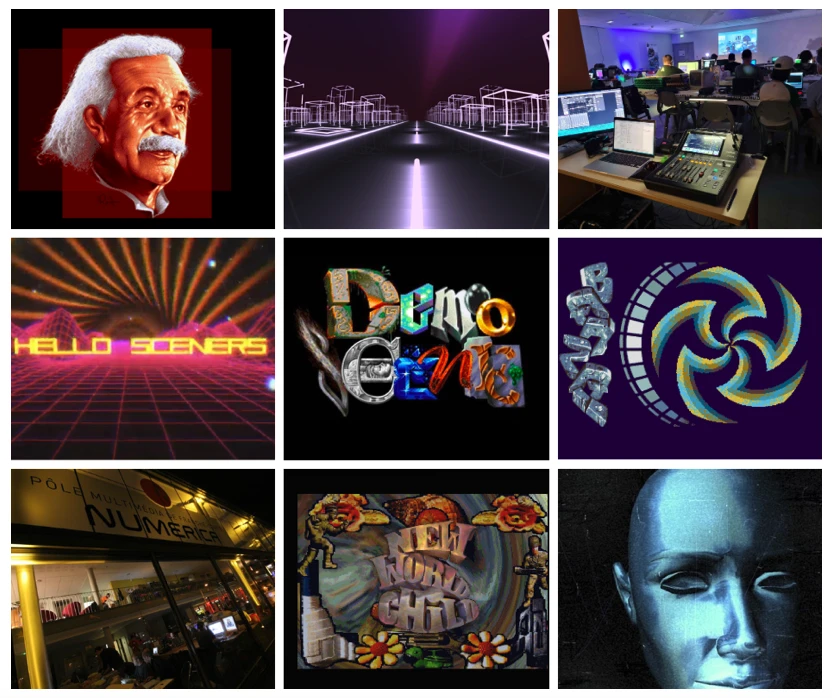
The Art-of-Coding initiative seeks to enlist the demoscene as
the first digital culture on UNESCO's list of Intangible World
Cultural Heritage. Thanks to their great work, it has already
been recognized in Finland, France, Germany, Netherlands,
Poland, and Sweden as a significant cultural asset. Learn more
at
demoscene-the-art-of-coding.net.
So... Why Do I Love It?
I love the demoscene because it keeps the "computer" magical. Not in a marketing way, not in a productivity way, but in the original sense: a machine that invites curiosity, play, craft, and obsession.
- I love the constraints that turn into puzzles.
- I love the culture that treats digital art as a creative medium.
- I love the parties where so many interesting makers.
- I love the people who are generous with knowledge and passion.
- I love the weirdness, the good kind, the courageous kind, the necessary kind.
The demoscene isn't just a hobby for me. It's a compass. It points toward the kind of creative life I want: playful, collaborative, slightly obsessive, and deeply human.

"The compass doesn't really point north, it points to what
you want most!" (Screen grab from "Pirates of the Caribbean:
Curse of the Black Pearl")
Every time I return from a demoparty... exhausted, inspired, running on too little sleep and too much Club-Mate... I'm reminded that art can be made anywhere, with anything, as long as you have curiosity and a community that understands why you care.
I have long accepted that I will work in serious software development and that it will never fully satisfy my creative urges. The demoscene fills that gap.
And that's why I keep coming back: because the demoscene keeps proving, again and again, that computers can be instruments, not only for work, but for wonder.
Related articles
In closing I'd like to share the "field reports" behind this love letter. Please find a list of my demoscene related articles below.

November 2025
From Zero to Koala
Learning to Draw for the Commodore 64 to Compete at Transmission64
I joined the demogroup VCC to make graphics for their Commodore 64 demo without ever having drawn a pixel for this machine. Now my chunky images are part of a quirky Ski Jumper demo, released at the remote demoparty Transmission64 in late November. I learned more about retro art, collaboration, and community than I expected. This is my making-of and demoparty report.
Read more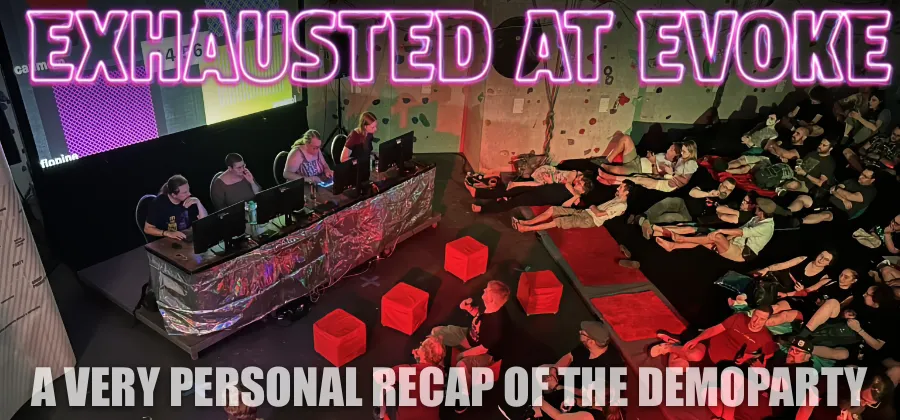
August 2025
Exhausted at Evoke 2025
A Very Personal Recap of the Demoparty
Evoke 2025 once again turned Cologne's AbenteuerHallenKALK into a playground of code, art, and sound. This year's edition brought some fresh surprises: From live Amiga coding battles and a dazzling drone show to heartfelt reunions with old friends. For me, it was a slower, more reflective Evoke. Yet still full of moments worth remembering.
Read more
April 2025
Revision 2025
A Journey Through Train Chaos, Creativity, and Community
Traveling from Thessaloniki to Saarbrücken wasn't easy, but for the Revision 2025 demoparty, it was absolutely worth it. Amid wonderful demos, arcade machines, bonfires, and a sea of creative minds, I found once again what makes the demoscene so unique: the awesome community of technology and art.
Read more
April 2025
From Spectator to Juror
My Tiny Role in the 'Oscars' of the Demoscene
Wanting to contribute to the demoscene in a bigger way, I became a jury member for the midschool category at the Meteoriks 2025 awards, sifting through an overwhelming number of demos, debating their merits, and helping to decide the year's best. It was a wild but ultimately rewarding experience that deepened my appreciation for the passion and craftsmanship behind the scene. I even delivered one of the award speeches.
Read more
October 2024 Mildly NSFW
Boris Vallejo and the Pixel Art of the Demoscene
As an epic fantasy painter, Boris Vallejo had a great influence on 1980s and 90s fantasy book covers, computer game box art, and the demoscene. Through the decades, his works have been replicated by pixel artists. This article features fantasy art history, demoscene drama, and a lot of pixel art fun creating a Boris Vallejo imitation graphic using only four colors.
Read more
September 2024
The Future of the Past
Avoiding Stagnation in Archives of the Amiga Demoscene
Let's explore the Amiga Demoscene Archive (A.D.A.), examining its role as a demo repository within the demoscene, and take a look at its carefully curated collection. What are the archive's strengths and weaknesses? And what can we learn from this archive of media art?
Read more
August 2024
The Magic of Evoke
Demoparty Report by a Bloke at the 25th Evoke
The 25th edition of Evoke was held from 16th to 18th of August 2024 in Cologne. It was an amazing event full of creativity, cooperation, and demoscene magic! Here are my impressions of this wonderful demoparty.
Read more
August 2024
Making Compo Graphics for Evoke 2024
Evoke is an awesome demoparty. I participated in three of the graphics competitions. Here is how I created my submissions and alternative graphics that taught me what I wanted to do.
Read more
June 2024
Graffathon 2024
Where Coding Meets Art
In June 2024, I went to Graffathon in Finland, an interesting intro to demoscene culture. 28 participants met for this uniquely starter-friendly demoparty, enjoying a good helping of creativity and collaboration. On two and a half days, demosceners crafted seventeen impressive demos, showcasing the talents of both beginners and advanced coders. Here are my impressions of Graffathon 2024, exploring the vibrant intersection of art and technology that defines this extraordinary community.
Read more
May 2024
The Books That Chronicle the History of the Atari ST Demoscene
Over the past decade, a number of books were published that chronicle the history of the Atari ST demoscene. These books provide a detailed look at the creative and technical achievements of the demoscene community, exploring the innovative audiovisual presentations created on the Atari ST computer. Here I introduce and discuss the various volumes in this loose collection.
Read more
January 2024
Demo Beats and MTV Vibes
History and Analysis of State of the Art by Spaceballs
"State of the Art" was a groundbreaking demo for the Commodore Amiga created by the Norwegian demogroup Spaceballs in 1992. It gained widespread acclaim for its innovative use of real-time 2D vector graphics, animation, and sound, becoming an iconic piece in the history of the Amiga demoscene. Let's take a deep dive!
Read more
December 2023
The Commodore Amiga and its Undying Adoration by Anarchist Creatives
Let's investigate the birth of the demoscene, the Amiga platform's revolutionary beginnings, its emotional resonance within a dedicated community, and its broader influence on the field of computer graphics and music. Why is the Amiga still one of the most significant platforms in the demoscene?
Read more
August 2023
Evoke 2023 Demoparty Report
From July 28th to 30th, I visited the Evoke 2023 demoparty in Cologne. After years of study and admiration of the demoscene, I participated in a demoparty in person for the third time. Here's what I experienced, which graphics I submitted for the competitions, and what I learned. I hope this helps newcomers to the demoscene make the most of their first demoparty.
Read more
April 2023
Revision 2023
Back to the E-Werk for Most, First Time for Me
After nearly three long years of distance and postponed events, the moment I stepped into the E-Werk for Revision 2023, I was swept up in radiant waves of sheer enthusiasm. Others were back, I was there for the first time. This is my account of a big, loud, and more joyful weekend in Saarbrücken.
Read more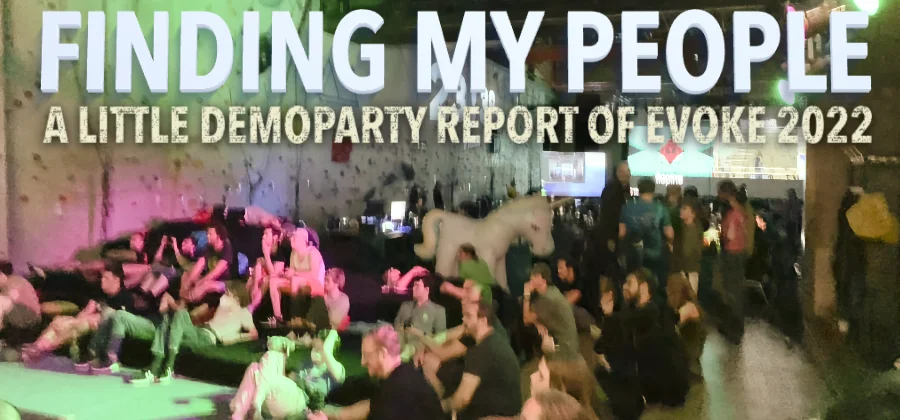
August 2022
Finding My People
A Little Demoparty Report of Evoke 2022
In August 2022, as the world slowly reopened after the pandemic, I found myself boarding a plane to Cologne for something I had dreamed of for years: my first demoparty. What I didn't know yet was that Evoke 2022 would become a personal milestone. It was a moment where my years long interests and my research culminated. I had found my community.
Read more
October 2020
Circuits Ablaze
How Technical Limitations Pushed the Early Demoscene to Produce Digital Art
This is my master's thesis about the demo-group The Exceptions during the years 1987 to 1989 in the Atari ST demoscene. These were the formative years of the Atari ST demoscene, and The Exceptions were the first to produce demos on the computer system.
Read more